Comprehensive Guide to Moss Textures for Photorealistic PBR Workflows
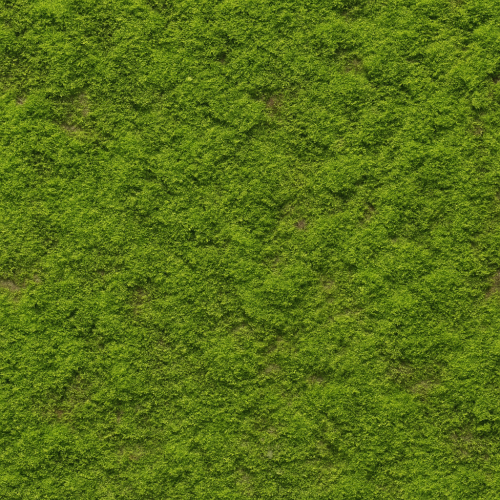
Acquiring high-quality moss textures for physically based rendering (PBR) workflows demands a nuanced approach that balances the natural complexity of moss surfaces with the technical constraints of digital asset creation. Moss presents unique challenges as a textural subject due to its intricate structure, micro-variations in color and reflectance, and the subtle interplay of light across its fibrous, often damp surfaces. To capture these details faithfully, practitioners typically rely on advanced photogrammetry and scanning technologies, each offering distinct advantages and requiring specific strategies for success.
Photogrammetry remains a foundational method for moss texture acquisition, leveraging multiple overlapping photographs taken from various angles to reconstruct detailed 3D geometry and associated texture maps. When capturing moss in situ, controlling lighting conditions is paramount. Diffuse, overcast daylight is preferred to minimize harsh shadows and specular highlights that can obscure fine details and introduce artifacts in albedo and roughness maps. Using a calibrated DSLR or mirrorless camera with a macro lens enables capturing the micro-structure critical for high-fidelity albedo and roughness data. The resolution of images should be maximized within practical limits—generally, images exceeding 20 megapixels facilitate capturing the subtle tonal variations and color richness inherent in moss.
To ensure accurate color reproduction, color calibration targets are essential during the shoot. Including a standardized color checker in the scene allows for consistent white balance and color correction in post-processing, critical for obtaining physically accurate albedo maps. Since moss surfaces often have a damp or wet aspect, which affects reflectivity and glossiness, it is beneficial to photograph both naturally wet and dry specimens to create multiple texture variants or a parameterized roughness map that captures moisture-driven reflectance changes.
The geometry captured through photogrammetry provides the basis for generating normal, ambient occlusion (AO), and height maps. However, capturing the extremely fine-scale relief of moss—its tiny stalks, leaves, and spore capsules—can be challenging due to limitations in photogrammetric reconstruction resolution and the softness of moss edges. To mitigate this, high-density image sets with increased overlap (70–90%) and controlled camera movement paths are employed, often supplemented by close-up macro photography to enhance detail. Post-processing software like RealityCapture, Agisoft Metashape, or CapturingReality can produce dense point clouds and meshes that preserve micro-geometry, but mesh cleanup and retopology are frequently necessary to optimize for real-time engine use, balancing detail retention with polygon budgets.
Scanning technologies such as structured light scanners and laser scanners offer alternative or complementary methods. Structured light scanning can achieve sub-millimeter accuracy, beneficial for capturing moss’s topography. However, reflective or translucent properties of moss tissues can introduce noise or data loss, so scanning often requires careful surface preparation or the application of matte sprays. This is less desirable if preserving the natural appearance is a priority, so scanning is often combined with photogrammetry to leverage strengths of both: the precise geometry from scanning and the rich color and reflectance data from photography.
In the PBR workflow, the data acquired must be carefully processed to produce the standard texture channels: albedo (base color), roughness, normal, ambient occlusion, and height. Moss typically has no metallic component, so the metallic map is omitted or set to zero across the board. The albedo map must represent the diffuse color without baked-in shadows or specular highlights, which necessitates careful lighting during capture and potentially manual correction. Roughness maps are particularly significant for moss because the surface varies from velvety dry patches to slick, wet areas. These variations can be baked into roughness maps as grayscale values or even parameterized for dynamic wetness effects within engines like Unreal Engine.
Normal maps derived from high-resolution photogrammetric meshes capture the complex undulations of moss surfaces. When generating these maps, it is crucial to maintain the directional fidelity of the micro-details, as normal map inaccuracies can cause unrealistic shading and lighting responses. Ambient occlusion maps provide subtle shadowing information that enhances depth perception but should be used judiciously to avoid overly darkening the moss texture in engine rendering.
Height maps or displacement maps, extracted from the photogrammetry mesh or scanning data, enable parallax or tessellation effects in modern rendering engines, thereby enhancing the perception of moss thickness and volume without excessive geometry. However, due to the soft and complex topology of moss, height maps require smoothing and artifact removal processes to prevent unnatural surface distortions during real-time rendering.
To create tileable moss textures suitable for large-scale environment texturing, acquired data often undergoes authoring workflows involving careful trimming and seamless tiling adjustments. Given that moss textures are rich in micro-variation, the challenge lies in preserving these subtle details while eliminating visible seams. Techniques such as edge blending, frequency separation, and non-destructive cloning in specialized texturing tools like Substance Designer or Mari help achieve seamlessness without sacrificing natural variation. Moreover, introducing randomized micro-variation through layered noise or detail masks can prevent repetitiveness in tiled moss surfaces, an important consideration for immersive environments.
Calibration and color matching between different moss captures are essential when building texture libraries or atlases. Variations in lighting conditions, moisture states, and species can cause noticeable color shifts and reflectance differences. Utilizing standardized color profiles and spectral calibration during capture, alongside software-based color grading, ensures consistency. This is particularly crucial when integrating moss textures into broader environment assets within rendering engines such as Unreal Engine or Blender, where physically accurate material responses depend on consistent albedo and roughness inputs.
Optimization for real-time engines involves balancing texture resolution and memory usage. Moss textures often benefit from high-resolution base color maps—typically 2K or 4K—to capture color nuances. Roughness and normal maps may be kept at similar or slightly lower resolutions to reduce overhead. Compression settings within Unreal Engine or Blender’s shader pipelines must be tuned to avoid introducing artifacts that degrade the delicate moss detail. For instance, using BC7 compression for diffuse textures and BC5 for normals strikes a good balance between quality and performance.
Within Unreal Engine, moss materials can leverage layered material setups that blend multiple moss texture variants based on vertex painting or procedural noise, enhancing realism through micro-variation. Height maps can drive tessellation or displacement features, while roughness maps modulate wetness dynamically via material parameters, simulating environmental changes. In Blender, the node-based shader system allows similar control, integrating moss textures with procedural masks and normal map adjustments to create physically plausible shading that responds correctly to scene lighting.
In summary, acquiring high-quality moss PBR textures is a multifaceted process requiring careful planning and execution. Photogrammetry, complemented by scanning where feasible, provides the detailed geometry and color data necessary to reproduce moss’s complex surface characteristics. Success hinges on managing natural lighting, ensuring color calibration, capturing sufficient micro-detail, and processing the data into optimized, tileable texture maps suitable for real-time rendering. The resulting textures, when integrated with physically accurate material setups, contribute significantly to the authenticity and immersive quality of natural environments.
Creating high-fidelity moss textures for physically based rendering workflows necessitates a nuanced balance between procedural generation and photographic input. The complexity of moss surfaces—characterized by their intricate organic patterns, subtle color variations, and three-dimensional micro-structures—renders purely photographic or purely procedural approaches insufficient in isolation. Instead, artists often leverage a hybrid methodology to maximize both realism and flexibility, ensuring moss textures are not only visually convincing but also efficient for real-time engine use and adaptable across diverse asset scales.
The foundational step in moss texture creation is acquiring high-quality photographic references that capture the nuanced coloration and surface detail of moss in various lighting conditions. Photographs taken with controlled diffuse lighting minimize harsh shadows that could bias albedo maps, while macro or close-up shots reveal the fine filamentous structures and sporadic debris embedded within moss mats. These images serve as the primary source for the albedo, providing the intrinsic color information stripped of lighting effects. When capturing or selecting photos, it is critical to consider the scale of the moss relative to the intended asset. Excessive macro detail can become overly noisy or illegible when tiled at large scales, whereas insufficient resolution loses essential micro-variations that prevent repetition artifacts.
Once photographic inputs are gathered, preprocessing involves color calibration and normalization to ensure consistent base color values aligned with PBR workflows. This usually entails removing color casts and balancing saturation and brightness to approximate the diffuse reflectance of moss under neutral lighting. It is also common to desaturate or subtly shift the hue to counteract environmental influences (e.g., excessive green from surrounding foliage) for a more controlled base. The albedo texture is typically complemented by ambient occlusion (AO) maps extracted either from baked geometry or generated via photogrammetry, which enhances perceived depth in crevices and denser moss clusters without introducing artificial shadows.
Procedural generation enters the pipeline primarily to address tiling and micro-variation challenges. Moss, by nature, exhibits irregular yet repetitive patterns that can easily betray tiling when mapped naively. Procedural noise functions—such as Perlin, Worley, or cellular noise—are employed to generate masks and variation maps that modulate albedo, roughness, and height channels. These procedural masks introduce subtle spatial variations, breaking up uniformity and enabling the seamless repetition of texture tiles. Artists often blend procedural noise with photographic detail using layered blend modes, where the base albedo is modulated by noise-driven color shifts or opacity maps, simulating the natural heterogeneity of moss patches.
In the roughness channel, procedural techniques are particularly valuable. Moss surfaces exhibit a complex interplay between soft, damp, matte areas and occasional glossier spots caused by moisture or decay. Using grayscale noise maps layered with directional gradients, artists can simulate this variability. By remapping noise values to reflectivity coefficients within the physically plausible range (typically 0.4 to 0.75 for moss), the roughness texture dynamically conveys these subtle wetness variations. Photographic roughness inputs, derived from specular or glossiness captures, often lack the spatial frequency needed to prevent repetition, making procedural augmentation indispensable.
Normal and height maps are critical for conveying the three-dimensionality of moss, especially in real-time engines like Unreal Engine or Blender’s Eevee renderer. Depth perception in moss textures arises from the filamentous structure’s fine relief and the underlying substrate’s irregularities. Photogrammetry can yield highly accurate height data, but often requires refinement to reduce noise and optimize for tiling. Procedural height displacement generated by fractal noise or layered simplex functions can be blended with photographic height maps to fill gaps and generate plausible micro-relief that responds well to dynamic lighting. In some workflows, artists employ displacement mapping for high-end offline renderers and normal map baking for real-time compatibility, carefully calibrating the intensity to avoid unnatural exaggeration.
Ambient occlusion maps derived from baked geometry or ambient light probes complement height and normal data by accentuating shadowed recesses within moss clusters, enhancing volumetric perception without additional geometry. When authoring AO maps for moss textures, it is advisable to isolate the moss layer from the underlying surface to prevent occlusion bleeding that can diminish clarity. This separation also enables artists to modulate AO intensity per material instance, adapting moss visual density dynamically within the engine.
Metallic values for moss textures are conventionally set to zero, as moss is an organic, non-metallic material. However, in specific cases where moss grows on metallic substrates or on objects with oxidized surfaces, layered materials using masks can simulate partial metallic reflections beneath the moss layer, but the moss itself remains non-metallic.
Tiling optimization is paramount in moss texture creation. Given moss’s repetitive nature, seamless tile edges are achieved by carefully blending photographic patches with procedural variation masks that extend beyond tile borders. Techniques such as edge feathering, gradient-based blending, and random rotation or mirroring of small photo patches reduce noticeable seams. In software like Substance Designer or Blender’s procedural texture nodes, tileable noise functions are critical to generate base masks that loop perfectly in UV space. Additionally, multi-scale noise layering—combining low-frequency large pattern noise with high-frequency fine detail noise—ensures that moss textures appear natural both close-up and at a distance.
Calibration of texture channels to engine-specific workflows is another essential consideration. For example, Unreal Engine expects roughness maps inverted relative to glossiness maps from photographic sources, requiring artists to adjust channel data accordingly. Similarly, Blender’s principled shader interprets normal maps differently depending on the color space and orientation conventions; thus, authors must verify normal map correctness within the viewport to avoid lighting artifacts. Using engine-specific LUTs for color correction and roughness response curves allows moss textures to maintain consistent appearance across different platforms and lighting models.
Micro-variation within moss surfaces also benefits from channel blending. By subtly overlaying procedural patterns onto photographic albedo and roughness, artists can simulate environmental effects such as slight desiccation, sporadic dirt accumulation, or sporophyte sporulation, which break uniformity and increase realism. This approach is further enhanced by vertex painting or mask-driven layering within engines, enabling dynamic customization of moss density, wetness, or decay states in real-time without swapping textures.
Finally, performance optimization is critical, especially for game engines or VR applications where moss often covers large terrain areas. Instead of a single high-resolution texture, artists implement texture atlases or detail maps that blend macro moss coverage with micro-detail overlays. Using mipmapping and anisotropic filtering strategically preserves texture clarity at oblique viewing angles while minimizing aliasing. Normal map compression and channel packing—such as storing AO in the roughness alpha or height maps in unused channels—reduce memory footprint without compromising visual fidelity.
In summary, the procedural and photographic authoring of moss PBR textures is a sophisticated interplay: photographic inputs provide authentic base color and structural detail, while procedural tools introduce variation, seamless tiling, and channel modulation essential for realistic, engine-ready materials. Mastery of this hybrid workflow enables artists to generate moss textures that convincingly replicate the organic complexity of natural moss, remain performant in real-time environments, and offer flexible customization for diverse 3D applications.
The creation and calibration of PBR texture maps for moss demand a nuanced approach that respects both the organic complexity of the material and the rigorous physical-based rendering workflows required for consistency and realism. Moss, by nature, is a composite biological surface composed of tiny, densely packed filaments with a subtle interplay of translucency, fine surface detail, and moisture retention, all of which must be carefully translated into the six core maps: BaseColor (Albedo), Normal, Roughness, Metallic, Ambient Occlusion (AO), and Height. Each map’s generation and calibration must be approached with an understanding of the material’s intrinsic properties to maintain physical plausibility and ensure reliable results across diverse lighting conditions and rendering engines such as Unreal Engine and Blender.
Starting with the BaseColor map, it is crucial to capture the intrinsic diffuse coloration of moss without baked-in lighting information such as shadows or specular highlights. Moss exhibits a wide range of greens, from deep emerald to yellowish or grayish tints, often punctuated by subtle brown or reddish decay spots. When authoring or capturing BaseColor, the ideal workflow involves acquiring high-resolution, color-calibrated photographs under diffuse, neutral lighting conditions or generating procedural base colors that simulate this variety. One common pitfall is oversaturation or encoding surface shadows in the albedo, which violates the PBR principle that the BaseColor represents only the diffuse reflectance. To avoid this, it is advisable to perform a neutralization step, often done by desaturating and adjusting levels or employing specialized software like Substance Designer or Quixel Mixer that separate albedo from baked lighting. Maintaining a physically plausible albedo prevents color shifts under different lighting and ensures that the moss’s subtle chromatic variations respond naturally to environmental illumination.
The Normal map for moss is arguably one of the most critical for conveying its micro-geometric complexity. Moss surfaces are rarely smooth; they consist of dense, fine filaments and small-scale bumps that create intricate light scattering patterns. High-fidelity Normal maps can be generated by baking from high-poly sculpts, scanning real moss samples with photogrammetry capturing fine surface details, or synthesizing normals from height maps. When authoring Normals procedurally, it is important to layer multiple scales of detail: larger undulations replicate clumps of moss, while micro details represent the filament structure. Calibration involves ensuring that the Normal map’s intensity (often controlled via RGB channel values) aligns with the scale and roughness of the moss; excessive normal strength can produce unrealistic shading, while too weak can make the surface appear unnaturally flat. Additionally, tangent-space normals must be authored respecting the target engine’s coordinate system—Unreal Engine uses a different normal map format (green channel inverted relative to OpenGL-style) than Blender’s default—requiring channel flipping or conversion to avoid shading artifacts. Testing Normal maps under directional and ambient lighting is essential to verify that the moss’s intricate geometry reacts realistically and simultaneously avoids over-bumping, which can generate aliasing or unnatural highlights.
Roughness maps for moss require a delicate balance because moss surfaces exhibit heterogeneous roughness due to varying moisture levels, filament density, and surface contamination. The roughness level typically ranges from moderately high to very high, reflecting the diffusive scattering caused by the soft, fibrous microstructure and retained moisture droplets. When authoring Roughness maps, it is important to avoid uniform roughness values; instead, micro-variation should be introduced by layering procedural noise or scanned roughness data to simulate the natural heterogeneity of moss patches. For instance, wetter or younger moss areas exhibit lower roughness (glossier) due to moisture, while drier or older parts have higher roughness. Calibration involves comparing roughness values against physically measured standards or reference materials, and adjusting midtones in the roughness map to ensure the highlights respond correctly under multiple light intensities and angles. Testing roughness consistency using real-time preview tools in Unreal Engine or Blender’s Eevee renderer is vital; these engines provide live feedback on how roughness influences specular reflections and scattering, enabling iterative tuning to achieve believable wetness and fibrous diffusion without artificial shine or flatness.
Metallic maps are, for moss, typically either unused or set to zero, since moss is an organic, non-metallic material. Unlike metals, moss does not exhibit conductive reflectance characteristics, so the metallic channel should be kept black (zero value) to prevent rendering artifacts. However, in some stylized or hybrid materials where moss partially covers metallic substrates or exhibits mineral deposits, a masked metallic map may be used to isolate those regions. The key calibration here is to ensure no unintended metallic values bleed into the moss areas, which would violate physical plausibility and cause unrealistic reflections or energy conservation errors in PBR engines.
Ambient Occlusion (AO) maps are essential for enhancing the perceived depth and micro-shadowing on moss surfaces, particularly in crevices and dense filament clusters where global illumination may not fully resolve subtle self-shadowing. AO for moss can be baked from high-poly models in applications like Marmoset Toolbag or Substance Painter, or derived from scanned data and procedural generators. Calibration involves ensuring that the AO map does not darken the moss unrealistically or obscure its fine details; typically, AO values are subtle and combined multiplicatively with the BaseColor or via engine-specific input slots. Overly strong AO can cause unnatural shadowing that flattens color variation, while insufficient AO reduces depth cues. Additionally, AO maps should be tiled seamlessly with randomized micro-variation to avoid pattern repetition that breaks immersion, especially when moss covers large surfaces.
Height maps for moss serve a dual function: generating parallax or displacement effects and driving normal map detail. Height data is often captured via photogrammetry or sculpted in high-resolution 3D applications, focusing on the filamentous surface topology. When authoring height maps, it is important to calibrate the displacement range to match the scale of moss filaments, typically on the order of fractions of a millimeter to a few millimeters in world space. Excessive height values introduce unnatural silhouette distortion, while too little height reduces the tactile feel of the moss surface. In PBR workflows, height maps are often converted to normal maps or used with tessellation/displacement shaders in real-time engines. Unreal Engine supports displacement mapping via the tessellation pipeline but requires careful optimization to balance performance and visual fidelity; Blender’s Cycles renderer integrates displacement natively but also benefits from calibrated height data to avoid mesh distortions. To optimize, height maps can be stored in 8-bit grayscale with careful dithering or compressed formats, ensuring minimal artifacts and smooth transitions.
Tiling and micro-variation are critical considerations when authoring moss PBR textures due to its naturally repetitive and uniform appearance at scale. To avoid obvious tiling, texture sets should incorporate randomized overlays, procedural variation in roughness or color channels, and detail masks that break repetition patterns. Techniques such as texture atlasing or multi-channel packed masks can be employed to optimize memory usage while preserving variation. Additionally, authoring multiple moss variations with subtle differences in color saturation, roughness, and normal intensity allows artists to blend multiple textures in shader graphs, creating visually rich surfaces without noticeable repetition. Calibration during tiling must ensure seamless edge matching in all maps, especially normal and height, to prevent visible seams under dynamic lighting or parallax displacement.
Practical calibration tips involve iterative testing under a range of lighting scenarios: direct sunlight, overcast skies, indoor artificial lighting, and HDRI environments. Rendering the moss textures in physically accurate engines like Unreal Engine’s path-traced renderer or Blender’s Cycles with HDRI lighting enables verification of reflectance and surface detail fidelity. Specific attention should be paid to energy conservation principles—ensuring that roughness and metallic values correspond correctly to the BaseColor’s reflectivity to prevent unexpected brightness or darkening under specular highlights. Calibration also extends to gamma correction and color space management; BaseColor textures should be stored in sRGB space, while Normal, Roughness, AO, and Height maps are linear or single-channel grayscale with no gamma correction, preserving data integrity and ensuring predictable shader behavior.
In summary, the accurate creation and calibration of PBR maps for moss require a disciplined workflow that respects the material’s biological intricacies while adhering to physically based rendering principles. By carefully authoring each map to isolate and represent specific physical characteristics—diffuse color, microstructure, surface roughness, occlusion, and height variation—and calibrating these maps through iterative testing in target rendering engines, artists and technical directors can achieve moss surfaces that respond convincingly to light and environment, maintaining visual consistency and physical accuracy across diverse production pipelines.
FAQ
What is covered in this guide?
This guide explains Comprehensive Guide to Moss Textures for Photorealistic PBR Workflows with practical notes for seamless PBR materials, texture setup, and production use.
Can I use these texture techniques in Blender, Unreal Engine, and Unity?
Yes. The workflow focuses on standard PBR maps and tileable materials that can be used in Blender, Unreal Engine, Unity, archviz, games, and VFX pipelines.
Where can I find textures for this workflow?
Use the AITextured texture library and the related texture links on this page to find seamless PBR materials and preview them before download.
Related Textures
 Procedural Stamped Sidewalk Concrete PBR Texture
 Procedural Fine Asphalt Road PBR Texture
 Procedural Pitted Concrete PBR Texture
 Seamless Concrete Pebble PBR Texture in 4K Resolution
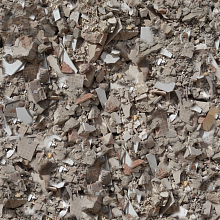 Seamless PBR Concrete Rubble Texture with Debris and Fragments
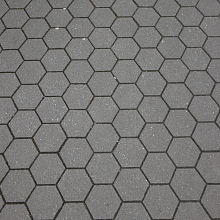 Seamless Hexagonal Concrete Tile PBR Texture 4K
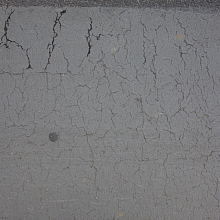 Cracked Asphalt Texture with Weathering