Creating and Using Vintage Halloween Seamless PBR Textures for Immersive 3D Projects
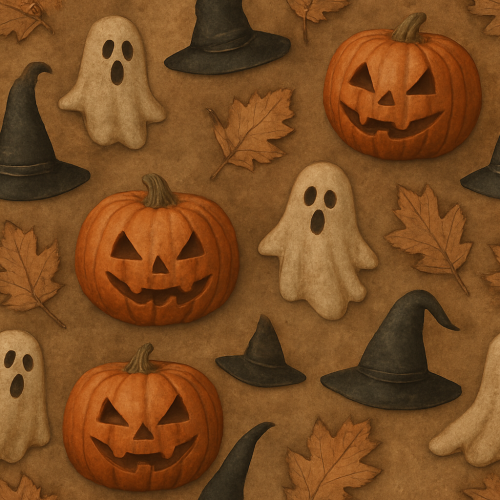
Acquiring authentic vintage Halloween textures for physically based rendering (PBR) workflows demands a meticulous approach that balances technical precision with an understanding of the aged materials’ inherent visual characteristics. The goal is to capture not only the surface geometry but also the nuanced color shifts, wear patterns, and micro-variations that define the retro aesthetic typical of vintage Halloween props and decorations. Achieving this requires a combination of high-resolution scanning techniques and photogrammetry, tailored lighting setups, and careful calibration to preserve fidelity across PBR texture channels such as albedo, roughness, normal, ambient occlusion (AO), height, and, where appropriate, metallic maps.
The first step in acquiring vintage Halloween textures is selecting physical source materials that exhibit the desired aged qualities—old paper cutouts, faded fabrics, distressed painted wood, and weathered plastics, for instance. These materials often present complex surface characteristics, with subtle surface degradation, color desaturation, and micro-fissures that contribute critical detail to the final digital asset. High-resolution flatbed scanning remains the gold standard for capturing planar surfaces such as vintage Halloween posters, greeting cards, and textured paper. Scanning at a minimum of 2400 dpi, preferably higher, ensures the capture of fine grain, fiber patterns, and ink degradation. It is vital to scan in RAW or 48-bit color where possible to maximize color fidelity and dynamic range, preserving the subtle tonal variations and muted hues characteristic of aged pigments and ink.
When scanning, calibration of the scanner with color targets (e.g., X-Rite ColorChecker) is essential. This step ensures the accurate reproduction of the faded, yellowed paper tones and ink discolorations that define vintage materials. Post-scan color correction must be approached conservatively to avoid inadvertently “restoring” the wear that imparts authenticity. Instead, the goal is faithful reproduction of the original material’s color gamut and luminance, so that the albedo maps reflect the imperfect, timeworn palette typical of vintage Halloween aesthetics.
For three-dimensional props such as carved pumpkins, witch hats, lanterns, and other sculptural elements often found in vintage Halloween sets, photogrammetry is the preferred acquisition method. Photogrammetry captures both shape and surface detail, enabling generation of normal, height, and AO maps that reveal the material’s micro-geometry. When photographing these props, diffuse, consistent lighting is critical to avoid specular highlights that can skew the perception of roughness and surface irregularities. Using polarizing filters on the camera lens, combined with cross-polarized lighting setups, effectively suppresses unwanted reflections, allowing the true matte and glossy properties of the surfaces to be documented.
The lighting rig should emphasize even illumination from multiple angles to fully reveal the contours and textural nuances. For vintage Halloween materials, which often have cracked paint, patinas, and subtle embossing, directional grazing light can be introduced in separate passes to accentuate surface relief for height map extraction. Capturing multiple lighting conditions is useful for computing ambient occlusion and cavity maps that enhance the depth cues in PBR shaders. These maps are critical for recreating the worn, tactile feel of these objects in real-time engines like Unreal Engine or authoring environments such as Blender.
When capturing color data for these 3D props, white balance calibration must be meticulous. Using a standardized gray card in each shoot session and shooting in RAW format permits precise correction and maintains color consistency across texture sets. Vintage Halloween props often show muted oranges, browns, and desaturated greens that are sensitive to color temperature shifts. Maintaining consistent color fidelity ensures that albedo maps accurately reflect the retro palette without artificially boosting saturation or contrast, which could undermine the authenticity.
Post-processing of the captured data requires careful separation of PBR channels. The albedo map should be stripped of shading and specular highlights to isolate pure color information. This often involves retouching to remove specular reflections captured during photogrammetry and flattening lighting effects while preserving color nuances such as faded paint edges and dirt accumulation. Roughness maps can be derived by analyzing the specular response in the original photographs; cross-polarized images help isolate the diffuse component, and the remaining highlights inform roughness variations. For vintage Halloween textures, roughness typically varies significantly due to material degradation—areas of worn paint or varnish will be glossier, whereas cracked or faded surfaces exhibit higher roughness values.
Normal maps generated from photogrammetry scans provide the micro-geometry detail essential for convincing surface interaction with light. However, vintage props often contain high-frequency noise due to surface irregularities such as cracks, paint chips, and fabric weave. Filtering normal maps carefully to retain meaningful micro-variations while suppressing scanning artifacts is crucial. Height maps extracted from the mesh or photogrammetry data can be used to add subtle parallax effects or displacement in engines like Unreal, enhancing the tactile feel without excessive geometry complexity.
Ambient occlusion maps, computed either during photogrammetry processing or baked in 3D software, add shadowing detail that reinforces depth perception in real-time renders. Given the complex shapes and crevices typical of vintage Halloween props—folds in fabric hats, pumpkin grooves, and lantern embossing—accurate AO maps are essential to convey the aged objects’ dimensionality. These maps should be optimized to tile seamlessly if the texture is intended for larger surfaces, ensuring micro-variations and wear patterns do not appear repetitive or artificial.
Creating tileable textures from acquired vintage materials presents another challenge due to the inherently irregular and distressed nature of aged surfaces. Techniques such as cloning and patching scanned textures can produce seamless tiling, but must be approached with care to maintain micro-variations and avoid obvious repetition. Incorporating subtle noise layers or procedural variation in Blender or Unreal Engine’s material editor can break up uniformity and enhance realism. For instance, blending scanned albedo textures with procedural grunge or dirt masks can simulate uneven fading and wear, which is characteristic of vintage Halloween props subjected to years of use and exposure.
Optimization considerations are paramount when integrating vintage Halloween PBR textures into game engines or real-time visualization. High-resolution scans, while rich in detail, can be prohibitively large. It is advisable to tailor texture resolutions based on asset scale and camera proximity, applying mipmapping and compression techniques without sacrificing critical surface details. Normal and height maps should be signed and packed efficiently, and grayscale maps like roughness and AO can be combined into channels of a single texture to reduce draw calls. Calibration of texture color space in engine import settings—ensuring albedo maps are treated as sRGB while roughness, normal, and height maps remain linear—is fundamental to preserving physical accuracy in lighting calculations.
In engines like Unreal, physically based materials benefit from the proper interpretation of vintage texture data. For example, roughness maps derived from aged paints should be used to modulate specular reflections realistically, preventing unnaturally glossy surfaces. Similarly, height maps can be harnessed via tessellation or parallax occlusion mapping to accentuate surface imperfections without heavy polygonal overhead. Blender’s node-based shader system allows for intricate layering of vintage textures, enabling artists to blend scanned albedo with procedural noise and curvature masks to reinforce wear edges and dirt accumulation dynamically.
Overall, acquiring vintage Halloween textures is a technically intensive process that requires rigorous attention to detail at every stage, from initial scanning and photography to channel extraction, color calibration, and final integration into PBR workflows. Understanding the unique material characteristics of vintage props—muted and shifted color palettes, surface wear, micro-geometry irregularities—and adapting acquisition methods accordingly ensures that the digital textures retain the authenticity and nostalgic charm essential to replicating the vintage Halloween aesthetic in contemporary 3D environments.
Creating seamless PBR textures that evoke the nostalgic ambiance of vintage Halloween involves a nuanced interplay between photographic source material and procedural authoring techniques. This hybrid workflow enables the faithful reproduction of classic motifs—such as stylized ghosts, curling autumn leaves, and timeworn pumpkins—while integrating subtle signs of wear and age that contribute to a realistic, tactile feel. The goal is to produce physically-based textures that not only tile flawlessly but also carry authentic micro-variation and nuanced surface responses across all relevant PBR channels: albedo (base color), roughness, normal, ambient occlusion (AO), height, and, where appropriate, metallic.
The initial acquisition of photographic assets is critical. High-resolution scans or photos of vintage Halloween ephemera—such as aged paper, fabric, or painted wood surfaces—serve as a rich foundation. These source materials inherently include organic imperfections, color shifts, and distressed details that are difficult to replicate procedurally from scratch. However, raw photographic inputs often require extensive calibration: color correction to match the intended retro palette, removal or softening of hard shadows and highlights to avoid overly localized lighting effects, and the elimination of perspective distortions to ensure tileability.
To convert photographic inputs into seamless textures suitable for PBR workflows, one must employ a combination of retouching and procedural tiling methods. Photoshop or similar image editors offer frequency separation techniques that isolate fine details from color variations, allowing for independent manipulation of texture microstructure and base hues. This separation supports the creation of roughness and height maps by extracting luminance or contrast data from the detail layer, which can then be adjusted to control surface reflectivity and micro-relief. Procedural operations—such as offsetting and blending edges, employing clone stamping with rotation and scaling, and introducing randomized noise masks—help mitigate visible seams and repetitive patterns.
Digital brushwork plays a pivotal role in enhancing photographic bases with thematic elements and aging effects. Custom brushes simulating ink bleeds, paper creases, or mild grunge can be layered atop photographic textures to introduce localized wear consistent with vintage media. When authoring albedo maps, these brush strokes must be carefully calibrated in opacity and hue to integrate naturally without overpowering underlying photographic detail. For example, hand-painted ghost silhouettes or curling vine motifs can be softly blended with distressed overlays to maintain a sense of depth and authenticity.
In terms of roughness and normal maps, procedural noise generators and edge-detection filters complement photographic detail by simulating micro-variations and surface response inconsistencies. Applying a subtle Perlin or fractal noise pattern modulated by the albedo luminance helps emulate the uneven varnish or fabric weave typical of vintage prints. Edge-aware normal map generation, combining directional Sobel filters with height data derived from ambient occlusion, enhances the perception of embossing or paper grain characteristic of retro Halloween designs. It is crucial to ensure these maps do not introduce repetitive artifacts when tiled; randomizing noise parameters or blending multiple noise layers with varying scales is an effective strategy.
Ambient occlusion maps derived from high-resolution models or baked from photogrammetry scans can be refined by overlaying shadow gradients extracted from photographs of folded or creased paper. These layered AO maps amplify the dimensionality of the texture when rendered, particularly in engines like Unreal Engine or Blender’s Eevee and Cycles, where AO strongly influences diffuse light response. Height maps, often generated via grayscale conversion of photographic texture details and enhanced with procedural noise, contribute to parallax or displacement effects, further grounding the vintage motifs in three-dimensional space.
The color calibration process is essential to evoke the desired retro palette, which typically features muted oranges, faded blacks, off-whites, and desaturated greens and browns. Utilizing color grading LUTs or manual hue/saturation curves, artists can shift photographic albedo data toward these tones while preserving the natural variation inherent in the source material. Care must be taken to maintain color linearity and correct gamma settings to ensure consistent results across different rendering engines. Testing textures under multiple lighting conditions within the target platform—such as Unreal Engine’s physically based skylight and directional sunlight setups—allows for iterative refinement of color balance and reflectivity.
Optimization for real-time usage demands careful attention to texture resolution and channel packing. Packing roughness, metallic, and AO into separate channels of a single texture reduces draw calls and memory footprint, but requires precise channel alignment and consistent data ranges to prevent rendering artifacts. For vintage Halloween textures, the metallic channel is often unused or minimal, except in instances of metallic foil or reflective pumpkin surfaces, where small localized metallicity enhances realism. Normal and height maps should be generated at resolutions matching or slightly exceeding albedo maps to preserve detail but must be compressed using engine-friendly formats (such as BC5/ATI2 for normals) to maintain performance.
Micro-variation is key to avoiding visible tiling, which can break immersion in scenes featuring repeated vintage Halloween patterns. Procedural layering techniques—such as blending multiple texture sets with randomized UV offsets or employing triplanar projection combined with noise masks—help distribute unique detail across large surfaces. In Blender, shader nodes can combine these inputs dynamically, enabling artists to preview and adjust tiling parameters interactively before exporting textures. Unreal Engine’s material editor supports similar workflows, with runtime variation achievable through material parameter collections and vertex painting to mask repeated patterns.
In summary, the seamless vintage Halloween PBR texture pipeline thrives on the judicious fusion of photographic authenticity and procedural flexibility. Photographic source material anchors the textures in reality, supplying organic imperfections and historical character, while procedural techniques and digital brushwork introduce control, repeatability, and thematic coherence. Mastery of calibration, channel authoring, and engine-specific optimization ensures these textures not only embody the nostalgic aesthetic but also perform robustly in modern physically based rendering environments. This approach provides 3D artists and technical directors with a reliable methodology to create immersive, high-fidelity materials that resonate with the evocative charm of vintage Halloween.
Achieving an authentic vintage Halloween aesthetic through PBR textures demands careful attention to the nuanced interplay between material properties and the subtle imperfections that characterize aged surfaces. Unlike straightforward contemporary materials, vintage Halloween textures rely on a balanced synthesis of wear, color fidelity, and physical response to light to evoke the nostalgic charm of retro decorations and props. This requires rigorous crafting of the core PBR maps—albedo, roughness, metallic, normal, and ambient occlusion—each contributing uniquely to the final visual impression.
Starting with the albedo map, the primary challenge lies in preserving the saturated yet slightly dulled color palette typical of mid-20th century Halloween iconography. The albedo should avoid the overly clean, high-chroma look common in modern digital textures. Instead, colors must be calibrated to reflect the subtle fading and yellowing from age and exposure, maintaining an eerie vibrancy without oversaturation. This often involves sampling real-world vintage materials such as aged pumpkin decals, weathered paper masks, or worn plastics, capturing their diffuse color under neutral lighting conditions to minimize baked-in shadows or highlights. When authoring albedo maps digitally, layering hand-painted stains, dirt, and subtle discolorations helps recreate the uneven fading and slight mottling characteristic of vintage prints and fabrics. For example, a classic orange pumpkin surface will rarely be perfectly uniform; it should exhibit gentle gradients in hue and luminance, with localized desaturation in areas where handling or environmental exposure would naturally occur.
The roughness map plays a critical role in mimicking the tactile qualities of retro Halloween materials. Unlike modern surfaces that might be uniformly matte or glossy, vintage props often feature a heterogeneous roughness profile due to wear and material composition. For instance, a papier-mâché jack-o’-lantern might have a predominantly rough surface punctuated by patches of smoother, worn edges where frequent handling or polishing occurred. To author such maps, high-resolution scans of vintage objects can be invaluable, supplemented by procedural noise and careful hand-painting to introduce micro-variations that break up uniformity. Calibration here is essential; roughness values must be tuned to the rendering engine’s response curve—Unreal Engine’s roughness workflow differs slightly from Blender’s Principled BSDF, especially in the interpretation of mid-range values. Testing in-engine with directional lighting setups helps verify that the roughness variations translate into believable specular highlights and diffuse reflections, crucial for conveying material age and texture.
Metallic maps are less prominent in vintage Halloween textures, given the predominance of organic and painted materials such as paper, plastic, and fabric. However, when metallic elements are present—such as tin pins, wireframes inside masks, or foil accents—they must be carefully isolated and represented in the metallic channel. The metallic mask should be binary or near-binary, reflecting the physically accurate conductor or dielectric nature of the surface. Partial metallic values can cause physically inaccurate reflections, so it’s best to restrict metallic to fully metallic or non-metallic regions. Capturing metallic details may involve photogrammetry or macro photography of actual hardware components from vintage decorations, ensuring the metallic sheen and micro-scratches appear realistic.
Normal maps are indispensable for conveying surface detail and depth without geometry overhead. For vintage Halloween textures, normal maps should capture subtle surface irregularities such as paper creases, chipped paint, embossed lettering, and fabric weave patterns. Achieving this involves both high-resolution scanning techniques and manual sculpting or baking workflows. For example, scanning a worn paper mask with a photometric stereo setup can reveal micro-details like fiber texture and surface dents. Baking these into normal maps allows the renderer to simulate the way light interacts with these imperfections, enhancing realism. Micro-variation at the normal map level is critical; uniform normals flatten surfaces and reduce believability. When tiling textures, care must be taken to break up repeating patterns in normals to avoid noticeable tiling artifacts. Techniques such as overlaying procedural noise or using edge-aware blending between tiles can mitigate repetition.
Ambient occlusion (AO) maps augment the perception of depth by darkening crevices and folds where ambient light is occluded. For vintage Halloween textures, AO must be carefully balanced so as not to over-darken surfaces or create unnatural shading effects. Since many retro materials have a matte finish, AO maps must complement the roughness and normal maps to enhance rather than overwhelm the visual detail. Generating AO maps can be done via high-poly to low-poly baking workflows or using software like Substance Painter or xNormal. The key lies in ensuring that AO subtly enhances surface relief—such as the indentations around lettering on a cardboard box or the seams of a fabric costume—without creating harsh shadows that break the stylized retro look. In real-time engines, AO maps are often combined with ambient lighting or global illumination techniques, so testing within Unreal Engine or Blender’s Eevee viewport is advisable to calibrate AO intensity and avoid visual conflicts.
Height or displacement maps, though optional in many vintage Halloween workflows, can provide added dimensionality when used judiciously. For example, height maps can simulate raised embossing on paper packaging or the corrugation of cardboard boxes. When implemented in engines that support tessellation or parallax occlusion mapping, height data can significantly enhance the tactile feel of the textures. However, these maps require optimization to avoid performance hits, especially in real-time contexts. Subtle height variations are preferred over exaggerated displacement, maintaining the vintage subtlety rather than hyper-realistic relief. Baking height maps from high-resolution scans or sculpted models and then optimizing them through mipmapping and compression techniques ensures they remain efficient while visually effective.
A key aspect of crafting vintage Halloween PBR textures is controlled tiling and micro-variation. Many retro materials were produced at scale—such as printed papers or fabrics—and exhibit repeating patterns with slight imperfections. To simulate this, textures should incorporate slight randomization: hand-painted noise overlays, subtle color shifts, and normal map perturbations that break up uniformity without introducing distracting artifacts. In practice, this might involve layering multiple small-scale noise maps with varying frequency and amplitude or using engine shader features like detail maps or triplanar projection to add variation without visible seams. The goal is to avoid the “too perfect” look of digital tiling while maintaining performance and memory efficiency.
Calibration across different rendering engines is crucial for achieving consistent vintage Halloween looks. Unreal Engine’s PBR pipeline expects linear roughness inputs and sRGB albedo, demanding that texture authoring workflows include appropriate gamma correction and channel packing. Blender’s Principled BSDF shader interprets maps similarly but can differ in specular and roughness response depending on lighting setups and color management settings. Therefore, iterative testing and adjustment are necessary—rendering textures on representative vintage Halloween geometry under directional and ambient lighting conditions to verify that the interplay between maps yields the desired aged, playful, and slightly eerie effect. Utilizing engine-specific tools such as Unreal’s Material Instance parameters or Blender’s node groups can facilitate fine-tuning roughness or AO intensity dynamically, allowing texture artists to adapt materials quickly to scene lighting.
Lastly, optimization is a practical consideration often overlooked in dense vintage texture workflows. Given the layered complexity of subtle imperfections and multiple PBR maps, maintaining reasonable texture resolutions and efficient compression is vital for performance, especially in real-time applications. Utilizing texture atlases, channel packing (e.g., roughness, metallic, and AO combined into single maps), and mipmapping strategies ensures that vintage Halloween textures remain visually rich without excessive memory consumption. Leveraging engine features like Unreal’s virtual texturing or Blender’s adaptive sampling further aids in balancing visual fidelity and computational cost.
In summary, crafting PBR textures for vintage Halloween materials is a meticulous process that synthesizes careful map authoring, subtle imperfection capture, color calibration, and practical engine integration. The interplay of albedo, roughness, metallic, normal, and AO maps—each thoughtfully calibrated and optimized—enables the recreation of nostalgic, characterful surfaces that evoke the eerie yet playful atmosphere of classic Halloween. This workflow underscores the importance of empirical observation, precise technical execution, and iterative refinement to translate the tactile qualities of retro materials into convincing digital assets.
FAQ
What is covered in this guide?
This guide explains Creating and Using Vintage Halloween Seamless PBR Textures for Immersive 3D Projects with practical notes for seamless PBR materials, texture setup, and production use.
Can I use these texture techniques in Blender, Unreal Engine, and Unity?
Yes. The workflow focuses on standard PBR maps and tileable materials that can be used in Blender, Unreal Engine, Unity, archviz, games, and VFX pipelines.
Where can I find textures for this workflow?
Use the AITextured texture library and the related texture links on this page to find seamless PBR materials and preview them before download.
Related Textures
 Procedural Dark Tree Bark PBR Texture
 Procedural Aged Oak Plank PBR Texture
 Seamless PBR Wood Planks Texture Featuring Natural Grain in 4K
 Seamless Wooden Facade PBR Texture in 4K Resolution
 Rustic Aged Wood Planks Texture for 3D Modeling and Rendering
 PBR Texture of Vertical Wooden Planks Wall
 Seamless PBR Wood Texture Featuring Vertical Natural Grain Patterns
 Natural Wood Logs Texture with Snow for 3D PBR