Creating and Optimizing Seamless PBR Textures for Realistic Rusted Metal Surfaces
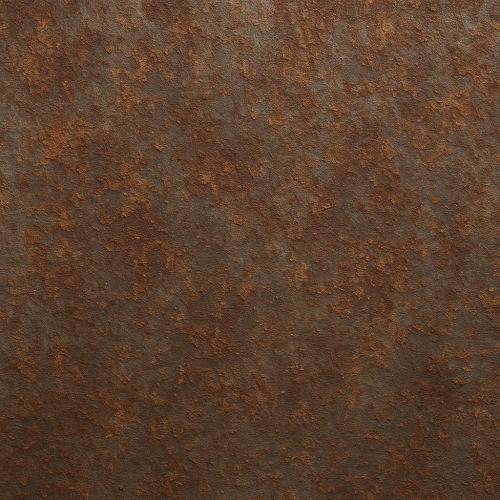
Rusted metal surfaces pose a compelling and complex challenge within physically based rendering (PBR) workflows, occupying a crucial niche in the pursuit of photorealism across diverse digital content creation domains. Whether in high-fidelity game environments, architectural visualization (archviz), or visual effects (VFX) pipelines, rust embodies a multifaceted visual phenomenon that demands a sophisticated approach to texturing. Unlike pristine metals that often exhibit relatively uniform reflectance and clear material boundaries, rusted metal surfaces are characterized by heterogeneous degradation patterns, intricate microstructural variances, and evolving optical properties. These attributes not only complicate their technical representation but also elevate their artistic importance, as rust communicates narrative cues—age, neglect, environmental exposure—and enhances the tactile authenticity of virtual assets.
At the heart of the challenge is the inherent complexity in the physical and chemical processes that generate rust, which translates into layered material heterogeneity at multiple scales. Rust is not a monolithic coating but a conglomeration of iron oxides and hydroxides, often interspersed with residual bare metal, varying degrees of corrosion, and deposits of dirt or moisture. This stratification manifests visually as nuanced color shifts, diverse roughness profiles, and intricate surface relief. Capturing these subtle interplays requires meticulous crafting of PBR texture sets, where each map—albedo, roughness, normal, ambient occlusion (AO), height, and metallic—must be carefully authored and calibrated to synergize realistically.
The albedo map of rusted metal is fundamentally different from that of fresh metal. Instead of uniform reflectance and specular coloration, rusted surfaces exhibit desaturated, often warm-toned hues ranging from deep reds and oranges to browns and muted yellows. These colors are spatially irregular and blend gradually into areas of exposed metal, demanding high-resolution detail and nuanced gradients to avoid visual repetition and artificiality. When authoring or acquiring albedo textures, it is essential to capture both the chromatic variation and the subtle translucency effects inherent in thin rust layers, which can influence subsurface scattering or light absorption at micro scales. Photogrammetry and high-resolution scanning of real-world rusted metal samples provide invaluable data for this purpose, but such acquisitions often require extensive post-processing to isolate diffuse color from baked lighting and shadows.
Roughness maps in rusted metal PBR workflows are equally critical, as they control the microfacet distribution that defines specular highlights and surface glossiness. Rust typically introduces a broad range of roughness values, from relatively smooth patches of oxidized metal to coarse, flaky deposits with high microsurface variance. Creating accurate roughness maps demands careful calibration against reference materials and iterative testing within rendering engines such as Unreal Engine or Blender’s Cycles/Eevee. These environments offer real-time feedback that is indispensable for tuning roughness to reflect the light scattering behavior of rust, ensuring that highlights appear appropriately diffuse and anisotropic where relevant. Moreover, roughness variations often correlate spatially with albedo changes, reinforcing the necessity of coherent texture layout and masking strategies.
Normal and height maps contribute significantly to the perceived depth and tactile realism of rusted metal surfaces. While normal maps encode micro-surface detail to influence shading and lighting interactions, height maps facilitate parallax and displacement effects, enhancing the illusion of three-dimensional corrosion. Generating these maps can involve either direct photogrammetric normals or procedural methods that simulate the pitted and flaky texture of rust. A critical technical consideration is maintaining a balance between detail fidelity and performance constraints, particularly in real-time applications. Excessive displacement can cause geometry distortion or increase draw calls, necessitating optimization strategies such as mipmapping, channel packing, or adaptive tessellation. Additionally, blending height with AO maps can improve shadowing in crevices, accentuating the depth of corrosion without incurring heavy computational costs.
The metallic map in rusted metal surfaces typically exhibits a binary or near-binary distribution: areas of intact metal have high metallic values, whereas rusted regions are non-metallic. However, this binary approach can oversimplify transitions where partial oxidation occurs, leading to visual artifacts or unnatural sharp boundaries. Advanced workflows may incorporate grayscale or gradient metallic maps to simulate intermediate oxidation states, enhancing the subtlety of surface transitions. This necessitates precise masking and layering techniques within texture authoring software such as Substance Painter or Quixel Mixer, where procedural generators and hand-painting can be combined to achieve naturalistic rust patterns.
Ambient occlusion maps, while often underappreciated, play a vital role in grounding rusted metal within its environment by simulating the self-shadowing effects caused by surface irregularities and micro-crevices. Given rust’s tendency to accumulate in recessed areas, AO maps must be carefully baked or generated to accentuate these zones without exaggerating shadowing that could flatten color dynamics. Integrating AO with roughness and height data during shader authoring can further enhance realism, especially under dynamic lighting conditions found in modern rendering engines.
A perennial challenge in creating rusted metal PBR textures lies in achieving seamless tiling without perceptible repetition or unnatural patterning. The organic, stochastic nature of rust growth defies simple tiling algorithms, requiring the introduction of micro-variation techniques to break uniformity. This can involve blending multiple texture layers with randomized offsets, incorporating noise functions, or leveraging procedural texturing systems native to engines like Unreal’s Material Editor or Blender’s node-based shaders. Proper calibration of tile scale relative to object size and camera distance is essential to maintain believable material scale and prevent the “fake” appearance often associated with repetitive rust patterns. Additionally, leveraging detail maps or secondary normal overlays can inject high-frequency variation that preserves realism at close inspection.
Optimization for real-time applications introduces further complexities. Rusted metal textures, due to their multi-layered detail and color complexity, can become resource-intensive. Strategies such as channel packing—combining metallic, roughness, and AO maps into a single texture—help reduce memory footprint and draw calls. Texture resolution must be judiciously selected based on asset importance and expected viewing distance, with mipmapping employed to maintain visual fidelity while minimizing aliasing. In offline rendering contexts like VFX or archviz, higher resolution and more elaborate displacement can be used, but efficient UV layout and texture streaming remain important to manage computational load.
Cross-engine calibration is another critical consideration. Different renderers interpret PBR inputs with subtle variations; for example, Unreal Engine’s metallic-roughness workflow includes specific energy conservation assumptions and Fresnel responses that may differ from Blender’s Principled BSDF shader implementation. Consequently, textures authored for one engine often require adjustment or reprocessing to achieve consistent appearance across platforms. This process benefits greatly from standardized reference materials and the use of industry-standard tools like Marmoset Toolbag or Substance Alchemist for previewing and iterating on materials under controlled lighting environments.
In summary, rusted metal surfaces occupy a uniquely demanding position in PBR texturing workflows, blending scientific accuracy with artistic interpretation. Their visual complexity arises from intricate color shifts, evolving roughness profiles, and layered surface geometry that must be cohesively represented across multiple texture maps. Mastery of these materials necessitates a robust understanding of physical material properties, proficiency in both photogrammetric acquisition and procedural authoring, and fluency with the technical constraints and capabilities of target rendering engines. By addressing the nuanced challenges of rust—its heterogeneity, scale-dependent detail, and environmental storytelling potential—artists and technical directors can unlock a vital dimension of realism and narrative depth in their digital creations.
Capturing high-fidelity reference material is fundamental to the creation of convincing, physically based rendering (PBR) textures for rusted metal surfaces. Unlike relatively uniform materials, rusted metal exhibits complex, heterogeneous patterns shaped by corrosion chemistry, environmental exposure, and substrate variations. Consequently, the acquisition process must embrace this complexity to inform accurate albedo, roughness, normal, ambient occlusion (AO), height, and metallic maps. The goal is to document the nuanced interplay of oxidation stages, surface pitting, and residual metal sheen while ensuring the data integrates seamlessly into the PBR workflow and real-time engines such as Unreal and Blender’s Eevee or Cycles rendering systems.
The initial step involves identifying diverse rust states across the same or similar metal substrates. Rusting progresses through a spectrum—from initial surface discoloration and light oxidation to deep, flaky corrosion and mineralized crusts. Capturing this continuum provides a rich dataset for authoring layered or blended textures that simulate micro-variation and wear progression. For example, early-stage rust might yield values in the roughness map that are only moderately elevated, while advanced rust zones demand higher roughness and altered albedo due to surface particulates and oxides reflecting light diffusely. Documenting these transitions is critical to avoid flat, repetitive tiling that breaks immersion.
Photographic reference acquisition benefits from controlled lighting environments when possible, but natural outdoor settings often provide the most authentic interaction of light and material. High dynamic range (HDR) photography is indispensable for this purpose, enabling capture of subtle tonal gradations in the rust’s albedo and the specular highlights of residual metal. Employing a polarizing filter helps reduce glare and reflections, revealing true surface color and texture detail. Additionally, capturing multiple exposures to create HDR images ensures that both shadowed crevices and bright metallic remnants are represented without clipping, which is crucial when deriving accurate base color and roughness information.
For photogrammetry, a technique increasingly favored for generating detailed normal, height, and AO maps, meticulous planning of capture angles and lighting consistency is paramount. Overlapping images, ideally with 60-80% coverage, allow dense point cloud reconstruction and fine geometric detail essential for representing the micro-geometry of rust pits, flakes, and raised oxides. To minimize shadows and specular artifacts that can confuse reconstruction algorithms, diffuse overcast lighting or use of portable diffusers is advisable. When shooting metallic surfaces, the unpredictable reflectance can introduce noise into the mesh and texture extraction; thus, varying the lighting angle slightly between shots can help the software differentiate surface features from reflections.
Calibration plays a vital role in ensuring that the captured data translates accurately into PBR texture maps. Color calibration targets should be included in the frame to correct white balance and exposure post-capture, maintaining consistent albedo values across different lighting conditions. Likewise, scale references are necessary to calibrate the photogrammetry output so that height and normal maps reflect physically plausible displacement magnitudes. Without this, the resulting textures risk appearing artificially exaggerated or muted when applied in 3D engines, disrupting the PBR principles where roughness and height correlate directly with microsurface geometry.
Once raw data is secured, the challenge moves to optimizing captures for seamless tiling and micro-variation. Rusted metal rarely exhibits perfectly repetitive patterns; instead, it is characterized by irregular patches of corrosion and residual metal. Stitching multiple photogrammetry scans or photographs into tileable textures requires careful blending to avoid visible seams or unnatural repetition. Techniques such as edge feathering, multi-directional offsetting, and overlaying noise or grunge masks can introduce subtle variances that mimic natural corrosion randomness. Additionally, authoring detail maps or micro-normal overlays derived from high-frequency scan data enhances the tactile feel of rust at close viewing distances without inflating texture resolution excessively.
In the context of PBR map authoring, the albedo map must isolate the diffuse color of rust and metal without baked shadows or highlights. This can be achieved by combining calibrated photographs with procedural or hand-painted corrections to remove lighting artifacts. The roughness map is particularly critical for rust, as the oxide layers scatter light diffusely, contrasting with the smoother metallic patches. Photogrammetry-derived height maps inform the normal maps, adding depth and relief to the surface. Ambient occlusion maps derived from the 3D scans can accentuate crevices and flaked regions, enhancing perceived depth in real-time engines. The metallic map is often binary or gradient-based, distinguishing between corroded oxidic areas (metallic = 0) and exposed metal (metallic = 1), although partial metallic values can simulate transitional zones where rust is thin or pitted.
Optimizing these textures for engines like Unreal or Blender requires balancing fidelity and performance. Unreal Engine’s material editor supports complex layered materials and tessellation, allowing height maps to influence surface displacement dynamically. However, excessive tessellation can be costly; thus, baking detailed normal maps from height data is often preferred for real-time applications. Blender’s PBR shader nodes allow similarly nuanced control, where the combination of roughness and metallic inputs governs the reflection model according to the Disney principled BSDF. Ensuring that maps are linearized appropriately and that roughness values align with engine expectations prevents discrepancies such as unnaturally glossy rust or overly matte metallic patches.
Practical tips include capturing reference images in RAW format to preserve maximum data fidelity and avoiding compression artifacts that can compromise texture quality. For photogrammetry, using high-resolution cameras with prime lenses minimizes distortion, while tripod stabilization ensures sharpness critical for high-frequency detail. Post-processing workflows should involve color correction, exposure normalization, and removal of lens artifacts before texture baking begins. Furthermore, when integrating scanned data into tiling textures, consider generating multiple texture sets to represent different corrosion stages, which can then be blended dynamically in-game through vertex painting or shader masks to simulate environmental effects like rain, dirt accumulation, or localized wear.
In summary, the acquisition and scanning of rusted metal reference material is a multifaceted process that demands attention to material heterogeneity, lighting conditions, calibration rigor, and optimization strategies. By embracing the full lifecycle of corrosion visually and geometrically, artists and technical directors can produce seamless, high-fidelity PBR textures that convincingly capture the chaotic beauty of rusted metal in both offline rendering and real-time engines. This foundation enables subsequent authoring stages to focus on refinement rather than reconstruction, ultimately elevating the realism and immersion of digital assets.
The creation of realistic rusted metal surfaces within a physically based rendering (PBR) workflow increasingly benefits from the integration of procedural and hybrid generation methods, marrying the strengths of algorithmic texturing with the fidelity of scanned data. This combined approach addresses the dual challenges of maintaining visual complexity at multiple scales and ensuring seamless tiling, while offering flexibility and scalability critical for production environments. For technical artists and texture authors, understanding and leveraging these methodologies enhances both the aesthetic quality and the efficiency of rust texture creation pipelines.
Procedural generation, in essence, harnesses mathematical functions, noise algorithms, and rule-based systems to produce textures that can be infinitely varied, seamlessly tiled, and parametrically adjusted. Traditional hand-painted or purely scanned rust textures often suffer from visible repetition or require extensive manual variation to avoid tiling artifacts, which can be time-consuming and resource-intensive. Procedural techniques mitigate these issues by enabling micro-variations—subtle changes in detail, color, and surface properties—across the texture’s expanse without the need for large, unique texture sets. This is particularly valuable for rust, whose natural formation is inherently stochastic and fractal in nature, spanning from large-scale corrosion patches to fine pitting and granular surface degradation.
The procedural pipeline typically begins with the generation of base masks that simulate the spatial distribution of rust patches and the underlying metal substrate. These masks can be created using fractal noise functions such as Perlin or Worley noise, or more sophisticated multi-octave noise combinations that mimic the organic clustering and eroded edges characteristic of rust. By controlling parameters such as frequency, lacunarity, and persistence, artists can simulate a wide variety of rust growth patterns—from sparse, flaky deposits to dense, crusty corrosion.
Once base masks are defined, the subsequent step involves layering and blending multiple PBR channels procedurally to represent the complex interplay of materials and surface conditions. The albedo map, for example, is generated by blending base metal hues—typically desaturated steel or iron tones—with rust colors ranging from ochre and burnt sienna to deep reddish-browns. This blending is modulated by the procedural masks, ensuring that rust deposits appear with irregular edges and color gradients, rather than flat, uniform patches.
Roughness maps benefit significantly from procedural detail, as rusted surfaces exhibit heterogeneous microfacets: flaky rust is generally rough and diffuse, while exposed metal areas can be smoother or even polished. Procedurally generated roughness variations, layered atop the base mask, help to break uniformity and enhance realism. Using noise textures with different scales, artists can simulate both large-scale roughness differentiation and micro-roughness variations that respond naturally to lighting.
Normal maps are often synthesized procedurally via height maps derived from noise and mask functions. This approach creates the illusion of surface relief associated with rust flakes and pitting without requiring high-poly geometry. Height maps, generated through fractal noise and edge detection filters from base masks, serve as inputs for normal map baking or direct conversion using tools like Substance Designer’s Normal node or Blender’s displacement-to-normal workflows. This procedural normal generation is essential for optimizing runtime performance, especially in real-time engines like Unreal Engine, where high-density mesh displacement is impractical.
Ambient occlusion (AO) maps complement this by simulating the self-shadowing effects caused by surface irregularities. Procedural AO can be approximated through curvature maps derived from height or normal data, accentuating crevices and edges where rust accumulation would naturally cast shadows. Hybrid workflows enhance this further by incorporating baked AO from scanned data, calibrated to blend seamlessly with the procedural AO to preserve fine detail and lighting coherence.
Metallic maps, while generally binary or near-binary for rusted metal, demand nuanced control in procedural systems. Rust is non-metallic, oxidized iron, thus its metallic value should be zero or near zero, while the underlying steel remains metallic. Procedural masks facilitate smooth transitions between these states, avoiding hard edges that undermine realism. This blending can be refined with scanned data to capture subtle corrosion gradients where oxidation is partial or layered.
Calibration of procedurally generated textures against reference scanned data is paramount to ensure physical plausibility and visual fidelity. Scanned rust textures—obtained via photogrammetry or surface scanning—offer high-resolution micro-variations in color, roughness, and microgeometry that are difficult to replicate purely procedurally. By integrating these scans as detail overlays or input masks, artists can inject authentic complexity into the procedural base. For example, a scanned normal map patch can be tiled and blended using procedural noise masks, providing localized detail without sacrificing seamless tiling.
Hybrid texturing workflows typically involve authoring base pattern masks and macro-variations procedurally, then layering scanned detail maps for micro-variations. This combination leverages the scalability of procedural methods while anchoring visual complexity in real-world data. In software like Substance Designer, this is achieved by importing scanned textures as bitmap inputs, which are then warped, normalized, and blended with procedural noise generators. The end result is a set of PBR maps—albedo, roughness, normal, AO, height, and metallic—that reflect the nuanced heterogeneity of rusted metal surfaces while maintaining tileability and efficient memory footprints.
Optimization is a critical consideration in these workflows. Procedural textures, while flexible, can be computationally expensive to generate in real time. Baking procedural outputs into texture maps during the authoring phase reduces runtime costs and facilitates compatibility across engines. For instance, in Unreal Engine, baked PBR textures are combined with material shaders that use vertex painting or masks to drive local variation, minimizing draw calls and memory bandwidth usage. Procedural masks can also be baked into grayscale textures to serve as opacity or blend masks within engine materials, enabling real-time layering of rust effects without recomputation.
Blender’s node-based shading system offers a similar procedural authoring environment, where noise textures, color ramps, and vector displacement nodes can be combined to generate detailed rust maps. Artists benefit from Blender’s real-time viewport preview and baking tools to iterate rapidly and export optimized texture sets. When integrating into game engines, it is advisable to calibrate texture resolution and mipmap bias carefully to preserve fine details without excessive VRAM consumption.
Practical tips for procedural and hybrid rust texture creation emphasize iterative calibration against photographic references and engine previews. Adjusting noise parameters to replicate specific rust growth patterns—such as pitting depth or flake size—requires balancing visual complexity with tileability. Seamless tiling is often achieved by using tileable noise functions or employing edge blending techniques to avoid visible seams. When incorporating scanned data, aligning the scale and orientation of details with procedural masks ensures coherent layering. Additionally, maintaining consistent physical units—such as real-world scale in height maps—facilitates accurate displacement and normal calculations, which are crucial for believable lighting and shadowing.
In summary, procedural and hybrid methods for rust texture creation empower texture authors with a dynamic toolbox for crafting physically plausible, richly detailed, and scalable PBR materials. By combining algorithmic noise generation with high-fidelity scanned data, artists can produce seamless rusted metal textures that retain micro-variations critical for realism, while optimizing for performance and flexibility across rendering engines like Unreal and Blender. This approach not only accelerates workflow efficiency but also elevates the visual authenticity of rusted surfaces in digital assets and environments.
FAQ
What is covered in this guide?
This guide explains Creating and Optimizing Seamless PBR Textures for Realistic Rusted Metal Surfaces with practical notes for seamless PBR materials, texture setup, and production use.
Can I use these texture techniques in Blender, Unreal Engine, and Unity?
Yes. The workflow focuses on standard PBR maps and tileable materials that can be used in Blender, Unreal Engine, Unity, archviz, games, and VFX pipelines.
Where can I find textures for this workflow?
Use the AITextured texture library and the related texture links on this page to find seamless PBR materials and preview them before download.
Related Textures
 Procedural Stamped Sidewalk Concrete PBR Texture
 Procedural Fine Asphalt Road PBR Texture
 Procedural Pitted Concrete PBR Texture
 Seamless Concrete Pebble PBR Texture in 4K Resolution
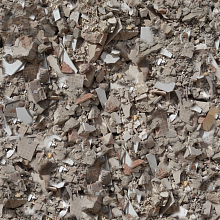 Seamless PBR Concrete Rubble Texture with Debris and Fragments
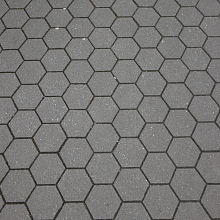 Seamless Hexagonal Concrete Tile PBR Texture 4K
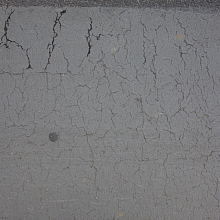 Cracked Asphalt Texture with Weathering