Mastering Vintage Halloween PBR Textures for Immersive 3D Environments
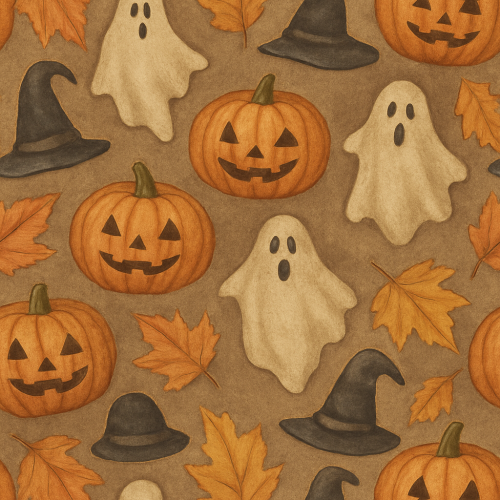
Acquiring authentic texture data for vintage Halloween-themed assets demands a rigorous approach that balances fidelity, practicality, and the unique challenges posed by aged, distressed surfaces. The objective is to capture the nuanced interplay of wear, patina, and material degradation while maintaining physically plausible rendering (PBR) workflows that ensure consistency within modern engines like Unreal Engine or Blender's Cycles. This process begins with selecting appropriate source materials—physical objects emblematic of vintage Halloween such as carved pumpkins, weathered lanterns, faded fabric, and cracked paint—and extends through meticulous capture, calibration, and optimization phases to yield textures that convey nostalgia without sacrificing technical rigor.
Photogrammetry stands as a cornerstone acquisition technique for vintage Halloween textures, primarily because it enables the capture of complex surface detail and spatial variation essential for convincing PBR shading. The process involves photographing an object from multiple angles under controlled lighting conditions to reconstruct a 3D model and derive texture maps. However, vintage Halloween props introduce specific challenges: their surfaces often exhibit irregular, non-uniform decay such as chipped paint, dirt accumulation, and subtle discoloration gradients. These characteristics demand high-resolution image capture to preserve fine micro-variations critical for convincing roughness and albedo maps.
When capturing such objects, diffuse lighting conditions are preferable to minimize harsh shadows and specular highlights that can contaminate albedo data. Using a light tent or diffusers helps achieve soft illumination, which is especially important for objects like pumpkins where surface subsurface scattering affects perceived color. For roughness and normal map extraction, it is crucial to capture subtle surface geometry variations; thus, the photographic setup must maximize detail without introducing noise from specular reflections. Polarizing filters can be employed to reduce unwanted glare, and cross-polarization techniques further isolate diffuse color information by filtering out specular components, enabling a cleaner albedo capture without baked-in highlights.
High-resolution scanning complements photogrammetry by providing precise surface geometry data, particularly useful when capturing intricate details on objects such as embossed lantern metalwork or the cracked surface of dried pumpkin skins. Structured light scanners or laser scanners offer sub-millimeter accuracy, which translates into high-fidelity normal and height maps critical for micro-variation in PBR workflows. However, these scanners often struggle with highly reflective or translucent materials, common in vintage Halloween props, necessitating pre-treatment with mattifying sprays or temporary coatings that can be removed post-scan. Additionally, the fragile nature of aged objects requires non-contact scanning methods to avoid damage.
Post-capture processing is integral to preserving the authenticity of vintage textures. The raw photogrammetry or scan data must be converted into a set of PBR maps: albedo, roughness, normal, ambient occlusion (AO), height, and, where applicable, metallic. The albedo map should be carefully calibrated to exclude lighting artifacts, ensuring neutral shading that accurately reflects the object's intrinsic color. This is often achieved by referencing color calibration charts included in the initial capture sequence and adjusting color curves accordingly in software like Substance Designer or Mari. For vintage Halloween objects, color calibration is particularly important because patina and discoloration contribute significantly to the nostalgic feel; thus, maintaining subtle color shifts without oversaturation or desaturation preserves the emotional impact of the texture.
Roughness maps require careful derivation from surface reflectance properties and micro-surface variations. The interplay of smooth, polished areas (for example, worn metal lantern handles) and rough, corroded patches (rust or dirt accumulation) must be captured with high dynamic range detail to inform physically plausible reflections in the engine. It is often necessary to blend data from multiple sources—photometric stereo captures, macro photographs, and height maps—to generate a roughness map that accurately represents this spatial variance.
Normal maps generated from high-resolution scans or photogrammetry-derived geometry provide the essential surface detail that informs lighting and shading in PBR workflows. For vintage Halloween assets, these normals must capture the subtle cracks, dents, and surface texture variations that define the aged aesthetic. Care should be taken during baking to avoid smoothing out these micro-details; using high subdivision levels and employing anti-aliasing filters judiciously helps retain crispness without introducing artifacts.
Ambient occlusion (AO) maps derived from baked geometry or ray-traced calculations help reinforce depth and shadowing within crevices, enhancing the perception of wear and grime accumulation. In vintage textures, AO also aids in simulating dirt and age-related shadowing effects, which are critical for the nostalgic feel. Careful blending of AO with albedo or roughness maps should be avoided to retain flexibility in the shader pipeline.
Height maps extracted from scan data or photogrammetry can be used for parallax occlusion mapping or displacement in real-time engines like Unreal Engine, adding an additional layer of depth beyond normal maps. For vintage Halloween textures, these height maps accentuate surface imperfections such as chipped paint around lantern edges or the uneven, slightly sunken pumpkin skin. Given performance considerations, these maps should be optimized for resolution and precision—often 8 or 16-bit grayscale textures suffice, balancing fidelity and memory footprint.
Metallic maps are less commonly applicable to vintage Halloween props, as many surfaces are non-metallic or heavily oxidized. However, certain elements such as tarnished lantern fittings or painted metal decorations may require subtle metallic values. These should be derived from reflectance properties observed during capture and carefully masked to avoid introducing unrealistic metallic reflections.
Tiling and micro-variation present additional considerations in vintage Halloween texture acquisition. While photogrammetry and scanning yield unique, high-fidelity textures, assets in a scene often require seamless or repeatable textures. Creating tileable versions of vintage textures involves carefully selecting regions of the captured data that can be blended to avoid obvious seams. Techniques such as edge-aware blending, cloning, and procedural noise addition help introduce micro-variation that prevents tiling artifacts. This is especially important for large surfaces like fabric or painted wood, where repetition can break immersion.
Calibration and optimization are imperative to ensure that the captured textures integrate seamlessly into PBR pipelines. After generating base maps, artists should verify the textures under physically accurate lighting conditions within their target engine environment. Unreal Engine’s Material Editor or Blender’s Shader Editor allow for iterative adjustments, such as tuning roughness response curves or normal map intensity, to match the desired aesthetic while maintaining physical plausibility. Performance optimization involves compressing textures using appropriate codecs (BC7 for albedo and roughness, BC5 for normals) and generating mipmaps that preserve detail at varying distances.
Practical tips for acquisition include adopting a modular pipeline where raw captures are archived alongside processed maps, enabling iterative refinement without redundant rescanning. Maintaining consistent capture metadata—camera settings, lighting conditions, calibration references—is essential for reproducibility and troubleshooting. Furthermore, combining photogrammetry with hand-painted detail work enhances the final textures, allowing artists to emphasize or de-emphasize specific vintage characteristics while retaining a grounded base.
In conclusion, acquiring vintage Halloween PBR textures is a complex interplay of precise capture methods, careful data calibration, and sophisticated texture authoring. The aged, distressed surfaces characteristic of vintage Halloween props demand high-resolution, nuanced acquisition techniques to preserve micro-variations and surface imperfections. By leveraging photogrammetry and high-resolution scanning, supplemented with rigorous post-processing and engine calibration, artists can create authentic, physically accurate textures that evoke nostalgia while seamlessly fitting within contemporary PBR workflows.
Creating authentic vintage Halloween PBR textures demands a careful synthesis of procedural generation techniques and photographic source materials, calibrated to evoke the nostalgic and eerie atmosphere characteristic of mid-20th century seasonal decorations. The key to success lies in balancing digital brushwork and layered procedural effects with high-quality photographic captures, resulting in textures that are visually rich, physically plausible, and optimized for real-time engines such as Unreal Engine or offline renderers like Blender’s Cycles.
The albedo or base color map serves as the foundation of any PBR texture set, and for vintage Halloween materials, it must reflect muted, slightly desaturated color schemes with subtle shifts in hue that recall faded pigments and retro printing processes. Photographic inputs often come from scans or high-resolution captures of worn paper, aged fabric, or distressed painted wood, which provide a natural variation in color and pattern. These source images require careful calibration: first, color-correct to ensure the base colors fall within a plausible range for vintage dyes, often leaning towards warm oranges, olive greens, and desaturated blacks. Avoid oversaturation or excessive contrast that would betray a modern source. Use calibrated color profiles and consistent lighting during capture to minimize post-processing guesswork.
Once the photographic base is established, procedural brushes and masks are applied to simulate the characteristic wear and tear of vintage materials. Digital brushwork in software like Substance Painter or Blender’s texture paint mode enables localized aging effects such as edge fading, ink bleeding, and subtle cracking. Procedural noise functions—Perlin noise, cellular patterns, or fractal variants—can generate distressed overlays that mimic ink degradation or fabric pilling. These procedural layers must be carefully tiled and blended with the photographic base to avoid obvious repetition, which breaks immersion. Employing micro-variation techniques, such as randomized brush strokes or layered noise with varying scales and intensities, enhances the naturalism of the wear.
Roughness maps are particularly critical in conveying the tactile feel of vintage Halloween props, which often comprise matte paper, chipped paint, or weathered plastic. Photographic roughness can be extracted from controlled lighting setups using cross-polarized photography or from image-based relighting tools, but these often need refinement. Procedural generation assists in defining roughness micro-variations across the surface: for example, edges and raised elements typically appear smoother due to wear or handling, while creases and cracks increase surface roughness. Leveraging curvature and ambient occlusion (AO) maps as masks to modulate roughness can automate this effect, enhancing believability. In Blender or Substance Designer, create curvature maps procedurally from the mesh or bake them from high-poly models, then blend procedural noise to yield complex roughness distributions.
Normal maps for vintage Halloween textures are often subtle but essential to imply the delicate surface details absent in albedo alone—such as paper grain, brush strokes, or embossed lettering. When photographic sources lack accompanying normal data, generate normal maps procedurally using height information derived from grayscale scans or manually painted height maps. Height maps can be digitally crafted with a combination of procedural patterns and hand-painted elements, mimicking the raised ink or embossed stickers commonly found on vintage packaging. Baking these height maps into normals offers a controlled way to fine-tune surface detail intensity, ensuring they read well under diverse lighting conditions without overpowering the subtlety of the albedo.
Ambient occlusion maps, often baked from the 3D model, play a pivotal role in grounding texture detail by simulating self-shadowing in crevices and folds. For vintage Halloween textures, AO maps are used not only for realistic shading but also as masks to enhance the perception of accumulated grime or dirt deposits in recesses. Combining baked AO with procedural dirt masks—created from noise functions with directional bias simulating gravity or handling patterns—adds depth and authenticity. This layered approach avoids flatness and reinforces the aged, neglected aesthetic.
Height maps, while sometimes overlooked, can be instrumental in achieving realistic displacement or parallax effects, especially for close-up shots in cinematic scenes or high-resolution real-time engines like Unreal Engine 5. For instance, simulating the subtle relief of cracked paint or embossed vintage typography benefits from carefully authored height maps. These can be derived from high-contrast photographic captures or procedurally generated with fractal noise and edge detection algorithms. When optimizing for real-time use, keep height map detail balanced to prevent excessive tessellation costs, and consider blending height with normal maps for more efficient detail representation.
Metallic maps are generally less relevant for vintage Halloween textures, as most materials are non-metallic—paper, fabric, plastics, and painted wood dominate. However, if metallic elements such as foil accents or fasteners appear in the asset, metallic maps must be precisely authored. Photographic reference images of tarnished or oxidized metal can guide the albedo and roughness input, while metallic values are binary or near-binary, reflecting the physical metalness. Procedural masks can introduce corrosion or wear effects on metallic surfaces, blending the metallic channel with roughness and height variations to convey aged patina.
Tiling and seamlessness are critical considerations when authoring vintage Halloween textures, especially for assets requiring large or repeated surfaces such as wallpaper, tablecloths, or cardboard boxes. Photographic sources rarely tile seamlessly out-of-the-box, necessitating careful editing in image processing software to remove hard edges and repeating patterns. Procedural generation excels here, as noise functions and pattern generators can produce infinite seamless variations or fill gaps between photographic patches. Techniques like edge padding, mirror tiling, and multi-scale blending help maintain visual continuity without obvious repetition. Micro-variation further masks tiling artifacts by overlaying subtle noise and pattern breaks at different scales.
Calibration between texture maps is essential to maintain physical plausibility and engine consistency. For example, the perceived roughness in the roughness map must correspond logically with the albedo’s visual gloss cues and the normal map’s surface detail. In Unreal Engine, utilizing the engine’s material editor to preview textures under different lighting environments facilitates iterative refinement. Adjust texture channels so that specular highlights and shadowing respond naturally, avoiding the “plastic” or “flat” look that often betrays amateur PBR workflows. In Blender’s shader editor, use principled BSDF shaders to simulate accurate subsurface scattering or translucency if applicable to vintage paper or fabric, further enhancing realism.
Optimization workflows depend heavily on the target platform and engine. Photographic textures should be downsized and compressed carefully to preserve key details without inflating memory budgets. Utilize mipmaps and anisotropic filtering to maintain sharpness at glancing angles. When procedural elements are baked into textures, consider baking them at multiple resolutions to support level-of-detail scaling in real-time engines. Blending procedural masks at runtime may be cost-prohibitive; baking them into maps allows for efficient rendering. For example, baking ambient occlusion and dirt masks into a single channel can save texture reads.
Finally, it is important to test vintage Halloween PBR textures in situ, under the specific lighting conditions of the scene. Halloween assets often appear in low-light environments with colored gels or flickering lights, which can dramatically affect color perception and surface reflectivity. Adjust texture parameters to ensure that roughness and normal details remain readable but not exaggerated under these conditions. Emulating subtle fluorescence or aged varnish via emissive or clearcoat channels can add additional atmospheric depth but must be employed sparingly to avoid breaking the vintage illusion.
In summary, the authoring of vintage Halloween PBR textures requires a precise interplay of photographic authenticity and procedural control. Through calibrated digital brushwork, layered procedural noise, and detailed map baking, artists can recreate the characteristic wear, faded colors, and tactile surfaces emblematic of vintage Halloween props. Maintaining physical consistency across albedo, roughness, normal, AO, and height maps ensures textures behave predictably under diverse lighting and rendering conditions, while optimization and tiling strategies enable practical deployment in both real-time and offline workflows. This hybrid approach harnesses the strengths of both photographic realism and procedural flexibility, yielding textures that convincingly transport viewers to the eerie nostalgia of a bygone Halloween era.
Creating physically based rendering (PBR) maps for vintage Halloween textures is a nuanced task that requires a careful synthesis of authentic material properties and the distinctive, often stylized aesthetic associated with the era. Achieving believable surfaces within a PBR workflow demands not only technical precision but also a thoughtful interpretation of how materials from the mid-20th century, such as aged paper, worn fabrics, chipped plastics, and oxidized metals, behave under light. Each PBR map—albedo, roughness, normal, ambient occlusion (AO), height, and where applicable, metallic—plays a crucial role in conveying the tactile essence of these materials, allowing the final render to evoke both the spooky thematic and the underlying physical reality.
Starting with the albedo or base color map, the primary challenge lies in capturing the desaturated, often muted color palettes characteristic of vintage Halloween props and decorations. Unlike contemporary textures that may favor saturated hues, vintage materials frequently exhibit color fading, staining, and uneven pigmentation due to age. To faithfully reproduce this, source material acquisition should focus on high-resolution, well-lit photographs taken under neutral daylight conditions to avoid color casts that could skew albedo calibration. When authoring the albedo map, it is critical to avoid baked-in shadows or highlights, as these should be handled separately by other PBR maps. Instead, the albedo should represent the diffuse reflectance of the material alone, often requiring careful retouching to neutralize uneven lighting while preserving subtle color variations such as yellowing paper edges, faded paint chips, or discoloration from oxidation.
Tiling vintage Halloween textures demands special attention to micro-variation and pattern irregularities. Unlike modern production textures, which often lean on seamless tiling, vintage materials inherently feature imperfections, stains, and wear marks that resist perfect repetition. To maintain authenticity, it is advisable to incorporate randomized overlays or procedural noise during the texturing phase, breaking up pattern repetition without compromising the overall look. This approach helps avoid the telltale artificiality of tiled textures while preserving the material’s characteristic aging details.
The roughness map is equally vital for communicating material wear and surface quality. Vintage Halloween objects frequently display a complex interplay of rough and smooth areas—for instance, a glossy varnish layer cracking to reveal matte paper underneath, or plastic pumpkin masks with surface scuffs and grime accumulation. When authoring roughness, it is important to capture these nuanced variations by sampling real-world reference materials and translating them into grayscale maps where white represents maximum roughness (diffuse reflection) and black conveys smooth, specular surfaces. Utilizing high dynamic range (HDR) photogrammetry or glossiness captures can greatly aid in generating accurate roughness maps, especially when combined with manual adjustments to emphasize features like peeling paint or dust accumulation. Calibration here involves iterative testing in your rendering engine—Unreal Engine or Blender's Eevee/Cycles—to ensure that the roughness values reproduce believable specular highlights and subtle anisotropy without appearing artificially uniform or overly glossy.
Normal maps for vintage Halloween textures require a balance between subtle surface details and pronounced relief, preserving the tactile feel of materials ranging from coarse fabrics to embossed cardboard. While high-frequency details such as fabric weave or paper grain can be baked or generated procedurally, mid-frequency features—like creases, cracks, or embossed logos—should be carefully modeled or scanned to produce normal maps that contribute to the overall material authenticity. When authoring these maps, consider using a combination of photogrammetry-derived height data and hand-painted details to enhance micro-geometry. This blend ensures that the normals respond correctly to lighting, emphasizing the roughness and depth variations crucial for rendering aged, tactile surfaces. In engines like Unreal, normal maps should be calibrated to conform to the engine’s normal space conventions (usually OpenGL or DirectX), and compression artifacts must be minimized to preserve detail fidelity.
Ambient occlusion maps are indispensable for enhancing perceived depth and contact shadows within vintage Halloween textures. Given that many vintage materials feature subtle crevices and worn edges—think of the folds in an old costume or the inset seams of a carved pumpkin—AO maps should be generated using high-resolution mesh baking or software like xNormal or Substance Painter. The AO map must be integrated carefully, often multiplied with the albedo or as a separate input in the shader, to avoid overly darkening the base color. An effective AO map in this context accentuates the aged feel by simulating dirt buildup or shadowing in recessed areas without losing the material’s overall brightness or color integrity. When optimizing, consider using a single-channel AO map if the target engine supports it, reducing texture memory while maintaining visual quality.
Height maps, although sometimes overlooked, can significantly enhance the realism of vintage Halloween textures, especially when used in parallax occlusion mapping or displacement workflows. Height information derived from photogrammetry or sculpted high-poly meshes can capture subtle surface undulations such as paper wrinkles, embossed card stock, or chipped plastic edges. Care must be taken to calibrate the height map’s intensity to avoid exaggerated displacement that can break silhouette or cause artifacts in real-time engines. In Blender, height maps can be directly connected to displacement nodes in Cycles, allowing for fine-tuning of surface relief, while in Unreal Engine, height maps can drive tessellation or screen-space displacement, though performance budgets must be considered. For optimization, height maps should be compressed with lossless or high-quality settings to preserve depth accuracy, especially where parallax effects significantly contribute to material perception.
The metallic map is rarely applicable to most vintage Halloween textures, as many materials involved—paper, fabric, plastic—do not possess metallic properties. However, certain decorative elements such as foil accents, metallic paints, or aged metal fixtures may require a metallic channel. When present, the metallic map should be a binary or near-binary grayscale image, where white represents true metal surfaces and black signifies dielectric materials. Careful masking and blending are necessary to avoid metallic bleed into non-metallic areas, which would disrupt the energy-conserving nature of PBR shading. For vintage metal surfaces, additional care must be given to integrate roughness and AO maps to simulate patina, rust, or oxidation, enhancing the aged metallic look without compromising physical accuracy.
Throughout the texturing process, calibration and iterative testing in the target rendering engine are paramount. Vintage Halloween textures often rely on subtlety—minor variations in roughness or specular response can drastically affect the perceived material authenticity. Artists should establish a baseline lighting setup that mimics typical indoor or twilight conditions found in Halloween scenes, enabling accurate assessment of how textures respond to point lights, emissive glows, and ambient illumination. Unreal Engine’s material editor provides robust tools for previewing textures under adjustable lighting and can simulate subsurface scattering or translucency effects that are relevant for materials like thin paper or fabric. Blender’s viewport shading modes, particularly Eevee with HDR environment maps, offer quick iteration cycles to evaluate roughness and normal map fidelity.
Optimization strategies should also be factored in early. Vintage Halloween projects often require large texture sets to cover varied props and environments, so channel packing—combining AO, roughness, and metallic maps into separate RGB channels of a single texture—can reduce texture fetch costs without sacrificing quality. Additionally, leveraging mipmapping with appropriately generated LOD textures prevents texture aliasing and maintains visual fidelity at varying distances. Procedural detail blending can be employed to introduce micro-variation dynamically, reducing the need for large tiled textures and improving memory efficiency.
In conclusion, creating PBR maps for vintage Halloween textures is a complex interplay of precise material capture, artistic interpretation, and technical rigor. By focusing on accurate albedo capture that respects the faded, stained color palettes; carefully authored roughness maps that reflect material wear; normal maps that emphasize tactile detail; and AO and height maps that deepen realism, artists can produce textures that convincingly blend the eerie charm of vintage Halloween aesthetics with the physically accurate light responses demanded by modern PBR workflows. Calibration within real-time engines like Unreal and Blender’s Cycles ensures these maps function cohesively, delivering immersive, believable surfaces that support both artistic vision and technical performance.
FAQ
What is covered in this guide?
This guide explains Mastering Vintage Halloween PBR Textures for Immersive 3D Environments with practical notes for seamless PBR materials, texture setup, and production use.
Can I use these texture techniques in Blender, Unreal Engine, and Unity?
Yes. The workflow focuses on standard PBR maps and tileable materials that can be used in Blender, Unreal Engine, Unity, archviz, games, and VFX pipelines.
Where can I find textures for this workflow?
Use the AITextured texture library and the related texture links on this page to find seamless PBR materials and preview them before download.
Related Textures
 Procedural Dark Tree Bark PBR Texture
 Procedural Aged Oak Plank PBR Texture
 Seamless PBR Wood Planks Texture Featuring Natural Grain in 4K
 Seamless Wooden Facade PBR Texture in 4K Resolution
 Rustic Aged Wood Planks Texture for 3D Modeling and Rendering
 PBR Texture of Vertical Wooden Planks Wall
 Seamless PBR Wood Texture Featuring Vertical Natural Grain Patterns
 Natural Wood Logs Texture with Snow for 3D PBR