Expert Guide to Birthday PBR Textures for Games Archviz and VFX
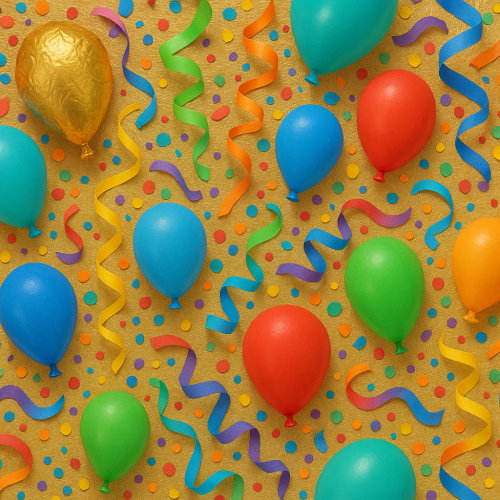
The category of Birthday PBR textures occupies a distinct and increasingly vital niche within the broader spectrum of physically based rendering workflows, especially when the goal is to craft environments imbued with a sense of celebration, warmth, and visual dynamism. Unlike generic or naturalistic materials, birthday-themed assets demand a nuanced approach to texture authoring that balances vivid color fidelity, intricate surface details, and plausible material responses under varied lighting conditions. This category encompasses a broad array of assets, ranging from decorative elements such as balloons, streamers, confetti, and wrapping paper to surfaces like frosting on cakes, gift ribbons, and party hats. Each of these materials presents unique challenges and opportunities for PBR texturing, requiring careful consideration of their physical properties and visual characteristics to achieve convincing and immersive renderings in real-time engines or offline renders.
Central to the creation of Birthday PBR textures is a robust understanding of the core texture maps that constitute a complete PBR workflow. The albedo or base color map must capture the vibrant hues and patterns typical of celebratory materials without introducing unwanted lighting information. For instance, party streamers and wrapping papers often feature saturated colors and complex patterns that must be represented accurately while maintaining a neutral response to lighting. This necessitates careful calibration during texture acquisition, often involving high-quality photographic capture under controlled lighting to avoid baked-in shadows or specular highlights. When authoring these textures digitally or enhancing scanned data, artists must ensure that the albedo retains color consistency across a variety of lighting scenarios, a process that can involve color profiling and the use of reference color charts during capture.
The roughness map plays a pivotal role in defining the tactile qualities of birthday materials, influencing how light scatters across surfaces. Consider the contrast between the matte finish of a paper invitation versus the glossy sheen of a balloon or the semi-translucent, slightly rough texture of frosting. Capturing this spectrum requires precise roughness calibration. For example, wrapping paper textures typically exhibit low roughness with occasional micro-variations where embossing or creases occur, while balloons and plastic party hats demand sharper specular highlights indicative of smoother surfaces. Generating roughness maps involves both empirical observation and procedural refinement, often combining photographic data with hand-painted masks to emphasize surface irregularities such as fingerprints, crinkles, or frosting swirls. These micro-variations are crucial for preventing the surfaces from appearing unnaturally uniform, especially under dynamic lighting in engines like Unreal Engine or Blender's Eevee and Cycles.
Normal maps further enhance the realism of Birthday PBR textures by simulating fine geometric details without increasing mesh complexity. For instance, the subtle embossing on a greeting card, the weave of a fabric party hat, or the bubbles and frosting ridges on a cake can be convincingly represented through carefully crafted normal maps. These maps are often derived from high-resolution scans of physical samples or sculpted digitally in software such as ZBrush or Substance Painter. When authoring normal maps, it is important to maintain consistency in the tangent space relative to the models they will be applied to, ensuring that the lighting response remains coherent. Additionally, the amplitude of normal map details should be adjusted to prevent exaggerated surface deformations that may break immersion, especially in close-up shots common in VFX or archviz scenes.
Ambient occlusion (AO) maps contribute significantly to the perception of depth and contact shadows in Birthday scenes, where overlapping decorations and detailed geometry are prevalent. AO maps are typically baked from high-poly models but can also be augmented with procedural techniques to emphasize crevices and layering effects, such as the overlap of ribbons or the folds in wrapping paper. In PBR workflows, AO is often multiplied with the base color or integrated as a separate mask controlling indirect lighting. Care must be taken to prevent AO maps from darkening areas excessively, which can flatten color vibrancy—a critical factor in birthday-themed assets that rely on bright, cheerful palettes.
Height maps or displacement maps provide an additional layer of realism by enabling subtle surface offsets that normal maps alone cannot replicate. In the context of Birthday PBR textures, height maps are invaluable for simulating features like embossed patterns on invitations, the layered icing on cakes, or the textured surfaces of party hats and gift ribbons. While real-time engines may limit the extent of displacement due to performance constraints, height maps can be leveraged for parallax occlusion mapping or tessellation in engines like Unreal Engine, enhancing the perceived depth without heavy geometry costs. When authoring height maps, it is essential to maintain a calibrated scale relative to the model’s UV layout to avoid unnatural exaggerations that break scale coherence.
The metallic map is less frequently utilized within Birthday PBR textures, as most assets in this category tend to be non-metallic by nature—paper, plastic, fabric, and edible materials dominate the palette. However, certain decorative elements such as foil wrapping paper, metallic ribbons, or glitter effects can benefit from a metallic map to accurately represent their reflective properties. In these cases, a binary or gradient metallic map can be employed alongside finely tuned roughness maps to simulate the specular behavior of metals without compromising the overall material balance.
Acquisition and authoring of Birthday PBR textures often begin with high-resolution photographic capture of real-world samples under controlled lighting conditions to minimize shadows and highlights baked into the base color. This process is commonly supplemented with photogrammetry or structured-light scanning for complex objects like cakes or balloons, allowing the capture of both color and geometric detail. Post-capture processing involves channel separation, color correction, and map generation through software such as Substance Designer or Quixel Mixer. When working procedurally, artists can simulate the intricate patterns and micro-variations inherent to birthday materials, using noise generators and mask layering to create believable imperfections like wrinkles, fingerprints, or frosting textures.
Tiling and seamlessness are important considerations for Birthday PBR textures, especially when applied to surfaces that require repetition, such as tablecloths, wrapping paper, or wall decorations. Creating tileable textures involves careful edge blending, pattern repetition avoidance, and the introduction of subtle variation to prevent obvious seams in rendered scenes. Micro-variation is particularly crucial in this regard; subtle changes in color, roughness, and normal map detail across tiled units prevent uniformity and enhance realism. This can be achieved by layering procedural noise or manually offsetting pattern elements during authoring.
Calibration of Birthday PBR textures involves rigorous testing across different lighting models and rendering engines to ensure material fidelity. Since birthday assets often appear in diverse environments—from brightly lit party rooms to dimly illuminated evening scenes—textures must respond predictably to both direct and indirect lighting. Artists should validate their textures in physically based renderers like Unreal Engine’s Lumen or Blender’s Cycles, adjusting roughness and metallic values to maintain consistent appearance. Utilizing engine-specific shader parameters, such as Unreal’s Material Instances, allows for fine-tuning without altering the base texture maps, facilitating iterative adjustments during scene assembly.
Optimization is another critical aspect, given the potentially high texture count in detailed birthday scenes. Efficient UV layouts, judicious use of texture resolution, and the combination of multiple material channels into packed textures (e.g., roughness, metallic, and AO in a single map) help minimize memory usage and improve runtime performance. Leveraging mipmapping and anisotropic filtering settings in engines further enhances visual quality while managing resource consumption. In scenarios where performance budgets are tight, artists may prioritize normal and roughness detail over high-resolution albedo maps, relying on engine lighting to convey material nuances.
Practical tips for integrating Birthday PBR textures into projects include maintaining consistent scale across textures to avoid mismatches in pattern size, ensuring proper gamma correction when importing textures into engines, and utilizing engine-specific features such as Unreal Engine’s virtual texturing or Blender’s texture baking workflows to streamline asset integration. Additionally, artists should consider the interplay between textures and scene lighting, as birthday materials often involve complex reflective and refractive properties (e.g., translucent balloons or glossy frosting), necessitating careful shader setup and potential use of subsurface scattering or translucency parameters.
In summary, Birthday PBR textures represent a specialized but richly rewarding domain within material authoring, demanding precise attention to the physical and visual attributes of celebratory materials. Their successful integration hinges on a comprehensive PBR workflow that encompasses accurate albedo capture, nuanced roughness and normal detailing, effective use of AO and height maps, and thoughtful optimization tailored to the target rendering environment. Mastery of these elements enables 3D artists and technical directors to create lively, festive scenes that resonate with authenticity and immersive detail across games, architectural visualization, and visual effects pipelines.
Capturing authentic birthday-themed PBR textures—encompassing elements like balloons, ribbons, and confetti—demands a nuanced approach to acquisition, balancing the challenges posed by their diverse material properties and the stringent requirements of physically based rendering workflows. Achieving accurate albedo, roughness, normal, ambient occlusion, height, and metallic maps begins with meticulous data capture, often leveraging a combination of high-resolution scanning and photogrammetry to replicate the intricacies of these celebratory objects in digital form.
High-resolution scanning remains a foundational technique for acquiring surface detail, particularly when dealing with materials that have relatively stable reflectance characteristics, such as matte ribbons or paper-based confetti. Structured light scanners or laser scanners can generate dense point clouds and high-fidelity normal information that underpin detailed normal and height maps. However, many birthday elements—especially balloons—present significant challenges due to their translucent, specular, and often anisotropic surfaces. Balloons typically combine a thin plastic film with complex subsurface scattering, specular highlights, and sometimes faint translucency, making standard scanning techniques prone to noisy data or inaccurate reflectance captures.
To address these issues, photogrammetry offers a complementary or alternative path. By capturing multiple high-resolution photographs under controlled lighting conditions, photogrammetry pipelines reconstruct geometry and texture maps by analyzing parallax and shading cues. For balloons and similarly challenging materials, employing polarized light filters on both the camera lens and light sources can dramatically reduce specular reflections that obscure texture detail. Additionally, cross-polarization techniques help isolate diffuse albedo by subtracting specular components, a critical step for generating clean base color maps free from lighting artifacts. This is essential for PBR workflows where albedo maps must represent the true diffuse reflectance without baked-in highlights.
Confetti and ribbons, while less reflective than balloons, often require capturing subtle micro-variation in surface roughness and small-scale geometry to avoid flat-looking textures in rendering engines. Close-range photogrammetry with macro lenses can reveal fine creases, fiber structures, and paper grain, all of which translate into more convincing roughness and normal maps. When working with ribbons—often satin or silk-like materials—the interplay of anisotropic roughness and directional specular highlights becomes paramount. Here, careful manual calibration during texture authoring is often necessary, using reference photographs to tweak roughness and anisotropy parameters so that the final maps behave realistically under dynamic lighting in engines like Unreal Engine or Blender’s Eevee and Cycles.
Calibration is a critical step that bridges acquisition and final texture authoring. Before beginning scans or photogrammetry, it’s advisable to perform color calibration with standardized color charts (such as X-Rite ColorChecker) to ensure consistent and accurate albedo capture across varying lighting conditions. This step minimizes color shifts and ensures that the base color maps are physically plausible within PBR frameworks. Similarly, including a reference gloss or roughness target in the capture setup enables empirical calibration of roughness maps, anchoring them to real-world material properties. Without such calibration, roughness textures risk being either too smooth—leading to unrealistic mirror-like reflections—or excessively rough, which flattens specular response and reduces material fidelity.
One of the more complex aspects of birthday texture acquisition is dealing with translucency and subsurface scattering, particularly for thin plastic balloons. Since standard photogrammetry and scanning capture surface geometry and reflectance but not light transmission, approximating these effects requires creative authoring. Subsurface scattering is typically handled in the shader rather than the texture maps themselves, but acquisition can inform the parameters. For instance, capturing backlit photographs reveals translucency variations and local thickness differences, which can be encoded into height or thickness maps. These maps can then drive subsurface scattering weights in the engine, enhancing realism without the need for complex volumetric captures.
Tiling and optimization considerations also play a vital role, especially when birthday textures are applied to large scenes or repeated assets. For example, confetti textures often require seamless tiling to cover tables or floors without obvious repetition. Achieving this involves careful authoring of albedo and roughness maps to avoid visible seams, while normal and height maps benefit from blending techniques such as edge mirroring or procedural noise overlays to break uniformity. Micro-variation is introduced through layered procedural detail or baked detail maps derived from high-frequency scan data, which can be combined with lower-resolution tiled textures to maintain visual interest at varying distances.
In terms of workflow integration, the captured and processed textures must be optimized for real-time engines like Unreal Engine or content creation suites like Blender. Unreal Engine, for instance, benefits from using texture compression formats such as BC7 for albedo and BC5 for normal maps, preserving detail while reducing memory footprint. The engine’s physically based shading models depend heavily on correctly linearized albedo data and perceptually mapped roughness values; thus, end-to-end color space management—from capture through authoring to engine import—is mandatory. In Blender, the Cycles renderer’s path-tracing capabilities allow for more physically accurate subsurface scattering and anisotropic reflections, making it an excellent platform for test renders and material validation before real-time deployment.
Lastly, practical tips for acquisition include stabilizing and controlling the lighting environment to minimize shadows and specular hotspots that complicate texture extraction. Diffuse dome lighting or light tents can provide uniform illumination for capturing flat materials like ribbons and confetti, while directional lighting combined with cross-polarization is preferable for reflective and translucent objects. Multiple exposure captures can be HDR merged to preserve highlight and shadow detail, essential for generating accurate roughness and AO maps. Additionally, post-processing steps such as retouching the albedo maps to remove residual lighting effects, normal map correction to fix scanning artifacts, and ambient occlusion baking onto height maps ensure that the final PBR textures deliver consistent, believable results across different rendering contexts.
In summary, acquiring birthday-themed PBR textures demands a hybridized approach that leverages the strengths of high-resolution scanning and photogrammetry, augmented by meticulous calibration and authoring tailored to the unique optical properties of balloons, ribbons, and confetti. Addressing the challenges of translucency, anisotropy, and reflectivity through controlled lighting, polarization, and careful data processing ensures that the resulting texture maps integrate seamlessly into modern PBR workflows, enabling realistic reproduction of these festive materials in both offline and real-time rendering environments.
Procedural and photographic authoring workflows each bring distinct advantages to the creation of birthday-themed PBR textures, particularly when addressing common motifs such as polka dots, stripes, and festive backdrops or gift wrap. Mastering the integration of these techniques enables a versatile and efficient pipeline that balances pattern precision, surface realism, and engine performance.
Procedural generation excels at producing perfectly tileable, customizable patterns like polka dots or stripes with parametric control over scale, spacing, color variation, and edge sharpness. Within a PBR context, these patterns often serve as the base color (albedo) input but must be complemented by physically plausible maps to achieve believable materials. For instance, a polka dot gift wrap might require subtle variations in roughness to simulate the difference between matte paper areas and glossy printed dots. Procedural tools such as Substance Designer or Blender’s node-based shading system allow you to generate these maps coherently from a single graph or shader network. By defining the pattern through mathematical functions, you maintain perfect tiling without visible seams, ensuring that large surfaces like walls or roll lengths of wrapping paper do not reveal repetition artifacts.
When authoring these procedural patterns, it is critical to maintain accurate color calibration and physical plausibility. The albedo should avoid baked-in shadows or highlights, adhering to the principles of diffuse reflectance. This can be achieved by isolating the pattern’s color information from any lighting or ambient occlusion baked into the texture. Procedural workflows simplify this segregation, as you generate each map explicitly; for example, you can produce a roughness map where the dots are glossier than the surrounding paper, or modulate height maps to simulate slight embossing of printed elements. This micro-variation in roughness and height enhances realism by introducing subtle light interactions beyond a flat color.
Normal maps derived procedurally from height information can be directly integrated into the shader graph, allowing fine-tuned control over surface detail. For instance, stripes on a gift wrap might appear subtly embossed or debossed, requiring accurate height-to-normal conversions and careful adjustment of intensity to avoid exaggerated surface distortion. Ambient occlusion (AO) maps can be generated procedurally as well, simulating the soft shadowing around pattern edges or folds in the paper. However, AO maps created procedurally lack the nuanced shadows cast by real-world imperfections, which is where photographic approaches complement procedural work.
Photographic authoring workflows provide high-fidelity surface detail that is difficult to replicate procedurally, particularly when capturing the fine grain, fiber texture, or subtle surface imperfections of paper or fabric materials used in birthday decorations. High-resolution scans or macro photographs under controlled lighting conditions are essential for acquiring base color, roughness, normal, and height data. Using photogrammetry or flatbed scanning with varied lighting angles, you can extract detailed height and normal maps that capture micro-surface undulations, creases, and paper grain. These details are crucial for breaking up otherwise uniform procedural patterns and infusing realism.
When photographing materials, it is vital to calibrate the capture setup meticulously. Consistent exposure, white balance, and lighting angles ensure that maps derived from the images align physically with PBR principles. For example, capturing a diffuse albedo pass under diffuse lighting conditions reduces baked-in shadows, while a separate specular or roughness pass can be obtained through cross-polarized photography or controlled specular highlight captures. Height maps can be generated via photometric stereo techniques or from displacement data acquired through focus stacking. Photographic AO maps obtained through ambient occlusion baking on 3D scans or through indirect lighting captures add dimensionality but should be treated as multiplicative rather than additive in the shader to avoid over-darkening.
Combining these photographic details with procedural patterns allows for enhanced flexibility and quality. One effective approach involves using procedural masks to define pattern regions and then blending photographic detail maps into these regions selectively. For example, a procedural polka dot pattern can serve as a mask to drive the blending between a base photographic paper texture and more reflective, smoother photographic maps for the dots themselves. This layered approach ensures that large uniform areas retain realistic surface noise and fibers from photographs, while the pattern remains crisp and customizable procedurally.
In terms of tiling, photographic textures often require careful edge cleanup or the use of cloning and healing tools to tile seamlessly, which can be time-consuming. Procedural patterns circumvent this issue entirely, providing infinite, perfect tiling. Therefore, when integrating photographic detail, it is advisable to use small-scale detail maps (such as micro-normal or detail roughness maps) tiled at a higher frequency than the pattern itself, which remains procedural. This multi-scale tiling strategy prevents visible seams while maintaining surface complexity.
Optimization is another critical consideration when merging procedural and photographic assets. Procedural shaders can be computationally intensive, particularly if they involve complex noise functions or high-frequency detail generation. Pre-baking procedural outputs into tiled texture atlases for use in real-time engines like Unreal Engine can significantly reduce runtime overhead. Unreal’s material editor facilitates blending procedural masks with baked detail textures, allowing artists to leverage the engine’s texture streaming and mipmapping features for performance gains. Similarly, Blender’s shader nodes support baking procedural maps into textures, which can then be refined or combined with photographic maps in external tools.
Micro-variation is essential to avoid pattern repetition and artificiality, especially on large surfaces like gift wrap or party backdrops. Procedural noise layers can be introduced subtly to modulate roughness or height maps, simulating the natural inconsistencies of printed materials. When combined with photographic imperfections such as creases or fingerprints captured in the source images, this approach yields a convincing tactile quality. It is important to balance such noise so it does not overpower the primary pattern or introduce visual artifacts.
Calibration between photographic and procedural maps must ensure consistent scale and tone. When mixing these inputs, matching the spatial scale of photographic detail with the procedural pattern’s frequency avoids visual dissonance. Color grading tools can harmonize albedo maps, while roughness and normal intensities should be matched through iterative shader previews within the engine or authoring environment. Using physically based reference materials during calibration helps maintain realism.
In practice, a recommended workflow begins with capturing high-quality photographic base materials of the birthday-themed surface in controlled lighting, extracting and calibrating the PBR maps. Concurrently, procedural pattern graphs are developed to define the polka dots, stripes, or other motifs parametrically. These procedural outputs are then baked or exported as tiled masks or pattern maps and layered onto the photographic base textures within the shader network or a texturing application. Subsequent addition of procedural micro-variation and fine-tuning of roughness and height ensures the final material exhibits both design flexibility and physically accurate surface interaction.
In summary, leveraging procedural generation for pattern creation alongside photographic acquisition of surface details forms a robust methodology for crafting birthday-themed PBR textures. This hybrid workflow maximizes creative control, physical accuracy, and performance, enabling artists to produce seamless, realistic materials that respond convincingly under varied lighting conditions in engines such as Unreal or renderers within Blender. The integration of parametric patterns with real-world imperfections yields a tactile richness essential for immersive and believable digital celebrations.
FAQ
What is covered in this guide?
This guide explains Expert Guide to Birthday PBR Textures for Games Archviz and VFX with practical notes for seamless PBR materials, texture setup, and production use.
Can I use these texture techniques in Blender, Unreal Engine, and Unity?
Yes. The workflow focuses on standard PBR maps and tileable materials that can be used in Blender, Unreal Engine, Unity, archviz, games, and VFX pipelines.
Where can I find textures for this workflow?
Use the AITextured texture library and the related texture links on this page to find seamless PBR materials and preview them before download.
Related Textures
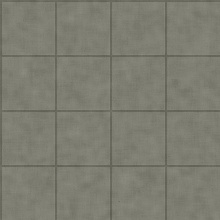 Procedural Stamped Sidewalk Concrete PBR Texture
 Procedural Fine Asphalt Road PBR Texture
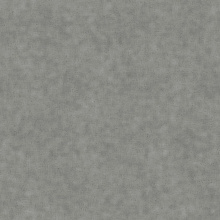 Procedural Pitted Concrete PBR Texture
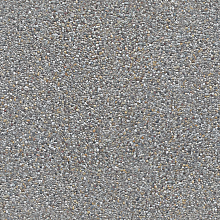 Seamless Concrete Pebble PBR Texture in 4K Resolution
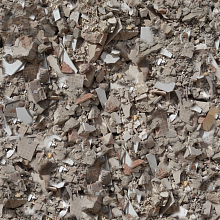 Seamless PBR Concrete Rubble Texture with Debris and Fragments
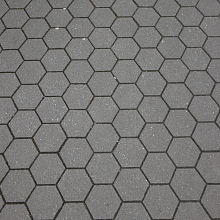 Seamless Hexagonal Concrete Tile PBR Texture 4K
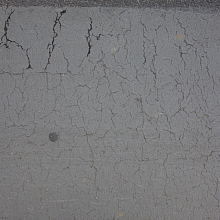 Cracked Asphalt Texture with Weathering