Comprehensive Workflow for Creating Seamless PBR Textures from Natural Stone Variants
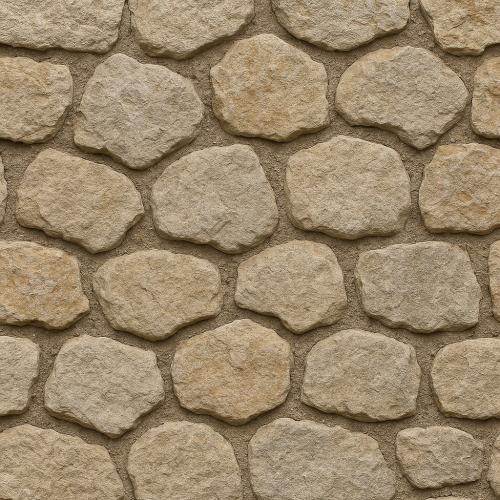
Natural stone occupies a pivotal role in photorealistic 3D projects, particularly in architectural visualizations, game environments, and virtual heritage reconstructions. Its intrinsic complexity and visual richness make it both a compelling subject and a challenging material to capture accurately within physically based rendering (PBR) workflows. Unlike synthetic or highly controlled surfaces, natural stone exhibits a broad spectrum of optical and tactile characteristics that demand meticulous consideration during texture acquisition and authoring. Understanding this complexity is critical for technical artists and texture developers aiming to produce seamless, versatile PBR stone materials that stand up to close inspection and diverse lighting scenarios.
At the core of natural stone’s appeal is its heterogeneity. Geological processes forge an immense variety of stone types—granite, marble, limestone, sandstone, slate, basalt, and many more—each with distinct mineral compositions, grain structures, and weathering patterns. This diversity translates into unique textural features and physical properties influencing PBR texture creation. For instance, granites tend to exhibit coarse, randomly distributed mineral grains with varying albedo and sub-surface scattering characteristics, whereas marble typically features smoother veining patterns with subtle translucency and lower roughness. Sandstones often show granular, porous surfaces with high micro-roughness and intricate ambient occlusion profiles due to their small-scale cavities. Capturing these nuances requires a tailored approach to data acquisition and map generation, ensuring that the resulting textures accurately encode the material’s real-world behavior under a range of lighting conditions.
The foundational PBR maps—albedo, roughness, normal, ambient occlusion (AO), height, and metallic—must be carefully derived to represent these stone-specific attributes faithfully. The albedo map should reflect the inherent color variation without baked-in shadows or lighting, preserving the stone’s base pigmentation and veining. Achieving a neutral albedo often involves rigorous color calibration during image capture and post-processing, ensuring consistency across different lighting setups and cameras. This calibration is indispensable when creating tileable textures, as minor color shifts can become glaringly obvious when tiled repeatedly. The roughness map encodes the microsurface scattering properties, which in stone are influenced by grain size, polish level, and weathering. For example, freshly quarried limestone may exhibit relatively low roughness with specular highlights on smooth facets, whereas aged sandstone surfaces show higher roughness due to pitting and erosion. Precision in roughness mapping often benefits from high-resolution photometric measurements or expertly crafted procedural masks derived from micro-geometry scans.
Normal maps are essential for conveying the micro- and meso-scale surface detail that defines stone’s tactile feel. Unlike synthetic materials with repetitive patterns, natural stone features irregular yet coherent surface undulations. Creating accurate normal maps typically involves photogrammetry or laser scanning to capture fine topographic data, followed by careful retopology and smoothing to avoid artifacts when the texture is tiled. Height maps complement normal maps by providing depth cues used in parallax occlusion mapping or tessellation, enhancing the perceived relief of cracks, chips, and grain boundaries. These height maps must strike a balance between detail and performance, as excessively high-resolution displacement data can strain rendering engines, especially in real-time applications like Unreal Engine or Blender’s Eevee renderer.
Ambient occlusion maps serve to simulate soft shadowing in crevices and concavities, a crucial feature for natural stone where fissures and pores trap light differently than flat surfaces. AO maps derived from geometry or baked from high-poly scans help ground the texture in realistic lighting, adding depth and contrast without reliance on scene-level shadows. However, care must be taken to avoid over-darkening in AO maps, which can make stone appear unnaturally dirty or exaggerated. The metallic map is generally trivial for natural stone, as it is non-metallic by nature, and is typically set to zero across the texture unless simulating mineral inclusions with metallic characteristics, which is rare and highly specialized.
A significant challenge in working with natural stone textures is achieving seamless tiling without visible repetition or tiling artifacts. Given the non-uniform grain and vein structures, naive tiling can produce unnatural patterns that break immersion. Overcoming this requires sophisticated techniques such as micro-variation layering, where multiple texture layers with slight variations in scale, rotation, and detail are blended to mask repetition. Procedural noise and detail masks can augment scanned data, introducing randomness that mimics natural variability. Additionally, careful edge blending and gradient corrections during texture authoring help ensure continuity across tile boundaries. This process is critical for large-scale environments where stone surfaces may extend over vast areas, such as cliff faces or ancient walls.
Calibration and optimization are integral throughout the workflow. Calibrated color charts and controlled lighting environments during texture acquisition mitigate inconsistencies in albedo data, while high-dynamic-range (HDR) imaging captures true reflectance values necessary for accurate roughness and specular calibration. Optimization involves balancing resolution and file size to suit the target platform—high-resolution textures with detailed normal and height maps benefit offline renderers and cinematic sequences, whereas game engines like Unreal Engine demand mipmapping strategies and compressed texture formats (e.g., BC5 for normals, BC7 for color) to maintain performance without sacrificing fidelity. In Blender, especially when using the Cycles or Eevee renderers, texture resolution and shader node setups can be fine-tuned to optimize render times while preserving the subtle optical properties of stone.
Practical tips for authors include leveraging multispectral imaging or photogrammetric methods combined with manual cleanup in software like Substance Designer or Quixel Mixer. These tools enable procedural refinement of roughness and normal data, ensuring that imperfections such as micro-cracks and mineral inclusions are emphasized without overwhelming the base texture. Another best practice is to maintain a non-destructive workflow, storing intermediate maps and masks separately to allow iterative tweaking based on feedback from test renders in the target engine. Cross-engine consistency can be achieved by adhering to standardized PBR conventions—linear workflow for albedo, perceptually linear roughness curves, and consistent normal map formats (OpenGL vs. DirectX orientation)—facilitating asset reuse across Unreal, Blender, and other rendering platforms.
In sum, natural stone textures present a unique intersection of geological complexity and technical challenge within PBR workflows. Mastery over the acquisition, calibration, and authoring of the full suite of PBR maps, combined with techniques to ensure seamless tiling and optimized performance, is essential for creating authentic, high-fidelity materials. By embracing the inherent variability of stone and leveraging both empirical data and procedural augmentation, 3D artists and technical directors can develop robust textures that faithfully translate the tactile and visual richness of natural stone into virtual environments.
Capturing authentic and high-fidelity natural stone textures for physically based rendering workflows begins with meticulous data acquisition, a foundational step that directly influences the quality and realism of the final PBR maps. The nuanced interplay of micro-geometry, color variation, and material response to light inherent in stone surfaces demands a rigorous approach combining high-resolution photogrammetry with complementary procedural techniques to address gaps and ensure seamless tiling.
High-resolution photogrammetry remains the gold standard for digitizing real-world stone surfaces. The process involves systematically photographing the stone specimen from multiple angles under controlled lighting conditions to reconstruct detailed surface geometry and albedo information. Critical to this endeavor is the choice and setup of imaging equipment. A full-frame DSLR or mirrorless camera equipped with a high-quality prime lens (typically 50mm to 100mm focal length for minimal distortion) ensures optimal capture of fine surface details. Maintaining consistent aperture settings (around f/8 to f/11) balances depth of field and sharpness, while ISO should be minimized to reduce noise, which can corrupt subtle texture data.
Lighting conditions during capture profoundly impact the fidelity of the albedo and the subsequent extraction of auxiliary PBR maps. Diffuse, even lighting, often achieved via softboxes or indirect natural light, minimizes harsh shadows and specular highlights that distort true color information. This uniform illumination is essential for accurate albedo map generation, as it isolates intrinsic surface coloration from lighting effects. Conversely, capturing normal and height information benefits from raking light angles that enhance micro-surface relief visibility. Therefore, a dual-pass approach—first under diffuse lighting for albedo, then under directional lighting for surface topology—is frequently employed.
To complement photogrammetry, structured-light scanning or laser scanning can be integrated when available to capture sub-millimeter surface variations with greater geometric precision, though these methods typically lack color data and thus require fusion with photographic inputs. In scenarios where access to high-end scanning equipment is limited or when aiming to generate extensive variations, procedural generation techniques can supplement or partially replace physical acquisition. Procedural texturing, employing noise functions, erosion algorithms, and displacement-driven detail layering, allows for the creation of tileable stone textures with controllable parameters such as grain size, crack patterns, and sediment layering. When combined with scanned base data, these procedural layers can add micro-variation and break visual repetition, critical for large-scale environments.
Post-capture, preprocessing of raw data is imperative to produce clean, calibrated texture maps suitable for PBR workflows. Photogrammetric software pipelines, such as Agisoft Metashape or RealityCapture, generate dense point clouds and mesh reconstructions that must be carefully inspected for artifacts like noise, holes, or misalignments. Mesh decimation and retopology refine geometry while preserving essential detail, balancing fidelity and performance. The extraction of height maps from displacement data involves baking high-resolution mesh detail onto low-poly UV-unwrapped models, ensuring that the subsequent normal map derivation captures subtle surface undulations accurately. Normal maps, often baked in tangent space, encode these surface perturbations crucial for physically accurate shading.
Ambient occlusion (AO) maps derived from baked geometry simulate self-shadowing in crevices and recesses, enhancing depth perception without computational expense at runtime. However, AO must be carefully calibrated, as overexposure can darken albedo colors unnaturally. Combining baked AO with curvature maps can further accentuate edges and surface wear, contributing to the realism of roughness and specular responses. Roughness maps require nuanced interpretation of the stone’s material properties; variations in microfacet distribution due to surface weathering, polish, or porosity must be reflected. These maps are often hand-tuned or adjusted via procedural masks generated from height or curvature data to simulate realistic spatial variation.
Metallic maps are generally not applicable to natural stone unless the material contains mineral veins or metallic inclusions; in such cases, these maps are derived from targeted photogrammetry or manual painting based on geological knowledge. For pure stone textures, the metallic channel is typically set to zero, adhering to PBR conventions.
Tiling and micro-variation considerations are paramount for stones intended for expansive surfaces. Natural stone rarely repeats seamlessly; thus, acquired textures must be processed to eliminate seams and tiling artifacts. Techniques include edge padding, mirror tiling, and blending with procedural noise layers to disrupt pattern repetition. Micro-variation can be introduced by layering multiple detail maps or blending subtly differing photogrammetric captures to simulate natural heterogeneity. When authoring textures in software like Substance Designer or Blender, procedural masks driven by noise and curvature inputs can generate secondary detail layers, enhancing realism and mitigating visual tiling.
Calibration of captured textures against standardized references ensures consistency across different stone variants and lighting environments. Color calibration targets photographed alongside the stone enable correction of white balance and exposure, preserving true color fidelity critical for albedo maps. Additionally, normal and height maps must be verified within the target engine—Unreal Engine or Blender’s Eevee/Cycles renderers—to confirm that surface details respond correctly under various lighting conditions. Engine-specific considerations include normal map format (OpenGL vs. DirectX), texture compression artifacts, and mipmapping behavior, all of which can subtly alter appearance. Early iteration and testing within the target pipeline prevent costly rework.
Optimization strategies balance texture resolution and performance constraints. High-resolution captures (8K or higher) provide exquisite detail but impose storage and runtime costs. Techniques such as detail map layering, where a base low-resolution tileable texture is augmented with high-frequency detail maps, preserve visual fidelity while controlling memory footprint. Additionally, texture atlasing and channel packing (e.g., combining roughness, metallic, and AO into a single map’s RGB channels) streamline resource usage without sacrificing quality.
In summary, the acquisition of natural stone surface data for PBR texturing is a multi-faceted process requiring deliberate equipment choices, lighting control, and rigorous data preprocessing. Coupled with procedural augmentation and calibrated optimization, these techniques yield a comprehensive set of maps—albedo, roughness, normal, AO, height, and occasionally metallic—ready to deliver photorealistic stone materials across diverse 3D engines. Mastery of these acquisition workflows empowers artists and technical directors to create seamless, high-impact stone textures that faithfully replicate the complexity and beauty of their natural counterparts.
Achieving physically accurate and visually compelling PBR textures for natural stone begins with the precise creation and calibration of the core material maps: albedo, roughness, normal, ambient occlusion (AO), height, and metallic. Each of these maps encodes distinct physical properties of the stone’s surface, and their careful generation and balancing are paramount to reproducing the subtle interplay of light and material that defines natural stone variants.
The albedo map serves as the foundation for color information, capturing the diffuse reflectivity devoid of lighting or shadow influences. For natural stone, albedo acquisition typically involves high-fidelity photogrammetry or controlled photographic capture under diffuse, neutral lighting conditions to minimize specular contamination. It is crucial to avoid baked shadows or highlights in the albedo texture, as these distort the material’s true reflectance and undermine PBR’s physically based assumptions. Post-capture, the albedo map often requires color correction to neutralize any color casts induced by the environment or camera sensor. Calibrating the albedo to a neutral gray scale baseline—usually achieved by referencing a calibrated color chart during capture or by manual adjustment in color grading software—ensures consistency across different stone variants. When authoring or enhancing albedo maps, subtle variation in chromaticity and luminance should be preserved to maintain the natural heterogeneity characteristic of stone, avoiding overly uniform or desaturated textures that result in flat or artificial appearances.
The roughness map encodes the microfacet distribution controlling surface glossiness, where darker values represent smooth, reflective areas and lighter values correspond to rough, diffuse regions. Natural stone surfaces rarely exhibit uniform roughness; instead, micro-variations caused by erosion, mineral deposits, and surface weathering contribute to localized differences in reflectivity. Generating a high-quality roughness map can be approached via a combination of direct measurement—such as using a gonioreflectometer—or inferred from photographic data with specialized software that isolates specular highlight intensity variations. When authoring roughness maps procedurally or by hand, it is essential to correlate roughness values with visible surface features: polished or crystalline facets should be assigned lower roughness, while porous or fractured regions exhibit higher roughness. Calibration involves iterative real-time previews in physically based renderers like Unreal Engine or Blender’s Eevee and Cycles, adjusting values until the stone’s characteristic reflectance response under environment lighting replicates reality. To optimize performance and visual fidelity, roughness maps can be combined or blended with other grayscale textures, such as cavity or curvature maps, to accentuate micro-variation and prevent tiling artifacts.
Normal maps are indispensable for simulating fine surface detail without increasing geometric complexity. For natural stone, the normal map captures the intricate bumps, grooves, and grain structure that define the tactile quality of the material. The most accurate normal maps arise from high-resolution photogrammetry-derived displacement or from sculpted high-poly meshes baked onto low-poly geometry. When authoring normal maps procedurally, care must be taken to replicate the stochastic nature of stone surfaces, avoiding repetitive patterns that break immersion. Normal map generation often involves converting height or displacement information into normal vectors using tools such as xNormal, Substance Designer, or Blender’s baker. Calibration focuses on ensuring the normal intensity is physically plausible; exaggerated normals can produce unrealistic shading and lighting artifacts, whereas underscaled normals fail to convey sufficient surface complexity. A common technique is to modulate normal map strength within the material shader or engine settings, fine-tuning the amplitude to balance between subtlety and visual impact. Additionally, blending multi-scale normal maps—combining macro surface undulations with micro roughness details—enhances realism and mitigates tiling repetition.
Ambient occlusion maps simulate the shadowing effect of occluded light in crevices and cavities, enhancing depth perception and grounding the material within its environment. For natural stone, AO maps accentuate fissures, cracks, and surface irregularities that trap ambient light, contributing to the stone’s perceived solidity. AO can be derived from baked geometry occlusion using high-poly meshes and ray-tracing baker tools in Blender or specialized applications like Marmoset Toolbag. Alternatively, AO may be generated procedurally based on curvature or cavity maps; however, these approaches typically lack the fidelity of baked occlusion maps. Calibration of AO maps requires careful balancing to avoid overly dark or overly subtle shadowing. AO intensity is often controlled within the material shader or engine, allowing artists to dial down occlusion in well-lit scenes to prevent unnatural darkening or color shifts. Importantly, AO maps should be applied as a multiplier to the indirect lighting component rather than baked directly into the albedo to preserve physically correct light transport. When optimizing for real-time engines, AO maps can be compressed or combined with roughness or metallic channels, but this necessitates precise channel packing and shader adjustments.
Height maps encode scalar displacement information representing the geometric variation of the stone’s surface. Unlike normal maps, height maps enable real geometric displacement or parallax occlusion mapping, essential for rendering pronounced surface features such as deep cracks, chips, or stratified layers. Height data can be extracted from photogrammetry-derived displacement maps or sculpted manually in 3D painting suites. When generating height maps, it is critical to preserve the relative scale and contrast of surface features to maintain consistency with other maps, particularly normals and roughness. Calibration involves adjusting the height map’s intensity range to reflect the physical depth of surface irregularities without causing excessive geometry distortion or self-shadowing artifacts during displacement. In real-time engines such as Unreal, height maps can be employed in tessellation or parallax occlusion shaders, where controlling the displacement scale and bias is vital to balance performance and visual quality. For offline rendering in Blender’s Cycles, height maps often drive true displacement modifiers, necessitating mesh subdivision levels that accommodate the displacement detail without compromising render times.
The metallic map, although less prominent for stone materials, plays a non-negligible role in defining the material’s conductive properties. Natural stone is typically non-metallic, and thus the metallic map is generally set to zero or black to indicate dielectric behavior. However, certain mineral inclusions or polished stone variants may exhibit slight metallicity or specular characteristics warranting subtle metallic values. When authoring metallic maps, it is advisable to use grayscale or binary masks precisely delineating metallic regions, avoiding gradient values unless the stone’s composition justifies it. Calibration involves ensuring metallic values correspond logically with roughness and albedo maps to prevent physically impossible reflectance results. For example, a high metallic value combined with a high roughness would suppress specular highlights unnaturally. Most PBR workflows recommend keeping metallic maps as strictly binary for natural stone, simplifying shader logic and ensuring predictable material response across engines.
Tiling and micro-variation are paramount considerations throughout map creation to prevent visible repetition, which can undermine the realism of natural stone textures. When capturing or authoring PBR maps, incorporating subtle stochastic noise, color variation, and micro-detail across all channels mitigates tiling artifacts. Techniques such as blending multiple texture sets, using triplanar projection, or employing detail maps layered atop base maps achieve this effect. In Substance Designer, for instance, procedural noise generators combined with mask blending facilitate seamless variation in roughness and albedo, while in Blender, shader nodes can overlay detail normal maps with randomized UV offsets. Calibration of these techniques requires visual evaluation in context, adjusting noise amplitude and blending thresholds to avoid unnatural transitions or excessive detail that distracts from the base stone character.
Optimization strategies are critical when preparing PBR maps for deployment in real-time engines like Unreal Engine or Blender’s Eevee renderer, where texture memory budgets and shader complexity impact performance. Compressing maps using appropriate formats (e.g., BC7 for albedo and roughness, BC5 for normals) minimizes memory usage without compromising quality. Channel packing—combining roughness, metallic, and AO maps into separate channels of a single texture—reduces draw calls and texture fetch overhead, but demands precise channel calibration to avoid crosstalk or blending artifacts. When calibrating packed maps, each channel’s value range should be normalized and tested extensively in the target engine’s material editor to verify that shader interpretations preserve physical accuracy. Additionally, mipmapping strategies should be fine-tuned to maintain detail at varying distances, particularly for normal and height maps, to prevent blurring or popping artifacts.
In summary, creating core PBR maps for natural stone materials is an exercise in capturing and authoring the nuanced physical characteristics of stone surfaces through carefully calibrated albedo, roughness, normal, AO, height, and metallic textures. Mastery of acquisition techniques, combined with iterative calibration within leading engines such as Unreal and Blender, enables the production of seamless, physically plausible materials that convincingly replicate the complexity inherent in natural stone variants. Balancing these maps to respect physical principles while optimizing for performance ensures that the rendered stone will exhibit the rich detail and subtle reflectance behaviors essential for immersive, photorealistic environments.
FAQ
What is covered in this guide?
This guide explains Comprehensive Workflow for Creating Seamless PBR Textures from Natural Stone Variants with practical notes for seamless PBR materials, texture setup, and production use.
Can I use these texture techniques in Blender, Unreal Engine, and Unity?
Yes. The workflow focuses on standard PBR maps and tileable materials that can be used in Blender, Unreal Engine, Unity, archviz, games, and VFX pipelines.
Where can I find textures for this workflow?
Use the AITextured texture library and the related texture links on this page to find seamless PBR materials and preview them before download.
Related Textures
 Procedural Stamped Sidewalk Concrete PBR Texture
 Procedural Fine Asphalt Road PBR Texture
 Procedural Pitted Concrete PBR Texture
 Seamless Concrete Pebble PBR Texture in 4K Resolution
 Seamless PBR Concrete Rubble Texture with Debris and Fragments
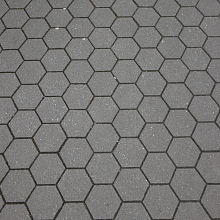 Seamless Hexagonal Concrete Tile PBR Texture 4K
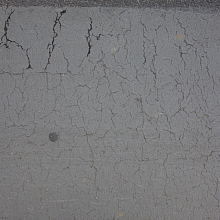 Cracked Asphalt Texture with Weathering