Advanced Integration of Displacement and Height Maps in Seamless PBR Textures for Realistic 3D Surfaces
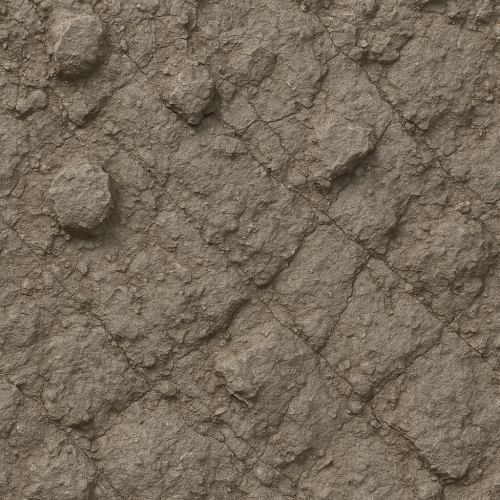
In physically based rendering (PBR) workflows, achieving photorealistic surface detail demands a nuanced understanding of how various texture maps interplay to simulate complex material characteristics. Among these, displacement and height maps occupy a critical role in defining true geometric variation on surfaces, extending beyond the illusion of depth and form typically conveyed by normal maps. While normal maps encode surface orientation perturbations to affect lighting calculations without altering mesh geometry, displacement and height maps influence actual or simulated geometry, thereby enabling a more convincing representation of micro and macro surface features that interact dynamically with lighting, shadows, and silhouettes.
Displacement maps fundamentally differ from height maps in both conceptual and practical terms, though they share a common genesis in grayscale data representing surface elevations. Height maps are grayscale textures that encode relative elevation data—usually as a single channel—where pixel intensity corresponds to the relative height of the surface at that point. These maps serve as input to displacement algorithms, but in many real-time engines and texturing pipelines, height maps are used primarily for parallax occlusion mapping or tessellation displacement, where the geometry is adjusted or faked based on camera viewpoint and shader calculations. Height maps are typically authored or derived with precision, often created from high-resolution scanned data, photogrammetry, or sculpted high-poly meshes, and subsequently baked down to capture subtle surface undulations such as scratches, bumps, and fine grooves.
Displacement maps, on the other hand, are often understood as the operational output or the processed form of height data that directly drive vertex or pixel displacement in rendering engines. In offline rendering and some real-time applications supporting tessellation, displacement maps can be stored in various formats, including vector displacement for complex multi-directional surface shifts beyond simple vertical offsets. The key distinction lies in the way displacement maps modify the actual geometry or mesh vertex positions, either during rendering time or as a pre-processed mesh deformation step. Displacement provides a level of detail and physical accuracy unattainable by normal or height maps alone, especially in silhouette definition and pronounced relief features that cast realistic shadows and occlusions.
Within the PBR texturing pipeline, integrating displacement and height maps requires a calibrated approach to ensure consistency with other texture channels—albedo, roughness, normal, ambient occlusion (AO), and metallic maps—that collectively define the material’s optical and tactile qualities. The albedo map controls diffuse color and reflectance, while the roughness map modulates microfacet scattering, determining how sharp or diffuse reflections appear. The normal map, encoding surface normals, simulates small-scale surface details without altering geometry, but it cannot affect silhouette or self-shadowing, which displacement maps handle by modifying actual mesh topology or pixel positions in tessellation shaders.
Calibration between height/displacement and normal maps is critical. Height maps often serve as the source for generating normal maps via tangent-space normal map baking. This ensures that the surface perturbations represented in the normal map correspond spatially and volumetrically to the geometric shifts introduced by displacement. A mismatch in scale or detail frequency between these maps can cause visual artifacts or inconsistencies, undermining realism. For example, if the displacement exaggerates surface features without corresponding normal map detail, lighting may appear flat or disconnected from the geometry; conversely, normal maps without aligned displacement can produce “floating” lighting effects detached from physical surface variations.
Authoring displacement and height maps begins with high-resolution source data, often derived from sculpting software like ZBrush or Mudbox, or from photogrammetric capture methods. The high-poly model contains the detailed geometry that defines the surface relief. From this model, height maps are baked by projecting the surface elevation data onto a low-poly mesh UV space, capturing relative height variations. This process must carefully handle UV seams, distortion, and texture resolution to maintain fidelity and avoid artifacts. Tools such as Substance Painter, Quixel Mixer, and Photoshop facilitate further refinement, allowing artists to paint or edit height data to emphasize critical surface features or correct scanning imperfections.
Tiling and micro-variation represent additional complexities in displacement and height map integration. Unlike albedo or roughness maps, which often rely on seamless textures and pattern variation to avoid repetition artifacts, displacement maps can create pronounced edge discontinuities if tiled naively. This is due to the geometric deformation manifesting as visible seams or unnatural breaks in surface continuity. To mitigate this, artists employ techniques such as gradient blending, micro-variation layering, and fractal noise overlays to introduce subtle randomness that breaks tile uniformity without sacrificing geometric coherence. These methods are especially vital in environments or assets requiring large-scale tiling, such as terrains, walls, or fabric materials.
Optimization is paramount given the computational expense of displacement, especially in real-time engines like Unreal Engine or Blender’s Eevee renderer. Unreal Engine supports displacement through tessellation and virtual heightfield meshes, but excessive displacement complexity can severely impact performance. Artists and technical directors must balance displacement detail with polygon budget and shader complexity, often resorting to hybrid workflows where height maps drive parallax occlusion mapping for medium-range detail, while tessellation displacement is reserved for close-up views or high-end cinematic renders. Blender’s Cycles renderer handles displacement via true mesh subdivision or adaptive subdivision, offering physically accurate results at the cost of render time, whereas Eevee relies on normal and parallax approximations, limiting displacement utility in real-time viewport rendering.
Practical tips in integrating displacement and height maps in PBR workflows include maintaining consistent scale and unit calibration across texture channels. Displacement heights must correspond logically to real-world measurements or artistic scale to ensure believable surface interaction with lighting and shadows. Additionally, careful management of displacement intensity and edge padding in textures prevents harsh transitions and clipping artifacts. Artists should utilize engine-specific parameters, such as Unreal’s displacement scale and bias or Blender’s displacement modifiers, to fine-tune the effect in context. Baking displacement from dynamic sculpting passes and validating results through viewport previews and shader analysis tools further enhances reliability.
In summary, displacement and height maps serve as indispensable components in advanced PBR texturing workflows, enabling the translation of intricate surface geometry into visually compelling, physically plausible 3D material representations. By understanding their differential roles—height maps as elevation data sources and displacement maps as geometry modifiers—and integrating them coherently with other PBR inputs, artists can unlock a new dimension of realism. This foundational knowledge sets the stage for sophisticated techniques that meld these maps seamlessly, balancing fidelity, performance, and artistic intent in the creation of truly immersive 3D surfaces.
Achieving high-fidelity displacement and height data is foundational to creating physically based rendering (PBR) textures that convincingly replicate real-world surface intricacies. The quality and reliability of these maps hinge critically on the acquisition methods employed, as well as on meticulous handling of source data prior to integration into the PBR workflow. For seasoned 3D artists and technical directors aiming to push the boundaries of realism, understanding the nuances of various capture technologies—namely photogrammetry, laser scanning, and procedural generation—is essential. These methods differ not only in hardware and software requirements but also in the nature and granularity of the data they produce, impacting downstream parameters like resolution, calibration, and ultimately the seamlessness of tiling and micro-variation.
Photogrammetry remains a staple technique for capturing displacement and height information, leveraging the photographic reconstruction of surfaces from multiple overlapping images. A critical factor in photogrammetric success is the quality of the source imagery. High-resolution cameras with good dynamic range are preferred to ensure accurate capture of subtle surface variations and albedo fidelity. Consistent, diffuse lighting conditions minimize shadow artifacts that can corrupt depth estimation algorithms. The spatial resolution of the resulting point cloud or mesh correlates directly with the number and quality of input images, as well as the distance and angle of capture. Overlapping coverage with around 70-80% redundancy is encouraged to enhance depth accuracy and reduce noise. Close attention must be paid to camera calibration parameters—focal length, lens distortion, and sensor alignment—as errors here propagate into inaccuracies in the derived height data.
Post-capture processing in photogrammetry involves dense point cloud reconstruction, mesh generation, and subsequent extraction of displacement or height maps. Software such as RealityCapture, Agisoft Metashape, or open-source alternatives like Meshroom employ multi-view stereo (MVS) algorithms to reconstruct depth. However, raw output often contains noise, holes, and irregular topology necessitating cleanup via filtering, hole-filling, and retopology to produce a mesh suitable for generating displacement maps. When converting to height maps, care must be taken to define a consistent base plane or reference surface to prevent bias in elevation data. This baseline is crucial for displacement mapping in real-time engines like Unreal Engine or offline renderers within Blender, where displacement vectors must be oriented relative to a known tangent space.
Laser scanning, particularly structured light and time-of-flight methods, provides an alternative pathway to high-precision displacement data. Unlike photogrammetry, laser scanning actively probes the surface with a controlled light source, yielding highly accurate point clouds with minimal dependence on ambient lighting conditions. This method excels in capturing fine geometric details with sub-millimeter precision, making it ideal for complex surfaces such as weathered stone or organic materials where micro-variations are paramount. The scanning resolution is governed by the scanner’s point density and the scanning distance, with trade-offs between coverage area and detail fidelity. Calibration of the scanner device itself is critical; any misalignment or drift can introduce systematic errors in the height data, which manifest as visible seams or distortions in tiled textures.
Initial processing of laser scan data involves registration of multiple scans to form a unified point cloud, often requiring sophisticated alignment algorithms like ICP (Iterative Closest Point). The resultant mesh is then decimated or retopologized to optimize polygon counts without sacrificing critical surface detail, a necessary step to maintain performance in real-time PBR workflows. Displacement maps derived from laser scans benefit from their high signal-to-noise ratio, but may require smoothing or noise filtering to remove scanning artifacts while preserving essential micro-geometry. Integration into a PBR pipeline demands normalization of height values to fit within engine-specific displacement scaling parameters, ensuring compatibility with roughness, normal, and ambient occlusion maps to avoid shading inconsistencies.
Procedural generation of displacement and height data offers a complementary approach, particularly effective when physical capture is impractical or when tiling and micro-variation need to be algorithmically controlled. Procedural techniques utilize noise functions, fractal algorithms, and hybrid synthesis methods to simulate natural surface detail. Perlin noise, Worley noise, and cellular fractals can generate detailed height fields that replicate terrain features, skin pores, or fabric weaves. The advantage of procedural methods lies in their parameterization, allowing artists to tailor displacement amplitude, frequency, and scale dynamically, facilitating seamless tiling and variation at multiple levels of detail. Procedural maps can be baked into texture sets compatible with PBR workflows, including albedo and roughness variations tied to displacement intensity to simulate realistic wear or erosion.
However, procedural generation demands rigorous calibration to maintain physical plausibility. Height maps must be calibrated against real-world scales to ensure displacement magnitude aligns with collision volumes and shadowing in engines like Unreal or Cycles in Blender. Moreover, procedural outputs often require blending with scanned or painted data to prevent artificial uniformity and to inject unique imperfections that enhance believability. This hybrid authoring approach leverages the strengths of both captured detail and parametric control, optimizing the balance between fidelity and resource efficiency.
Resolution considerations are paramount across all acquisition methods. The spatial frequency of displacement data should exceed or at least match that of accompanying normal and roughness maps to prevent visual discrepancies. For example, a height map with insufficient resolution relative to the normal map can lead to flattening of micro-detail or visible aliasing artifacts during tessellation-based displacement in real-time engines. Conversely, excessively high-resolution displacement maps can incur performance penalties and storage overhead. Therefore, it is advisable to capture or generate height data at a resolution compatible with the target platform’s texture streaming and memory capabilities, often necessitating mipmapping strategies and detail blending.
Best practices for initial processing include establishing a consistent coordinate system and aligning all PBR texture maps with the same UV layout to facilitate accurate packing and shader interpretation. Calibration workflows may involve scanning calibration targets or using photogrammetric markers to anchor displacement data spatially. Noise reduction should be conservative to retain textural nuance, using bilateral or anisotropic filtering rather than aggressive blurring. Additionally, leveraging software tools that integrate displacement and height map baking with normal, roughness, and ambient occlusion extraction streamlines the pipeline and ensures inter-map coherence.
Incorporating these acquisition techniques into a seamless PBR texturing pipeline demands a holistic understanding of the interplay between source data fidelity, map resolution, and engine-specific displacement implementation. Unreal Engine’s adaptive tessellation and displacement shaders, for instance, require height maps normalized between 0 and 1 with clear baseline references, whereas Blender’s Cycles renderer benefits from displacement maps with calibrated scale vectors and compatible UV layouts to avoid shading artifacts. Understanding these subtleties allows for optimized authoring workflows that maintain the integrity of displacement information, enhance micro-variation through controlled tiling, and ultimately elevate the realism of 3D surfaces within physically based rendering frameworks.
Generating high-fidelity displacement and height maps is a foundational step in crafting physically plausible, seamless PBR textures that elevate surface realism in modern rendering engines. Whether derived from raw photogrammetric captures, high-resolution scanned geometry, or procedurally synthesized data, the key to successful integration lies in meticulous calibration and optimization tailored to the target engine's displacement workflows and material pipeline.
The initial acquisition of displacement and height data invariably influences downstream calibration requirements. Photogrammetry-derived height maps often emerge as grayscale images representing relative surface elevations captured via multi-view stereo, but they can suffer from noise, inconsistent scale, and non-uniform sampling. Similarly, procedural height generation—using noise functions, fractal algorithms, or node-based workflows in software like Blender’s Geometry Nodes—provides infinite control over pattern scale and detail but demands rigorous parameter tuning to emulate realistic surface micro-variation. Regardless of source, the raw height information must be normalized, filtered, and aligned with the base mesh’s UV space to avoid discontinuities and ensure seamless tiling.
Crucially, the physical scale of displacement or height data must correspond to real-world units whenever possible. This enables the PBR material to respond accurately to lighting and shadowing, particularly in engines like Unreal Engine, where displacement interacts with tessellation and ray-traced distance fields. Calibration begins by determining the expected height range of the surface features, typically measured in millimeters or centimeters, and then remapping the height map’s 8- or 16-bit values to this range. For example, a cobblestone surface might have a maximum displacement amplitude of 5 cm, so the height map’s pixel intensities must be scaled accordingly during texture authoring or within the material graph. This step is critical because disproportionate height scale leads to unrealistic silhouette distortion or insufficient relief, breaking immersion.
Beyond amplitude, the spatial scale of features encoded in the height map governs the perceived level of detail and must harmonize with the albedo, roughness, and normal maps. Micro-variation—minute surface undulations below the pixel footprint—can be introduced using high-frequency noise overlays or detail height maps blended within the material stack. This layering approach provides rich surface complexity without excessively increasing displacement tessellation costs. However, the procedural or photographic sources for these micro-details must be carefully filtered and calibrated to avoid aliasing artifacts or tiling repetitions, which compromise seamlessness. Utilizing mipmapping and anisotropic filtering during texture baking and export helps maintain consistent detail at varying distances and viewing angles.
When generating displacement maps from high-poly sculpted meshes, such as those created in ZBrush or Mudbox, the extraction process involves baking the difference between the high-res detail and a low-poly base mesh onto a grayscale map. This process must incorporate proper cage meshes and ray distance parameters to capture fine crevices without introducing projection errors. The resulting displacement map often requires post-processing to normalize the height range and adjust mid-gray offsets, ensuring that zero displacement corresponds to the base surface level. This normalization facilitates intuitive control over displacement intensity within the shader and prevents unwanted surface inflation or concavity.
Height maps intended for parallax occlusion or steep parallax mapping require additional calibration nuances. Unlike true displacement where geometry is dynamically offset, these screen-space techniques rely on height data to simulate depth via pixel offsetting. Consequently, the height map’s contrast and linearity directly influence the visual accuracy of occlusion and self-shadowing effects. Artists must calibrate the height values to balance between sufficient depth perception and avoidance of edge artifacts or silhouette popping. Baking and authoring tools such as Substance Designer provide procedural nodes designed specifically for height map optimization, including histogram equalization, edge padding, and seamless tiling generation, which are invaluable for these workflows.
Channel optimization within the broader PBR texture set is another vital consideration. Displacement and height maps are generally stored as single-channel grayscale textures to maximize memory efficiency and reduce shader complexity. However, some workflows consolidate height data with ambient occlusion or curvature maps in separate channels of an RGBA texture, leveraging channel packing strategies to minimize texture lookups. This packing demands precise calibration to ensure that the encoded data does not interfere with compression artifacts or mipmap generation. When integrating displacement with normal and roughness maps, maintaining consistent scale and orientation of surface details is essential. The displacement map shapes the macro-relief, while normal maps encode fine surface normals for lighting interactions. Discrepancies between these maps—such as an exaggerated displacement paired with a muted normal detail—can produce unrealistic shading and break the illusion of depth.
Seamlessness in tiled PBR textures incorporating displacement and height maps requires rigorous UV layout management and texture border handling. Procedural height maps naturally tile if constructed with periodic noise functions, but photographic maps necessitate border correction techniques such as edge mirroring, feathering, or gradient blending to avoid hard seams. Tools like Substance Painter and Designer provide advanced triplanar projection and seamless clone brush capabilities to manually or procedurally blend edges. Moreover, when displacement is applied in engines like Unreal, proper UV padding with extrapolated pixel data prevents visible seams during tessellation and displacement offsetting, especially at mesh boundaries.
In practice, the calibration workflow is iterative. Artists begin by setting displacement amplitude and scale according to real-world references or scanned data metadata. They then verify the visual outcome in the target engine’s viewport, toggling tessellation or virtual displacement features, and inspect for silhouette accuracy, shadow casting, and micro-detail fidelity. Adjustments to the height map’s contrast, gamma, and mid-level offset follow, alongside refinement of normal maps and roughness to maintain consistent PBR response. Blender’s material preview and texture paint modes are invaluable for quick iterations, while Unreal’s Material Editor allows real-time parameter tweaking and visualization of tessellation effects with displacement maps.
Finally, optimization balances fidelity with performance constraints. Excessive displacement amplitude or detail density increases tessellation overhead and can cause GPU bottlenecks. Consequently, artists employ techniques such as hybrid displacement workflows—using displacement for large-scale relief and normal maps for fine detail—and mipmapped height maps that progressively reduce displacement at distance. Compression formats like BC4 or BC5 for single- and dual-channel textures respectively preserve detail with minimal memory footprint but require careful calibration to mitigate compression artifacts that can distort height data.
In summary, creating and calibrating displacement and height maps for seamless PBR textures demands a synthesis of precise data acquisition, physical scale alignment, channel optimization, and seamless tile preparation. Mastery of these processes ensures that the rendered surface not only exhibits convincing geometric depth but also integrates harmoniously with the full suite of PBR maps—albedo, roughness, normal, ambient occlusion, and metallic—to deliver a robust, physically accurate material response across diverse real-time and offline rendering platforms.
FAQ
What is covered in this guide?
This guide explains Advanced Integration of Displacement and Height Maps in Seamless PBR Textures for Realistic 3D Surfaces with practical notes for seamless PBR materials, texture setup, and production use.
Can I use these texture techniques in Blender, Unreal Engine, and Unity?
Yes. The workflow focuses on standard PBR maps and tileable materials that can be used in Blender, Unreal Engine, Unity, archviz, games, and VFX pipelines.
Where can I find textures for this workflow?
Use the AITextured texture library and the related texture links on this page to find seamless PBR materials and preview them before download.
Related Textures
 Procedural Stamped Sidewalk Concrete PBR Texture
 Procedural Fine Asphalt Road PBR Texture
 Procedural Pitted Concrete PBR Texture
 Seamless Concrete Pebble PBR Texture in 4K Resolution
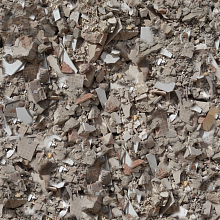 Seamless PBR Concrete Rubble Texture with Debris and Fragments
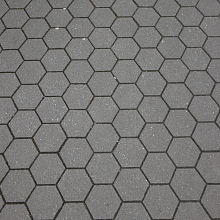 Seamless Hexagonal Concrete Tile PBR Texture 4K
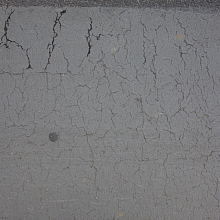 Cracked Asphalt Texture with Weathering