Creating and Optimizing Seamless PBR Textures for Realistic Volcanic Rock Surfaces
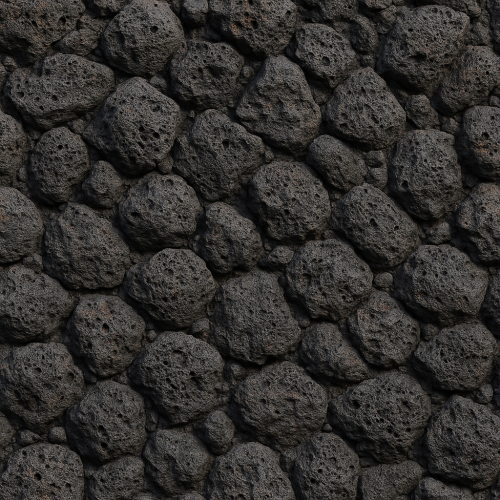
Volcanic rock surfaces present a unique and complex challenge for physically based rendering (PBR) texturing due to their inherently heterogeneous geological formation and visually intricate characteristics. To create authentic and high-fidelity PBR textures that convincingly replicate volcanic rock, an intimate understanding of their intrinsic physical and optical properties is essential. These properties directly inform the generation and calibration of the core PBR maps—albedo, roughness, normal, ambient occlusion (AO), height, and, less commonly, metallic—and guide decisions around micro-variation, tiling strategies, and optimization for real-time engines such as Unreal Engine or offline renderers like Blender’s Cycles.
At the most fundamental level, volcanic rock is the product of rapid cooling and solidification of magma or lava, which inherently produces a textured surface marked by notable porosity and an irregular microstructure. The cooling process traps gas bubbles, creating vesicles that punctuate the rock surface with pits and cavities and impart a distinctive roughness profile. This porosity is not merely a visual detail but a key factor that influences the roughness and height maps in PBR workflows. Surface roughness in volcanic rock is typically high and spatially varied; it must capture the interplay between matte, diffuse regions and subtly specular patches caused by smooth mineral faces or glassy obsidian inclusions. Consequently, roughness maps require careful authoring or capture to express this heterogeneity, ensuring specular reflections behave realistically under varying lighting conditions.
Porosity also impacts the normal and height maps. The irregular cavities and vesicular texture necessitate accurate microgeometry representation to convey depth and shadowing faithfully. When authoring normal maps, one must balance fidelity and performance, often starting from high-resolution photogrammetry or photometric stereo scans that capture subtle undulations and pits. These data-driven normal maps can be refined or combined with procedural noise to introduce micro-variation, preventing visible tiling artifacts in large surfaces. Height maps, derived from either displacement data or grayscale scans of the rock surface, enhance depth perception in tessellation or parallax occlusion mapping workflows, allowing engines like Unreal Engine to render convincing surface relief without exorbitant polygon counts.
Color variation is another critical characteristic that shapes the albedo map in volcanic rock PBR texturing. Unlike uniform stones, volcanic rocks exhibit a broad palette resulting from mineralogical diversity and weathering effects. Basalt, for example, ranges from deep charcoal to muted grays, occasionally interspersed with rusty iron oxides manifesting as reddish-brown streaks or blotches. Rhyolite and andesite may introduce lighter hues, including subtle greens and yellows, depending on mineral inclusions and alteration. These chromatic nuances arise not only from mineral content but also from oxidation states and environmental exposure, which must be captured authentically to avoid flat or artificial appearances. Albedo maps should be crafted to retain this subtle variability while ensuring color information is confined strictly to diffuse reflectance, avoiding baked-in shadows or highlights that undermine PBR accuracy.
Capturing such complex coloration typically involves a combination of calibrated high-resolution photography under controlled lighting and spectral data analysis. When authoring albedo maps, color calibration workflows become indispensable, using gray cards, color charts, and linear workflow adherence to ensure that colors remain consistent across different lighting environments and rendering engines. This calibration process is critical because volcanic rocks’ subtle color shifts can be easily distorted by improper gamma correction or non-linear workflows, leading to unrealistic renders. In practice, artists often employ tools like Substance Designer or Quixel Mixer to blend scanned data with hand-painted variations that emphasize geological features, such as mineral veins or weathering patterns, while maintaining physically plausible reflectance.
Mineral inclusions within volcanic rocks introduce localized variations in reflectance and roughness that profoundly affect the metallic and specular behavior of the surface. Although volcanic rocks are predominantly non-metallic, inclusions such as magnetite, pyrite, or olivine crystals can exhibit increased specularity or even quasi-metallic reflections. In PBR workflows, this demands nuanced treatment within the metallic and roughness maps. Typically, volcanic rock textures assign a metallic value close to zero, as the bulk rock is dielectric. However, high-quality textures often encode isolated metallic or specular highlights corresponding to mineral crystals’ presence, either through localized roughness minima or subtle metallic mask channels. This approach enhances realism by introducing micro-reflective details that catch light differently than the surrounding matrix.
Ambient occlusion (AO) maps play a pivotal role in accentuating the deep crevices and shadowed recesses inherent to volcanic rocks. Because of their pronounced surface relief and porous nature, accurate AO maps help simulate the soft shadows cast within vesicles and fractures, which are difficult to reproduce solely through dynamic lighting. AO data is typically baked from high-poly geometry or approximated through curvature analysis and cavity detection algorithms in texturing software. When integrated into PBR shaders, AO maps improve the perception of depth and solidity, particularly in real-time engines like Unreal Engine, where they complement global illumination and screen-space ambient occlusion (SSAO) techniques.
Optimization of volcanic rock PBR textures demands balancing high-resolution detail with efficient tiling and micro-variation strategies to avoid repetitive patterns—an issue particularly salient given the rock’s stochastic surface features. Tiling seamlessly is challenging because the geological randomness resists simple repetition; thus, texture authors often employ multi-channel masks and procedural overlay layers to break uniformity. Techniques such as triplanar projection blending or detail map layering can inject additional noise and fine-scale detail, preserving realism at various viewing distances. In Blender, for example, combining normal maps generated from scanned data with procedural noise nodes can simulate micro-roughness variations that dynamically respond to lighting without heavy geometry.
Calibration between all PBR maps is essential to maintain physical plausibility across rendering engines. For instance, roughness values must be consistent with albedo brightness and the presence of mineral inclusions to avoid contradictory reflections. Height and normal maps should be cross-checked to ensure they represent the same surface features at compatible scales, preventing visual artifacts during displacement or parallax occlusion mapping. Furthermore, it is advisable to test textures under different lighting setups, including directional, HDR environment maps, and dynamic game engine lighting, to validate their behavior. This iterative calibration often involves adjusting roughness curves, remapping height values, or tuning AO intensity to achieve the desired balance of realism and performance.
Finally, when deploying volcanic rock textures in engines such as Unreal Engine 5, leveraging features like virtual texturing, nanite geometry, or Lumen global illumination can significantly enhance the perceived realism while managing resource consumption. Virtual texturing allows extremely high-resolution textures to be streamed efficiently, preserving fine surface details crucial for volcanic rock’s complex topology. Nanite’s virtualized micro-polygon geometry can supplement height and normal maps, providing unmatched geometric detail that complements the PBR approach. Similarly, Blender’s physically accurate Cycles renderer benefits from well-calibrated PBR textures combined with displacement and subsurface scattering parameters to simulate subtle translucency in thin sections or weathered areas.
In summary, the geological and optical complexity of volcanic rock surfaces demands a rigorous and scientifically informed approach to PBR texturing. Understanding porosity, surface roughness variability, nuanced color shifts, and mineral inclusions forms the foundation for creating coherent and physically plausible PBR maps. Careful acquisition, calibration, and optimization—combined with a deep knowledge of rendering engine capabilities—ensure that volcanic rock textures not only look convincing but also perform efficiently across diverse digital content creation pipelines.
Achieving photorealistic volcanic rock surfaces in PBR workflows begins with acquiring high-fidelity source data that captures the intricate microgeometry and nuanced material variations characteristic of these geologies. Among the arsenal of acquisition techniques, photogrammetry stands out as an indispensable method for capturing authentic texture detail directly from nature, while procedural generation offers a powerful complementary approach to extend, refine, or fabricate textures where physical scanning proves impractical or insufficient. Mastering the interplay between these methodologies supports the creation of seamless, optimized PBR textures that faithfully reproduce the chaotic complexity and rugged realism of volcanic rock.
Photogrammetry acquisition of volcanic rock demands meticulous planning and execution to overcome the natural challenges posed by the subject’s heterogeneous surface and lighting conditions. Volcanic rock surfaces typically exhibit a broad range of albedo values, from deep blacks and charcoals to rusty reds and ashy grays, coupled with strongly varied roughness and micro-normal detail from vesicles, fractures, and crystallization. Capturing these features with high fidelity requires precise calibration of both hardware and environmental conditions to ensure accurate data extraction for all relevant PBR maps—albedo, roughness, normal, ambient occlusion (AO), height, and in rare cases, metallic.
Starting with equipment, a high-resolution DSLR or mirrorless camera equipped with a prime lens capable of macro focus is imperative. Macro lenses minimize distortion and maximize sharpness, crucial for capturing the micro-variations in surface texture that translate into convincing normal and height maps. A tripod with a geared head facilitates consistent framing and focus stacking when necessary, which is often required to maintain depth of field across uneven rock surfaces. For lighting, diffuse, overcast conditions are ideal to avoid harsh shadows and specular highlights that can confound photogrammetry algorithms and introduce unwanted artifacts in albedo and roughness maps. When natural lighting is insufficient or inconsistent, a portable light dome or an array of LED panels with adjustable color temperature can be employed to simulate uniform illumination, preserving color accuracy and surface detail.
The capture workflow involves systematic, overlapping coverage of the target surface from multiple angles to ensure comprehensive 3D reconstruction. For volcanic rock, where micro-geometry features such as vesicles and fractures can be on the millimeter scale, image overlap ratios of 80% or greater and small angular increments between shots are recommended. Calibration targets or scale bars should be placed within the scene to enable accurate dimensional referencing and to assist photogrammetry software in proper alignment and scaling. Alongside the color pass, capturing separate sets under polarized lighting conditions or with cross-polarization filters enhances the separation of diffuse and specular components, facilitating the extraction of clean albedo and roughness maps. Gray cards or color checkers included in the capture enable accurate color calibration during post-processing, which is critical for ensuring that the albedo map faithfully represents the rock’s true reflectance without baked-in lighting.
Post-capture, photogrammetry software pipelines such as RealityCapture, Agisoft Metashape, or Meshroom are employed to reconstruct high-density meshes and generate initial texture maps. The raw outputs often require refinement to optimize for real-time engines like Unreal or offline renderers in Blender. Normal maps generated through mesh baking must be inspected for artifacts caused by mesh noise or misalignment, especially in regions with complex geometry or occlusions. Similarly, ambient occlusion maps derived from baked geometry can be enhanced by ray-tracing techniques or ambient occlusion passes from physically based renderers, ensuring that subtle shadowing around micro-features is preserved without exaggeration. Height maps should be carefully normalized and filtered to maintain the fidelity of surface relief while avoiding aliasing when used for parallax occlusion mapping or tessellation in game engines.
One critical optimization step involves the creation of seamlessly tileable textures, as natural volcanic rock surfaces rarely exist as finite patches in digital environments. High-resolution scans may produce unique but non-repeating textures that are impractical for large-scale terrain coverage. To address this, edge blending or patch-based texture synthesis algorithms can be applied to the photogrammetry outputs, ensuring seamless tiling without visible repetition or seams. Additionally, introducing subtle micro-variation through detail normal maps or procedural noise overlays helps break uniformity and enhance realism when the textures repeat over expansive surfaces.
Where photogrammetry is constrained by accessibility, environmental conditions, or scale—such as capturing active volcanic flows or vast lava fields—procedural generation becomes an invaluable tool. Procedural methods allow artists and technical directors to algorithmically simulate volcanic rock textures with full control over material parameters and scalability, generating all relevant PBR maps from scratch or to augment existing scan data.
Procedural workflows typically begin with noise functions and fractal algorithms that mimic the chaotic topology of volcanic surfaces. Techniques such as Perlin noise, Worley noise, and cellular textures are combined and layered to simulate the heterogeneous porosity and vesicular structure of volcanic rock. These base patterns are then sculpted and modulated through displacement and height maps to create the characteristic roughness and bumpiness. Shader authoring environments inside Blender’s node-based system or Unreal Engine’s Material Editor facilitate the generation of complex masks that differentiate between smooth basaltic crusts, rough scoria, and glassy obsidian-like patches within a single procedural material.
Colorization is controlled through gradient ramps and multi-layered masks that replicate the variegated albedo patterns seen in volcanic rock, ranging from dark basalt to oxidized iron deposits. Procedurally generated roughness maps are crucial in conveying the tactile feel of the surface, with roughness values dynamically modulated by underlying height or cavity masks to simulate the interplay of light on smooth versus porous areas. Normal maps can be derived from procedural height information or enhanced with additional micro-detail noise to inject realism at close viewing distances.
A significant advantage of procedural generation is its inherent scalability and non-destructive nature, allowing artists to tweak parameters in real time to fit specific scene requirements or artistic directions. For example, artists can introduce subtle wetness variation, simulate ash deposits, or incorporate thermal cracking patterns by layering additional procedural nodes, all while maintaining consistent PBR accuracy. Procedural materials can also be baked out to texture maps for performance optimization in game engines, enabling seamless integration with photogrammetry-derived textures through blending masks or vertex painting for large terrain systems.
Combining photogrammetry and procedural generation often yields the best results. Photogrammetry provides the authentic base textures and maps that ground the material in reality, while procedural techniques supplement missing data, enhance tiling, and introduce controlled variation. For instance, a high-resolution photogrammetry scan might be used for albedo and normal maps in a specific area, while procedural roughness and height overlays add micro-surface variation and improve tiling across a broader terrain. This hybrid approach leverages the strengths of both methods, producing optimized, versatile PBR textures that maintain fidelity without sacrificing performance.
In terms of engine integration, careful calibration is essential to ensure that the gathered or generated maps translate correctly into the PBR shading models of target platforms. Unreal Engine’s physically based shading pipeline expects maps in specific linear or gamma spaces—for example, albedo maps in sRGB and roughness or metallic maps in linear space—requiring color space conversions during texture authoring or export. Normal maps must conform to engine-specific conventions such as DirectX or OpenGL normal map formats, influencing how tangent space vectors are interpreted. Similarly, Blender’s Principled BSDF shader adheres to PBR standards but allows for flexible input configurations, so maintaining consistent map formats and bit depths during acquisition and baking is paramount to avoid visual discrepancies.
Optimization strategies also include mipmap generation and anisotropic filtering to preserve texture detail at oblique viewing angles and distances, as well as the creation of detail maps that overlay base textures to add high-frequency noise without increasing base texture resolution. In real-time applications, balancing texture resolution with memory budgets is vital; thus, photogrammetry-derived textures are often downscaled and compressed with minimal loss, while procedural maps can be generated on the fly or baked at lower resolutions to conserve resources.
Ultimately, the successful acquisition and creation of seamless PBR textures for volcanic rock surfaces hinge on a rigorous approach to data capture, calibration, and procedural supplementation. By combining high-quality photogrammetric scans with sophisticated procedural authoring, artists and technical directors can deliver visually compelling, physically accurate materials that withstand the scrutiny of close-up inspection and large-scale environmental integration alike. The mastery of these techniques ensures that the volcanic rock surfaces in any digital scene resonate with geological authenticity and tactile richness, elevating the overall realism and immersion achievable through PBR texturing workflows.
Creating photorealistic volcanic rock surfaces hinges fundamentally on the precise crafting and calibration of core PBR texture maps. Each map—albedo, roughness, normal, ambient occlusion, height, and metallic—serves a distinct role in defining how light interacts with the surface, and their interplay dictates the ultimate realism achievable within physically based rendering workflows. Achieving believable volcanic rock textures requires not only accurate map authoring but also rigorous calibration to ensure these maps function cohesively under the nonlinear lighting models employed by modern engines such as Unreal Engine or Blender’s Cycles and Eevee renderers.
The albedo map, often the starting point in volcanic rock texturing, captures the inherent color information free of lighting or shading artifacts. For volcanic rock, this typically involves a nuanced palette of dark basaltic grays, interspersed with subtle variations of burnt oranges, rusty reds, and ashen whites—colors indicative of mineral deposits and cooling lava crusts. Acquisition of albedo textures can stem from high-resolution photogrammetry scans of real volcanic samples or from hand-painted procedural workflows that simulate micro-variations in mineralogy and surface deposits. When authoring albedo textures, it is critical to ensure the absence of baked shadows or highlights, as these will corrupt the physically correct light response in the shader. Calibration demands the albedo remain within a linear color space (typically sRGB to linear conversion) and maintain a relatively subdued reflectance value, given volcanic rock’s inherently low albedo. Values rarely exceed 0.3–0.4 reflectance on the visible spectrum, which helps avoid overly bright or plastic-looking surfaces.
Roughness maps for volcanic rock are arguably the most important driver of realism, as these surfaces exhibit a complex interaction between microrough and macro-rough features. The roughness channel defines the microfacet distribution controlling specular reflectance scatter, directly impacting how light glances or diffuses off the surface. Volcanic rock’s roughness is highly variable—freshly solidified lava tends to have rougher, more jagged surfaces, whereas weathering and mineral accretions introduce smoother patches and subtle gloss variations. When authoring roughness maps, a hybrid approach often yields the best results: procedural noise layers combined with photographic detail extracted via curvature and cavity maps can simulate the heterogeneous roughness distribution. Calibration involves careful gamma correction since roughness is a perceptually nonlinear parameter; most engines expect roughness in a linear 0–1 range, with darker values indicating smoother surfaces. It is critical to avoid channel contamination—any residual ambient occlusion or height information embedded in roughness maps can lead to inconsistent highlights and light scattering artifacts. Iterative testing in the target engine’s viewport, using HDRI lighting rigs and various roughness-dependent post-processing effects such as bloom or screen-space reflections, is crucial to dial in the parameters.
Normal maps for volcanic rock serve to reproduce fine geometric detail without the computational cost of additional polygons. Given the highly irregular and fractured nature of volcanic surfaces, accurate normal maps must capture both micro-scale bumps—such as vesicles and small fractures—and larger-scale undulations. Generation of these maps often begins with high-poly sculpting in ZBrush or similar software, where artists create detailed displacement information, subsequently baked into tangent-space normal maps. Alternatively, photogrammetry data can be processed to extract normal maps directly, preserving real-world surface intricacies. Proper calibration of normal maps involves ensuring consistent tangent space orientation and avoiding artifacts such as seams or inverted normals, which can break the illusion of depth. Additionally, subtle variations in normal map intensity can be adjusted to balance between exaggerated surface detail and overly flat appearances. Within engines like Unreal, the normal map channels must be flipped or adjusted according to platform conventions (e.g., DirectX versus OpenGL normal map standards), requiring validation across target platforms.
Ambient occlusion (AO) maps provide essential shading cues by simulating the occlusion of ambient light in crevices and cavities, enhancing depth perception and grounding textures in the environment. For volcanic rock, AO maps emphasize the complex topology of fractures, vesicles, and layered deposits. These maps are commonly baked from high-resolution geometry or generated via curvature-based algorithms that accentuate concave areas. Calibration of AO maps demands attention to blending and intensity levels, so the occlusion does not appear unnaturally dark or overly pronounced. It’s best practice to keep AO maps as a multiplicative mask applied post-shading rather than baked into albedo or roughness channels, preserving the physical correctness of the material. In real-time engines, AO can be combined with global illumination or screen-space ambient occlusion techniques; thus, AO map values often require tuning to avoid double-darkening or conflicts with dynamic lighting.
Height maps are indispensable for adding depth cues and parallax effects to the volcanic rock surface without increasing mesh complexity. Height maps encode relative displacement information representing the elevation of surface microfeatures. For volcanic rock, these maps accentuate the roughness and fracturing patterns, allowing for parallax occlusion mapping or tessellation-based displacement in engines like Unreal Engine or Blender’s displacement modifiers. Creating height maps involves either baking from sculpted high-poly models or converting grayscale albedo variants via edge detection and procedural noise refinement. Calibration for height maps is a balancing act; excessive height values can lead to unrealistic surface exaggerations and silhouette distortions, while insufficient contrast flattens the perceived depth. It is crucial to normalize height maps within the expected range of the target engine’s displacement system and ensure seamless tiling to avoid visible repetition artifacts.
Metallic maps, although less prominent for volcanic rock since these surfaces are predominantly non-metallic, still require careful consideration. Typically, volcanic rock’s metallic channel is zeroed out or contains minimal values reflecting trace mineral inclusions such as iron oxides. Authoring metallic maps involves isolating metallic features through spectral analysis or masking based on mineralogical data, ensuring no spurious metallic reflections contaminate the overall material. Calibration here is straightforward—the metallic map is usually binary or near-binary, with values strictly clamped between 0 and 1. Accurate metallic values are critical because PBR workflows use this channel to determine the nature of specular reflections and Fresnel effects; any miscalibration can cause unnatural highlights or incorrect energy conservation in the shading model.
Tiling and micro-variation techniques are pivotal across all core maps to prevent noticeable repetition and enhance realism. Volcanic rock’s fractal and chaotic surface characteristics lend themselves well to multi-scale detail layering, where base tiling patterns are combined with overlay detail masks and noise-driven variation. When authoring textures, it is advisable to use tileable base maps augmented by procedural noise or vertex blending to introduce randomness. Calibration involves aligning the scale of micro-variation with the scene’s spatial resolution and camera proximity to maintain consistent visual fidelity. Engines like Unreal offer tools such as virtual texturing and texture streaming to optimize memory usage for these complex layered maps, while Blender’s node-based material editor facilitates custom blending operations that simulate natural heterogeneity.
Optimization is an ongoing concern, particularly in real-time applications where performance budgets are tight. Efficient channel packing can reduce texture fetches—commonly, ambient occlusion, roughness, and metallic maps are combined into a single RGB texture, but care must be taken to avoid cross-channel interference. Compression artifacts must be minimized, especially in normal and height maps, as degradation here can significantly impact surface detail perception. Calibration workflows should include examining mipmap levels under dynamic lighting and adjusting map contrast or detail accordingly.
In sum, the creation and calibration of core PBR texture maps for volcanic rock surfaces demand a multidisciplinary approach involving accurate capture or procedural synthesis, precise linearization and gamma management, and rigorous validation within target rendering engines. Only through meticulous attention to each map’s role and interdependencies can one unlock the full visual potential of volcanic rock materials, rendering their complex geological narratives convincingly under any lighting scenario.
FAQ
What is covered in this guide?
This guide explains Creating and Optimizing Seamless PBR Textures for Realistic Volcanic Rock Surfaces with practical notes for seamless PBR materials, texture setup, and production use.
Can I use these texture techniques in Blender, Unreal Engine, and Unity?
Yes. The workflow focuses on standard PBR maps and tileable materials that can be used in Blender, Unreal Engine, Unity, archviz, games, and VFX pipelines.
Where can I find textures for this workflow?
Use the AITextured texture library and the related texture links on this page to find seamless PBR materials and preview them before download.
Related Textures
 Procedural Stamped Sidewalk Concrete PBR Texture
 Procedural Fine Asphalt Road PBR Texture
 Procedural Pitted Concrete PBR Texture
 Seamless Concrete Pebble PBR Texture in 4K Resolution
 Seamless PBR Concrete Rubble Texture with Debris and Fragments
 Seamless Hexagonal Concrete Tile PBR Texture 4K
 Cracked Asphalt Texture with Weathering