Mastering Cracked And Holes PBR Textures For Realistic Surface Damage
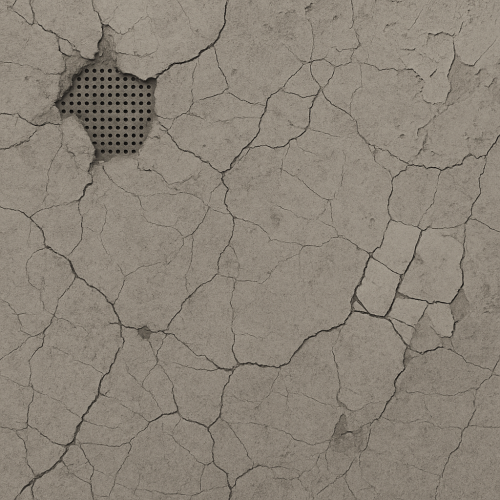
Capturing high-quality cracked and hole textures suitable for physically based rendering workflows demands a rigorous approach to acquisition, combining precise geometry capture with accurate color and surface property data. These surfaces, characterized by complex micro and macro variations—such as fractured edges, irregular cavities, and depth discontinuities—pose unique challenges that must be addressed to ensure the resulting PBR materials exhibit believable roughness, normal perturbations, ambient occlusion, and height information. The core of effective acquisition lies in selecting and tailoring photogrammetry and scanning methodologies to the intricacies of cracked and hole surfaces, while adopting best practices that preserve fine detail and enable efficient integration into real-time engines like Unreal Engine or versatile DCCs like Blender.
Photogrammetry remains one of the most accessible and flexible methods for capturing cracked and hole surfaces, leveraging multiple overlapping photographs to reconstruct detailed geometry and albedo textures. However, the uneven and discontinuous nature of cracks and holes often results in challenging reconstruction scenarios. To mitigate this, it is critical to ensure sufficient image overlap and coverage from varying angles, particularly emphasizing oblique shots that reveal the depth and shape of cavities and fractured edges. The lighting conditions during capture should be diffuse and consistent, typically achieved with overcast daylight or controlled softbox setups, to avoid harsh shadows that can confuse the reconstruction algorithms and distort color fidelity. Using a polarizing filter can reduce specular highlights on wet or glossy fractured surfaces, which otherwise cause artifacts in the albedo and roughness maps.
Calibration of photogrammetry setups is vital to maintain scale accuracy and geometric fidelity. Employing high-precision scale bars or coded targets within the capture area allows the processing software to generate meshes with correct real-world dimensions, which is especially important when deriving height and normal maps for PBR workflows. Since cracks and holes often exhibit steep depth gradients and occluded regions, multi-scale capture strategies can be beneficial. For instance, starting with a broad capture of the entire surface to establish macro geometry, followed by focused captures of smaller areas with higher resolution and tighter depth of field, ensures detailed micro-variation is preserved. This hierarchical approach facilitates creating tiled textures that can be seamlessly repeated while retaining natural irregularities.
Post-processing photogrammetry data for cracked and hole textures involves careful mesh cleanup and retopology to optimize the geometry for real-time rendering. Raw reconstructions often contain noise, non-manifold edges, and holes that must be fixed without compromising fine detail. High-resolution meshes can be baked down to normal, height, and ambient occlusion maps using tools like xNormal, Marmoset Toolbag, or Blender’s baking system. The height map generation benefits from well-defined geometry edges and consistent vertex density; otherwise, baked maps may suffer from artifacts or loss of detail in critical areas such as the sharp edges of cracks. Ambient occlusion maps captured or baked should reflect the self-shadowing intricacies of cavities and fractures, enhancing surface depth perception when combined with roughness or curvature maps in shader networks.
Structured light scanning and laser scanning offer alternative acquisition techniques that excel in capturing the precise geometry of cracked and hole surfaces, often surpassing photogrammetry in depth accuracy and detail. These methods project known light patterns or laser beams onto the surface and measure distortions to reconstruct 3D geometry with sub-millimeter precision. When working with cracked surfaces, the choice of scanning resolution and scanning angle is paramount. Fine cracks and holes can be too narrow or deep for certain scanners, causing shadowing or occlusion in the scan data. Employing multiple scanning passes from different angles, and in some cases rotating the sample or scanner, helps fill gaps and produce a more complete mesh. The resulting point clouds or meshes can then be processed to generate the necessary PBR maps.
One challenge with scanning technologies is capturing accurate diffuse color information, which often requires a separate high-resolution camera system or integrated color capture module. Ensuring that the color data aligns perfectly with the geometry is essential for generating seamless albedo maps without blurring or misregistration, which can degrade the realism of the PBR material. Calibration between the scanner and color capture system must be precise, typically using checkerboard patterns or calibration targets, and the lighting during color capture should minimize specular reflections and shadows to maintain neutral albedo data.
Both photogrammetry and scanning workflows benefit from the use of reference materials and controlled environments to improve the consistency of roughness and metallic maps, which are harder to derive directly from raw capture data. Roughness, in particular, is influenced by surface microstructure and material properties that are not always visually apparent in the captured images or scans. To address this, authors often complement acquisition with manual or procedural authoring of roughness maps, guided by curvature and ambient occlusion data extracted from the geometry. For instance, the edges of cracks typically exhibit higher roughness due to chipping and fracturing, while the interiors of holes may be smoother or coated with different materials. These variations can be sculpted into the roughness map using masks generated from baked maps, ensuring physical plausibility and enhancing shader response under varying lighting conditions.
Tiling cracked and hole textures presents additional complexity due to their inherently irregular and non-repetitive nature. To produce seamless tiles without obvious repeating patterns, it is advisable to capture large enough surface patches that encompass multiple cracks and holes. Then, using texture authoring tools such as Substance Designer or Blender’s procedural nodes, micro-variations can be blended and distributed across the tile edges to mask tiling artifacts. Incorporating height and normal map blending techniques, like edge padding and gradient smoothing, helps maintain the illusion of depth continuity across tile boundaries. Moreover, leveraging curvature and ambient occlusion data to drive detail blending ensures that the high-frequency features of cracks and holes persist seamlessly when the texture repeats.
When integrating cracked and hole textures into real-time engines such as Unreal Engine or authoring software like Blender, optimization remains a key consideration. High-resolution textures and complex normal or height maps can be expensive in terms of memory and shader cost. Therefore, baking down multiple detail layers into combined maps, such as packed roughness/metallic/ambient occlusion textures, is standard practice. Level of detail (LOD) strategies should be employed, especially for height and normal maps, where lower LODs use simplified maps that maintain convincing silhouettes and shading without excessive detail. Normal map compression settings must be tuned carefully to preserve the sharpness of crack edges and hole depth cues, as excessive compression can blur these critical features and reduce realism.
In practical terms, achieving the fidelity required for cracked and hole PBR textures demands an iterative acquisition and authoring process. Initial captures should be closely reviewed in viewport environments with physically accurate lighting to identify areas where geometry or color data fall short. Supplementary hand-painting or procedural detailing techniques can then be applied to enhance the material maps. During shader setup in Unreal Engine or Blender, careful adjustment of material parameters such as subsurface scattering (if applicable), anisotropy, and microfacet distribution models can further refine the appearance of fractured surfaces. This holistic approach, combining meticulous capture, data calibration, optimized baking, and shader tuning, ensures the final cracked and hole textures meet the high standards of modern PBR rendering pipelines.
Creating convincing cracked and hole textures within a physically based rendering (PBR) workflow demands a nuanced combination of procedural generation and photographic editing techniques. Both approaches serve distinct purposes and, when integrated effectively, can produce damage textures that exhibit the complexity and authenticity needed for modern real-time and offline rendering engines such as Unreal Engine and Blender’s Cycles/Eevee. The primary challenge lies in simulating the intricate micro-variations and organic randomness characteristic of natural fractures and holes, while maintaining correct physical properties across the texture maps—albedo, roughness, normal, ambient occlusion (AO), height, and occasionally metallic—to ensure consistent light interaction and material response.
Procedural generation excels at producing tileable base patterns for cracks and holes with controllable parameters, enabling infinite variation without relying on photographic sources. Common procedural methods include fractal noise functions, Voronoi patterns, and cellular automata, which can simulate branching crack networks or clustered pits. For instance, a Voronoi-based approach, where cells represent fracture boundaries, can be used to generate a network of interconnected cracks by manipulating cell edge thickness and blending with fractal noise to introduce micro-scale roughness. This pattern can then feed into the height map to create convincing displacement effects, and also inform normal map derivation via slope calculations. The roughness map can be procedurally varied by correlating crack edges with increased roughness values, reflecting the natural weathering and erosion where cracks expose more porous or chipped surfaces.
Photographic editing, on the other hand, provides a rich source of authentic detail, capturing the unpredictable morphology of real-world damage. High-resolution scans or macro photographs of cracked paint, corroded concrete, or weathered stone surfaces are invaluable for extracting albedo and normal information with realistic color bleeding, subtle dirt accumulation, and fine micro-geometry. The challenge is integrating these photographic details into a PBR framework that requires consistent physical parameters across all texture channels. This involves careful calibration of roughness and metallic values to match the base material and the damage context—e.g., cracked asphalt will exhibit different roughness and reflectance from chipped ceramics. Tools like Substance Painter or Designer enable the conversion of photographic inputs into physically plausible maps by adjusting grayscale channels, relighting normals, and generating ambient occlusion baked from the height or normal data. Height maps extracted from photo-based displacement can be refined with procedural noise overlays to remove repetitive artifacts and introduce micro-variation, enhancing the illusion of depth and irregularity.
A key consideration in both procedural and photographic methodologies is tiling. Cracked and hole textures often demand non-repetitive detail to avoid visible patterning, which breaks immersion. Procedural generation inherently supports seamless tiling through noise functions and pattern wrapping, but the complexity of crack networks may require blending multiple noise layers or introducing random offsets to disrupt obvious repetition. Photographic textures must be carefully edited to tile seamlessly, often requiring manual cloning, edge blending, or the use of specialized tools like Content-Aware Fill and offset filters in Photoshop or GIMP. Alternatively, a non-tiling approach with sparse placement of damage decals can circumvent this issue, though it increases asset count and complexity in scene management.
Micro-variation is essential to avoid flatness and uniformity in damaged surfaces. For cracks and holes, this means incorporating subtle shifts in roughness and normal detail along the fracture edges and within pit interiors. Procedural masks can be used to modulate roughness based on distance from crack centers, producing gloss variations that mimic polished edges or dirt accumulation. In photo-based workflows, hand-painting or procedural layering techniques can introduce these micro-variations, ensuring that the damage does not appear artificially uniform or “baked.” Furthermore, ambient occlusion maps derived from high-resolution height data help accentuate the depth of cracks and holes by darkening recesses, reinforcing the 3D illusion without additional geometry.
Calibration of damage textures within a PBR pipeline requires rigorous attention to scale and material context. The physical size of cracks and holes must correspond to the UV layout and the expected real-world dimensions of the asset, as discrepancies can cause lighting inconsistencies and disrupt spatial perception. Using real-world scale references during procedural pattern generation or photographic acquisition ensures that normal map intensity, height displacement, and roughness gradients align with plausible surface behavior. For instance, the width and depth of cracks should be consistent with the resolution of the height map to prevent exaggerated or muted displacement effects when rendered in engines like Unreal Engine. Calibration also involves iterative testing under varied lighting conditions, adjusting texture parameters to maintain readability of damage without overexposure or loss of detail in shadows.
Optimization is critical for performance-sensitive applications, particularly in real-time engines. Procedural damage textures can be stored as compact grayscale masks or noise maps that drive shader-based displacement or detail normal blending, reducing texture memory usage. Conversely, photo-based textures tend to be larger in size due to their detail richness but can be optimized through mipmapping, channel packing (e.g., storing roughness and AO in separate channels of a single texture), and careful compression settings that preserve critical detail in cracks and holes. Normal map compression artifacts are a common pitfall; using high-quality BC5 or ASTC formats in Unreal Engine mitigates these issues and preserves the fine geometry of fracture edges.
Within Unreal Engine, damage textures can be integrated as part of layered materials or decal systems to selectively apply cracked and hole effects. Using the engine’s material editor, one can blend procedural noise masks with photographic albedo inputs, dynamically modulate roughness and AO, and drive tessellation displacement or parallax occlusion mapping from height inputs for enhanced depth perception. In Blender, the shader node system allows similar integration, with procedural textures feeding bump or displacement nodes and image textures providing albedo and roughness inputs. Both engines support dynamic parameter control, enabling artists and technical directors to fine-tune damage appearance based on environmental factors or gameplay states.
In summary, the creation of cracked and hole PBR textures demands a hybrid approach that leverages the repeatability and control of procedural generation with the nuanced realism of photographic sources. Achieving authenticity involves careful calibration of all texture channels to reflect physical material properties, meticulous management of tiling and micro-variation, and optimization tailored to the target rendering engine. Mastery of these techniques ensures that digitally simulated surface damage convincingly interacts with light, enhancing material storytelling and visual fidelity in 3D assets.
Creating physically-based rendering (PBR) textures for cracked and hole-riddled surfaces demands a rigorous approach to map generation and channel optimization to ensure visual fidelity while maintaining performance across real-time engines like Unreal Engine and rendering software such as Blender. The complexity arises from the need to represent both the macro-structural damage—cracks, perforations, missing chunks—and the micro-surface nuances like edge wear, dust accumulation, and subtle roughness variations. Achieving consistent and accurate PBR maps involves a careful orchestration of base color, normal, roughness, ambient occlusion (AO), height, and, where applicable, metallic channels, combined with intelligent channel packing strategies and opacity handling for perforated materials.
The base color or albedo map for cracked and holed textures must be authored with a keen understanding of the underlying material’s response to lighting without baked-in shadows or highlights. Given the irregularities introduced by cracks and holes, it is crucial to capture the subtle color shifts caused by edge chipping, dirt ingress, and exposed substrate materials. When sourcing or authoring base colors, high-resolution photogrammetry scans can provide a foundational color reference, but extensive hand-painting or procedural blending is often required to eliminate baked lighting and ensure tileability. Seamless tiling is particularly challenging here due to the discontinuities inherent in cracks and holes; employing techniques like edge mirroring, randomized micro-variation overlays, and controlled blending of crack edge fragments helps maintain continuity without visible repetition. It is essential to maintain a neutral, physically plausible albedo that respects the material’s diffuse reflectance properties to avoid energy conservation violations when combined with roughness and specular data.
Normal map generation for these materials must accurately convey both micro and macro surface detail. The large-scale topology of cracks and holes should be represented through height or displacement maps baked into normal maps, emphasizing the depth and sharpness of the damaged edges. Micro-details, such as small chips, surface roughness variations, and fine scratches, are layered on top of this base normal detail to enrich surface complexity. High-resolution sculpting in software like ZBrush or Substance Designer’s procedural height generation can be used to create these details, followed by baking normal maps from high-poly to low-poly meshes or generating them procedurally via height-to-normal conversions. Calibration of normal map strength is vital; overly aggressive normal intensities can produce unnatural lighting artifacts, especially around crack edges where self-shadowing is prominent. Testing normal maps dynamically under varying directional lights in engines like Unreal Engine helps ensure that the perceived depth and shadowing of cracks and holes appear realistic without exaggeration.
Roughness maps for cracked and holed surfaces play a pivotal role in simulating the varying reflectance behavior caused by material degradation and exposure. Cracks and holes often expose raw or worn substrate materials with different roughness characteristics than intact surfaces. For example, the edges of cracks may be more polished or dust-covered, altering local roughness. To capture this, roughness maps should be authored with spatial variation, combining procedurally generated noise patterns that simulate microsurface irregularities with hand-tuned masks for crack edges and exposed areas. Layering roughness data derived from physically measured references or scanned material samples ensures plausible energy conservation when interacting with light. It is advisable to keep roughness values within a physically plausible range (0.05 to 0.95) to avoid overly glossy or diffuse results that break immersion. Calibrating roughness maps against reference materials in real-time previews, especially under dynamic lighting in Unreal Engine’s PBR shaders, is critical to achieving believable surface response.
Ambient occlusion (AO) maps for cracked and hole-based textures are indispensable for enhancing contact shadows and depth perception around cavities and fissures. AO maps should isolate the subtle shadowing caused by geometry proximity without interfering with direct lighting or global illumination. Producing AO involves baking from high-poly meshes that contain detailed crack and hole geometry or generating them procedurally in tools like Substance Painter or Designer. Calibration is necessary to avoid overly dark AO regions that can “muddy” the texture, particularly around hole edges where ambient occlusion can accumulate excessively. Multiplying AO maps with base color or using them as separate masks in shader setups can enhance the perceived depth without sacrificing the integrity of the albedo. For real-time engines, it is often beneficial to optimize AO maps by selectively blurring or reducing resolution in less critical areas to balance performance and quality.
Height maps serve a dual purpose in cracked and holed PBR textures: they provide displacement or parallax data for enhanced surface depth and assist in the generation of accurate normal maps. The height channel must represent the vertical displacement of the surface, with positive values indicating raised areas and negative or zero values indicating recesses, such as holes or cracks. When authoring height maps, care must be taken to maintain a consistent scale and avoid abrupt discontinuities that can cause artifacts in displacement or parallax occlusion mapping. Utilizing high-resolution sculpting data or photogrammetric scans can provide authentic surface depth information, which can be refined with procedural noise layers to simulate micro-roughness. In engines like Unreal, height maps can drive tessellation or parallax occlusion shaders to add genuine geometric complexity without increasing mesh density. Calibration of height scale is essential to prevent popping or silhouette distortion during camera movement.
Channel packing is a critical optimization technique for handling multiple grayscale maps (roughness, AO, height, metallic) within limited texture slots, especially in real-time applications where draw calls and memory budgets are constrained. For cracked and holed textures, it is common to pack roughness in the red channel, ambient occlusion in green, and height in blue of a single texture, freeing up other channels for additional data or leaving them empty. Metallic maps, if the material is non-metallic (e.g., stone, concrete), are generally assigned zero values and can be omitted or packed into unused channels if necessary. This channel packing not only reduces the number of texture fetches in shaders but also simplifies material setups in engines like Unreal Engine, where combined masks can be plugged directly into the material graph’s input nodes.
Opacity and alpha inclusion become especially relevant when dealing with perforated materials where holes represent true transparency or cutouts. Instead of approximating holes via displacement or normal maps alone, incorporating an explicit opacity or alpha channel allows the engine to discard pixels and render true holes, optimizing over complex geometry. This alpha channel is typically stored in the alpha channel of the base color texture or a dedicated mask texture. However, care must be taken to synchronize the opacity mask with the height and normal maps to avoid visual inconsistencies such as floating edges or shadow artifacts. In Unreal Engine, using masked or clipped materials with well-authorized opacity maps improves rendering performance by enabling early pixel rejection and reducing overdraw. For materials with semi-transparent edges or dirt accumulation around holes, blending opacity with smooth gradients rather than hard cutoffs enhances realism.
Tiling and micro-variation are indispensable for avoiding repetition artifacts that break immersion in cracked and holed surfaces. Because cracks and holes are inherently non-uniform, seamless tiling demands intelligent edge blending and the introduction of randomized detail overlays. Utilizing procedural noise generators or detail masks layered over base color and roughness maps helps introduce subtle variations in color and reflectance. Similarly, normal and height maps can benefit from micro-normal variations to break up uniform shading patterns. These micro-variations can be authored procedurally or painted by hand, and their strength and scale should be calibrated to the viewing distance and engine’s mip-mapping behavior to prevent aliasing or blurring.
Calibration of all maps should be conducted iteratively within the target engine environment using physically based shader models. In Unreal Engine, this means leveraging the Material Editor’s preview capabilities, dynamic lighting setups, and post-processing volumes to assess how the cracked and holed textures react under various lighting conditions. Adjusting roughness and normal map intensities, verifying AO influence, and ensuring opacity masks behave correctly with shadows and reflections are essential steps. Similarly, in Blender’s Eevee and Cycles renderers, real-time previews and shader nodes enable fine-tuning of parameters to replicate intended material characteristics. Consistency across maps ensures that the final rendered surface exhibits the expected interplay of light, shadow, and geometry, vital for convincing cracked and holed materials.
Performance optimization should not be overlooked during map creation. Textures should be authored at resolutions appropriate to their screen-space footprint, employing mip-mapping and anisotropic filtering to maintain clarity at oblique angles. Channel packing reduces texture fetches, while opacity masks improve rendering efficiency by enabling pixel discard. When displacement or tessellation is used for cracks and holes, balancing geometric complexity and shader cost is critical to avoid frame rate drops. Leveraging engine-specific tools such as Unreal’s virtual texturing or Blender’s adaptive subdivision can further optimize resource usage without sacrificing visual quality.
In sum, the creation of PBR maps for cracked and holed textures requires a disciplined workflow focusing on physical accuracy, detailed geometry representation, and optimized channel usage. By integrating high-fidelity base color, carefully calibrated normal and roughness maps, precise ambient occlusion, and height data with intelligent channel packing and opacity handling, artists and technical directors can achieve visually compelling and performant materials tailored for modern real-time engines and renderers.
FAQ
What is covered in this guide?
This guide explains Mastering Cracked And Holes PBR Textures For Realistic Surface Damage with practical notes for seamless PBR materials, texture setup, and production use.
Can I use these texture techniques in Blender, Unreal Engine, and Unity?
Yes. The workflow focuses on standard PBR maps and tileable materials that can be used in Blender, Unreal Engine, Unity, archviz, games, and VFX pipelines.
Where can I find textures for this workflow?
Use the AITextured texture library and the related texture links on this page to find seamless PBR materials and preview them before download.
Related Textures
 Procedural Stamped Sidewalk Concrete PBR Texture
 Procedural Fine Asphalt Road PBR Texture
 Procedural Pitted Concrete PBR Texture
 Seamless Concrete Pebble PBR Texture in 4K Resolution
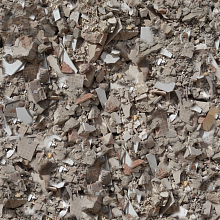 Seamless PBR Concrete Rubble Texture with Debris and Fragments
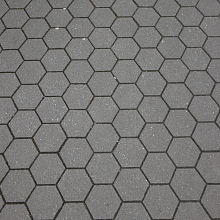 Seamless Hexagonal Concrete Tile PBR Texture 4K
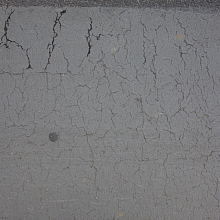 Cracked Asphalt Texture with Weathering