Mastering Seamless Flower PBR Textures for Realistic 3D Botanical Surfaces
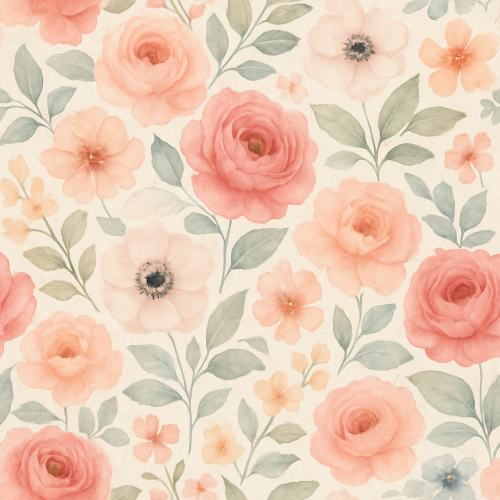
Capturing flower textures for physically based rendering (PBR) workflows demands a nuanced balance between high-fidelity detail and practical workflow integration. Flowers, with their delicate petal surfaces, subtle translucency, and complex micro-variations, challenge standard texturing techniques. Advanced acquisition methods such as high-resolution scanning and photogrammetry have become essential for obtaining the intricate albedo, roughness, normal, ambient occlusion (AO), and height data that form the foundation of realistic PBR materials. Achieving photorealistic source materials suitable for real-time engines like Unreal Engine or offline renderers within Blender begins with meticulous planning of equipment, lighting, and capture strategies, followed by careful calibration and optimization during post-processing.
High-resolution scanning technologies, including structured light and laser scanning, offer an unparalleled means of capturing surface geometry and reflectance properties at sub-millimeter precision. Structured light scanners project patterned light onto the flower surface, measuring distortions to reconstruct detailed 3D geometry. These scans produce dense point clouds that can resolve the fine curvature and micro-folds of petals, which are critical for generating accurate normal and height maps. Importantly, the choice of scanner must consider the flower’s optical properties; glossy or semi-translucent petals often require scanning technologies capable of handling subsurface scattering effects or at least minimizing specular interference. For example, multispectral structured light systems or scanners with polarization filters can reduce reflective hotspots, improving data quality.
Laser scanners, while offering high spatial resolution, may struggle with organic, highly reflective, or translucent surfaces typical of flowers. To mitigate this, surface preparation techniques such as applying a removable matte spray or powder can help diffuse specular reflections, although this risks altering the natural texture and coloration, which is critical for albedo capture. Therefore, many artists prefer non-contact photogrammetry for color fidelity, reserving scanning primarily for geometry acquisition.
Photogrammetry has gained prominence due to its accessibility and ability to simultaneously capture high-resolution albedo textures alongside geometry. The process involves photographing the flower from multiple angles under controlled lighting, then reconstructing a dense point cloud and textured mesh via specialized software. When shooting for PBR purposes, it is vital to maintain a consistent, diffuse lighting environment to minimize harsh shadows and specular highlights that corrupt albedo maps. Using a light tent or dome with diffusers can create near-uniform illumination, enabling the capture of subtle color gradients and micro-variations across petals and leaves. Additionally, employing cross-polarization techniques—polarizing filters on both the light sources and camera lens oriented orthogonally—can further suppress specular reflections, revealing true diffuse color, essential for accurate base color maps.
Camera choice plays a significant role in texture fidelity. High-resolution full-frame or medium format cameras with macro lenses are preferred for capturing fine detail. Macro lenses with close focusing capabilities allow for capturing individual petal microstructures, veins, and trichomes, which translate into detailed normal and height maps after processing. To avoid chromatic aberrations and maintain sharpness across the image, prime macro lenses with low distortion and high resolving power are ideal. Using RAW image capture preserves maximum color data and dynamic range, enabling precise color calibration in post-production.
Color calibration is a critical step often overlooked but indispensable for physically accurate albedo textures. Including a calibrated color target (e.g., X-Rite ColorChecker) in shots and using color profiling software ensures the captured colors correspond to real-world values. This standardization is essential when integrating flower textures into PBR workflows, where accurate base color directly influences diffuse reflectance and shading outcomes. The calibrated albedo textures must be gamma corrected and linearized in accordance with engine requirements—for instance, Unreal Engine expects sRGB inputs for base color, whereas roughness and normal maps remain linear.
For roughness capture, flower surfaces present a unique challenge, as petals can exhibit varying degrees of specularity and microstructure. Direct acquisition of roughness maps is rarely achievable through photography alone; instead, artists infer roughness from controlled lighting setups or supplement photogrammetry with reflectance transformation imaging (RTI). RTI involves capturing a series of images under varying directional lighting, enabling extraction of surface reflectance properties and microfacet distribution. This data can be converted into roughness or glossiness maps by analyzing highlight spread and intensity. Alternatively, artists may rely on physically measured reference values from botanical studies or spectrophotometry to fine-tune roughness textures.
Normal and height maps derive primarily from high-resolution geometry scans or photogrammetry-generated meshes. After generating a dense mesh, retopology and baking workflows produce tangent-space normal maps that capture the micro-relief of petal veins, leaf serrations, and cellular structures. High-frequency details can be enhanced by integrating hand-painted or procedurally generated micro-variation to avoid tiling artifacts in engine usage. Height maps, typically grayscale representations of surface displacement, supplement parallax occlusion or tessellation shaders, adding depth to thin petal edges and folds without exorbitant polygon counts.
Ambient occlusion maps, which simulate self-shadowing in crevices and folds, are baked from the high-poly scanned or reconstructed mesh. Since flowers often have complex overlapping petals and intricate leaf arrangements, AO maps contribute significantly to realistic shading by darkening occluded areas and reinforcing depth perception. Careful attention to capture scale and resolution ensures AO maps integrate seamlessly with other PBR channels, preserving consistent texel density and minimizing seams.
When preparing flower textures for tiling, the inherent irregularity of natural forms presents a challenge. Flowers are rarely uniform, so creating seamless tileable textures without obvious repetition requires strategic capture of multiple flower specimens and varied sections of petals and leaves. Micro-variation can be introduced in shader networks or material instances within Unreal Engine or Blender’s Shader Editor, employing subtle noise textures or vertex color blending to break uniformity. Additionally, capturing multiple overlapping texture sets from different angles and scales enables layered material blending, facilitating transitions between fresh and withered petals or different lighting conditions.
Workflow optimization is paramount for managing the large datasets generated from high-resolution scans and photogrammetric reconstructions. Data organization protocols—such as maintaining consistent naming conventions, metadata tagging (including capture parameters and calibration details), and version control—streamline authoring. In engines like Unreal Engine, using virtual texturing and mip-mapping reduces performance costs, while Blender users benefit from baking procedural adjustments into texture maps to minimize shader complexity during rendering.
Integrating flower PBR textures into real-time engines involves attention to material setup conventions. For example, Unreal Engine’s physically based material system expects specific inputs: base color in sRGB, roughness and metallic in linear space, normal maps encoded in tangent space with correct Y-axis orientation, and ambient occlusion often multiplied into base color or combined in the material graph. Metallic maps for flowers are typically unused or set to zero, as organic tissues rarely exhibit metallic properties; however, subtle specular reflections can be simulated through roughness adjustments.
In Blender’s principled BSDF shader, the same texture maps can be plugged directly, ensuring correct color space assignments: base color in sRGB, roughness and AO in linear, and normal maps connected through a normal map node. Blender’s displacement settings can leverage height maps for micro-displacement, enhancing realism in close-up renders.
In conclusion, acquiring flower textures for PBR workflows demands an integrated approach combining high-resolution scanning or photogrammetry, controlled lighting and calibration, and sophisticated post-processing workflows. The resulting textures must precisely capture albedo color fidelity, microstructure normals, roughness variation, ambient occlusion, and height details to realize photorealistic shading in modern rendering engines. Through rigorous attention to acquisition techniques and material authoring conventions, 3D artists and technical directors can elevate flower assets from simple textures to compelling, physically accurate representations that hold up under diverse lighting conditions and close inspection.
Creating convincing flower PBR textures demands a nuanced approach that balances the fidelity of photographic references with the flexibility of procedural generation. Flowers, with their intricate petal structures, subtle translucency, and complex color gradients, challenge texture artists to capture both naturalistic detail and artistic stylization. By blending photographic input with procedural methods, artists can efficiently author textures that not only embody botanical realism but also accommodate stylized workflows such as watercolor effects or seamless tiling, essential for diverse real-time and offline rendering contexts.
Photographic references provide a foundational base for the albedo or base color maps, capturing the organic chromatic variation and micro-patterning inherent in floral surfaces. High-resolution macro photography, preferably shot in controlled lighting to minimize specular highlights and shadows, serves as an excellent starting point. To ensure consistency across the PBR workflow, photographs must be properly color-calibrated using neutral gray or color check targets during capture, and post-processed with linear workflow considerations in mind. This calibration is crucial to prevent color shifts when textures are imported into physically based rendering engines like Unreal Engine or Blender’s Cycles and Eevee. A calibrated albedo map should represent pure diffuse reflectance without baked-in lighting or shadows, which could otherwise interfere with the dynamic lighting of the target engine.
While photographs provide a rich base, they often require augmentation to address common limitations such as repeated patterns, lack of tileability, or insufficient variation for close-up and distant views. Procedural techniques fill these gaps by generating detail maps—such as roughness, normal, and height—that complement and extend photographic data. For instance, roughness maps derived from procedural noise algorithms can introduce subtle micro-variation, mimicking the natural surface irregularities of petals and leaves that are difficult to capture in a single photo. These variations affect the scattering of light on the petal surfaces, enhancing realism by breaking uniform specular reflections. Procedural roughness can also be layered with photographic roughness data extracted from specular response in photo references, balancing accuracy with control.
Normal maps are another area where procedural authoring excels. While photo-based normal maps derived from photogrammetry or normal map baking from high-poly models capture macro details, procedural noise and detail maps can be overlaid to generate micro-normal perturbations. This micro-normal variation simulates fine petal veins and subtle curvature changes at a scale smaller than the photographic capture, which contributes to more convincing subsurface scattering and shading nuances in engines like Unreal Engine 5’s Lumen or Blender’s SSS shaders. Height maps, similarly, benefit from a hybrid approach; height detail can be baked from sculpted high-poly petals but enhanced with procedural fractal noise to simulate the slight undulations and edge wear commonly found in natural flowers. These height maps can drive parallax occlusion or displacement in real-time engines, adding dimensionality without excessive geometry.
Ambient occlusion (AO) maps, critical for simulating self-shadowing in crevices and folds, are typically baked from 3D models rather than derived from photographs. However, procedural AO can be generated or refined via curvature analysis and cavity maps, ensuring that occlusion respects stylized patterns or seamless tiling constraints. For example, when authoring floral textures intended for use in large tiling patterns—such as flower fields or garden scenes—procedural AO can help maintain consistent shadowing without visible seams or repeated artifacts. Seamlessness is often a challenge with photographic textures due to natural irregularities and directional lighting. Techniques such as edge blending, frequency separation, and procedural noise-driven edge warping can be employed to create seamless tiling without sacrificing the naturalistic detail that photographs provide.
Incorporating artistic stylization, notably watercolor or painterly effects, into floral PBR textures requires a careful melding of procedural and photographic workflows. One method is to start with a photographic base and apply procedural masks and gradient overlays that simulate brush stroke patterns and pigment diffusion. These overlays can modulate roughness and specular intensity maps to mimic the uneven surface of watercolor paper and the variable absorption of paint, which influences light scattering. For example, procedural gradients can generate subtle transitions in roughness to replicate areas where pigment pools or fades, while custom normal maps can simulate the textured paper surface. This approach allows the artist to maintain the underlying botanical detail from photographs while introducing stylized variation that translates well in physically based rendering pipelines.
Optimization is paramount when authoring flower textures for real-time engines. Floral textures are often applied to small, detailed meshes requiring high fidelity without imposing heavy GPU loads. To optimize, texture atlasing and mipmap generation should be carefully managed to preserve critical detail at close range while reducing memory footprint at distance. Additionally, channel packing can be employed to consolidate grayscale maps such as AO, roughness, and metallic into a single texture, leveraging the fact that flowers rarely require metallic maps unless simulating rare iridescent or dew effects. Procedural detail can be integrated as shader-based overlays or detail maps that tile at higher frequencies than the base albedo, enabling high-frequency surface detail without increasing the resolution of the main texture.
In engines like Unreal Engine, the use of Material Functions and layered materials facilitates the blending of photographic textures with procedural noise and masks, enabling real-time control over parameters such as color variation, roughness intensity, and translucency. Unreal’s subsurface scattering models can be fine-tuned with height and normal map input to simulate the semi-translucent petals of flowers, and procedural vertex displacement can be driven by height maps to add subtle animation or wind effects. Blender’s node-based shader editor allows similar procedural layering, where the artist can combine image textures with noise and gradient nodes to produce stylized but physically plausible materials. The ability to preview textures under different lighting setups and to bake maps such as curvature and cavity within Blender’s baking system streamlines iterative refinement.
Calibration between photographic and procedural inputs is essential to avoid visual dissonance. Artists should ensure that the scale of procedural noise matches the scale of photographic details, which can be verified by comparing microstructure sizes in rendered previews. Color grading and gamma correction must be consistent across all texture maps to prevent mismatches in lighting response. Finally, documentation of texture provenance—detailing photographic capture parameters, procedural generation settings, and post-processing steps—facilitates reproducibility and future adjustments.
In summary, the fusion of photographic and procedural authoring techniques yields flower PBR textures that are both rich in natural detail and adaptable to diverse stylization demands. Photographs anchor the textures in botanical reality, capturing intricate color variation and macro-geometry, while procedural methods introduce essential micro-variation, seamless tiling capabilities, and artistic effects such as watercolor stylization. When carefully calibrated and optimized for engines like Unreal and Blender, these hybrid textures enhance both realism and creative expression in floral 3D assets, supporting high-fidelity rendering alongside efficient real-time performance.
Generating accurate PBR texture maps for flowers demands a nuanced understanding of both the physical characteristics of floral surfaces and the constraints of real-time rendering pipelines. Unlike more uniform materials such as metals or stone, flowers exhibit a complex interplay of translucency, fine-scale surface detail, and subtle color variation that must be carefully captured and represented across multiple texture channels. This section dissects the process of authoring the key PBR maps—albedo, normal, roughness, ambient occlusion, and height—emphasizing techniques to faithfully reproduce delicate features like petal translucency and leaf venation while maintaining optimized asset performance in engines like Unreal Engine or Blender.
Starting with the albedo or base color map, the primary challenge lies in capturing the inherently translucent and often thin nature of flower petals. Unlike opaque materials, flower petals transmit and scatter light internally, resulting in color saturation that varies with viewing angle and illumination. To approximate this in a PBR workflow, the albedo texture should be authored with careful color calibration to avoid baked-in lighting or shadows, which would otherwise conflict with the dynamic lighting in the renderer. High-resolution, diffuse color capture can be achieved through calibrated photo references under neutral lighting conditions, preferably using a lightbox or indirect daylight to minimize specular highlights. When photographing, it is essential to include both front-lit and back-lit captures to understand how translucency affects color and saturation. These images can be blended or selectively painted in an image editor to create an albedo map that maintains vibrancy without baked shadows or directional light artifacts.
In addition to straightforward color fidelity, micro-variation in the petal surface must be represented to avoid flatness. Subtle changes in hue and saturation caused by vein patterns, pigment granulation, and surface texture need to be preserved. This can be done by sampling fine-scale color detail from macro photographs and layering these details via masks or procedural noise to simulate natural variation. Using tileable detail textures derived from flower petal close-ups can also help when creating seamless materials, especially for flowers with repetitive patterns—such as daisies or chrysanthemums—ensuring that micro-variation scales correctly across large surfaces.
The normal map for flowers requires particular attention to the fine geometry of veins and petal folds. These features often have low relief but are critical for conveying realism, especially under directional lighting in real-time engines. Generating normals from high-resolution photogrammetry scans or microdisplacement detail maps provides a good starting point. When scanning is not feasible, hand-painting or deriving normals from height maps created in image editing software or procedural generators can be effective. The challenge is to balance the amplitude of the normal detail; overly exaggerated normals can create unrealistic sharp shadows inconsistent with the soft, organic nature of petals, while too subtle normals will fail to register on lighting and leave the surface visually flat. In Unreal Engine or Blender’s shader editors, artists can fine-tune normal map intensity and combine multiple normal layers—for example, a base map for larger petal curvature combined with a detail normal map for veins and micro folds—to achieve a layered, physically plausible surface response.
Roughness maps are key to simulating the specular response of flower surfaces, which typically range from satin matte on petals to slightly waxy or glossy on leaves. Unlike metals where roughness is often uniform, flower surfaces exhibit variation both spatially and with microstructure. Petal ridges and veins tend to be rougher and scatter light more diffusely, while smoother petal areas can have lower roughness, creating subtle highlights. Capturing this map often involves a combination of direct observation and procedural painting. Photographic references under controlled lighting can reveal specular variations, but since roughness is a purely reflective property, it cannot be directly photographed and must be inferred from the intensity and spread of specular highlights. A practical approach is to use specular or gloss maps captured via specialized equipment or estimated by isolating specular highlights in photo references, then refining these in a painting tool to enhance or reduce roughness in key areas such as veins or petal tips. Calibration against rendered samples in the target engine is crucial; roughness values should be adjusted iteratively to match observed real-world behavior under dynamic lighting conditions.
Ambient occlusion (AO) maps for flowers present unique considerations. The intricate overlapping geometry of petals and leaves creates soft shadows and occluded areas that enhance depth perception. However, because flowers are often thin and translucent, ambient occlusion should be subtle and avoid harsh, unnatural shadowing that conflicts with the material’s light scattering. AO maps are typically baked from high-poly geometry or generated via software like Substance Painter or Blender’s baking tools, carefully tuned to include self-shadowing from veins and petal folds while omitting occlusion in transparent or semi-transparent regions. Given that AO is often multiplied or blended in the shader, high-resolution maps that capture fine crevices and delicate overlaps contribute significantly to visual richness without overwhelming the base color with darkened patches. In real-time engines, AO maps may be combined with global illumination or screen space AO; thus, it’s advisable to keep AO subtle and optimized, using grayscale maps with carefully compressed bit depth to maintain performance.
Height maps or displacement maps are especially effective for adding realistic depth to flower textures. While normal maps convey surface detail through lighting perturbation, height maps allow for actual mesh displacement or parallax occlusion mapping, which can dramatically enhance the perception of petal curvature and vein topology. These maps are often derived from photogrammetry, micro CT scans, or hand-painted based on high-resolution reference images. For petals, whose thickness varies subtly and whose veins form shallow ridges, height maps should be calibrated with low amplitude to avoid unnatural silhouette distortion. In Unreal Engine, height maps can be used to drive tessellation or parallax occlusion shaders, with careful control of displacement distance to maintain performance and avoid popping artifacts. Blender’s displacement modifiers combined with microdisplacement shaders offer similar control, allowing artists to preview displacement interactively and adjust parameters to match observed flower morphology.
The metallic map is generally unused or set to zero for floral materials, as flowers are dielectric and lack metallic properties. However, if designing stylized or hybrid materials that incorporate metallic elements—such as pollen grains or artificially augmented petals—this channel can be utilized accordingly, though such cases are rare in realistic floral texturing.
Tiling and seamlessness pose additional challenges for flower textures. Many flowers possess radial symmetry or unique petal arrangements that resist traditional planar tiling. For large-scale foliage or repeated floral elements, it is advisable to create tileable detail maps capturing micro-variation—such as subtle vein textures, epidermal cell patterns, or pollen granules—while using unique, non-tiled albedo maps for the primary petals and leaves. This hybrid approach balances visual fidelity with memory constraints. When tiling is unavoidable, careful edge blending and procedural noise overlays can mitigate repetition artifacts. Additionally, incorporating vertex color variation or shader-driven noise can introduce subtle micro-variation per instance, enhancing naturalism.
Engine-specific considerations are paramount. Unreal Engine’s physically based shading model supports layered materials and subsurface scattering, which is vital for flowers. Petal translucency, which is challenging to capture in standard PBR maps alone, is best simulated by combining well-calibrated albedo with subsurface scattering profiles tuned to petal thickness and color, often informed by spectral measurements of real petals. Blender’s Principled BSDF shader similarly allows the mixing of diffuse and subsurface scattering components, with height maps driving microdisplacement for added realism. In both environments, iterative shader calibration—adjusting roughness, normal intensity, and subsurface parameters in concert with the base textures—is essential to achieve authentic floral materials that respond convincingly to dynamic lighting.
Optimization remains a critical aspect. High-resolution textures are necessary to capture floral micro-detail but must be balanced against texture memory budgets. Utilizing mipmaps with detail textures and baking micro-variation into normal and roughness maps reduces the need for excessive texture resolution. Efficient UV layouts that maximize texel density on visible petal areas and leverage trim sheets or texture atlases for repeated floral components can also improve performance without sacrificing quality.
In summary, creating physically based textures for flowers involves a multi-faceted approach that integrates precise color capture, subtle surface detail representation, calibrated roughness and normal maps, and judicious use of AO and height maps. Attention to translucency and micro-variation, combined with engine-specific shader tuning and optimization strategies, is essential to render digital flowers that possess convincing depth, vibrancy, and tactile authenticity.
FAQ
What is covered in this guide?
This guide explains Mastering Seamless Flower PBR Textures for Realistic 3D Botanical Surfaces with practical notes for seamless PBR materials, texture setup, and production use.
Can I use these texture techniques in Blender, Unreal Engine, and Unity?
Yes. The workflow focuses on standard PBR maps and tileable materials that can be used in Blender, Unreal Engine, Unity, archviz, games, and VFX pipelines.
Where can I find textures for this workflow?
Use the AITextured texture library and the related texture links on this page to find seamless PBR materials and preview them before download.
Related Textures
 Procedural Lime Plaster Wall PBR Texture
 Procedural Stamped Sidewalk Concrete PBR Texture
 Procedural Fine Asphalt Road PBR Texture
 Procedural Pitted Concrete PBR Texture
 Seamless Concrete Pebble PBR Texture in 4K Resolution
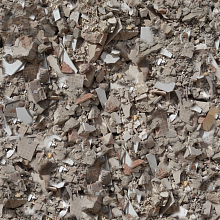 Seamless PBR Concrete Rubble Texture with Debris and Fragments
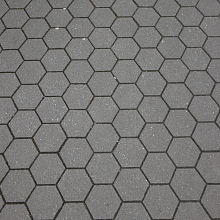 Seamless Hexagonal Concrete Tile PBR Texture 4K
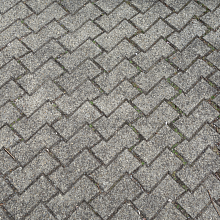 Realistic Concrete Paving Brick Pattern Texture