Creating Seamless PBR Textures for Realistic Ceramic and Porcelain Surfaces

Ceramic and porcelain materials occupy a distinctive niche within the realm of physically based rendering (PBR) due to their unique optical and surface characteristics. These materials, widely utilized in architectural visualization, product rendering, and virtual heritage reconstructions, pose specific challenges and opportunities for texture artists aiming to achieve photorealistic results. Understanding the intrinsic properties of ceramic and porcelain—ranging from their interaction with light, micro-surface details, to their compositional heterogeneity—is fundamental to constructing effective PBR workflows that faithfully replicate their visual complexity.
Ceramic and porcelain are both fired clay-based materials but differ significantly in their density, translucency, and surface finish. Porcelain generally exhibits a higher degree of vitrification, resulting in a denser, more homogeneous microstructure with subtle translucency and a characteristic glossy sheen. Ceramic, by contrast, often retains a more porous and matte or semi-gloss surface texture, susceptible to micro-roughness variations and surface imperfections. These distinctions directly influence the parameters within PBR maps, necessitating tailored capture and authoring techniques to reflect their physical reality.
In practical 3D projects, ceramic and porcelain materials are commonly deployed in environments demanding high fidelity, such as detailed interior scenes featuring tiles, sanitary ware, decorative objects, and cookware. Beyond static renders, these materials must also perform under dynamic lighting conditions and varying camera angles in real-time engines like Unreal Engine and Blender’s Eevee or Cycles. This contextual demand highlights the importance of a robust PBR texturing approach that balances physical accuracy with performance considerations.
The foundation of any PBR texture workflow for ceramic and porcelain starts with comprehensive material acquisition. High-resolution photogrammetry or photometric stereo scanning is ideal for capturing the intricate surface nuances that define these materials. However, the reflective and translucent qualities of porcelain can complicate standard photogrammetry, often requiring cross-polarized lighting setups to isolate diffuse albedo from specular reflections. Additionally, careful calibration of exposure and white balance is critical to preserve color fidelity, especially since subtle variations in glaze coloration can significantly affect the perceived realism.
Once raw data acquisition is complete, the extraction and refinement of PBR maps become the next focus. The albedo map for ceramic and porcelain must accurately represent the base color without baked-in lighting or shadows, a task often complicated by the shiny, glossy nature of these surfaces. This is where the use of cross-polarized images or specialized software for specular-diffuse separation proves invaluable. For porcelain, the albedo generally exhibits a smooth, uniform coloration with very subtle hue shifts, whereas ceramic albedo maps may contain more pronounced color mottling or patterning owing to surface texture and glazing inconsistencies.
Roughness maps hold particular significance in simulating the tactile feel and light scattering behaviors of ceramic and porcelain. Porcelain’s glossy finish typically corresponds to low roughness values, but microscopic glaze imperfections and wear must be encoded as higher-frequency roughness variations to avoid an overly plastic or artificial look. Ceramic surfaces, especially unglazed or matte finishes, require roughness maps that capture a broader range of micro-roughness, including tiny pits, scratches, and firing marks. These maps are often derived from high-resolution micro-normal or height data, processed with careful edge-aware blurring to maintain natural transitions.
Normal maps play a critical role in conveying the subtle micro-geometry of ceramic and porcelain surfaces. While major geometric details may be modeled procedurally or baked from high-poly meshes, the fine undulations and glaze ripples characteristic of these materials demand high-quality normal maps captured or generated from displacement or height maps. Ambient occlusion (AO) maps complement this by enhancing small shadowing effects in crevices and around surface imperfections, which are particularly important in tiles or patterned ceramics where grout lines and relief decoration exist. AO maps should be calibrated to avoid excessive darkening that could flatten the material’s appearance under dynamic lighting.
Height maps, or displacement maps, offer an additional dimension of realism when used in tessellation or parallax occlusion mapping workflows. For ceramic and porcelain, height data must be precise enough to represent glaze drips, cracks, and fired texture variations without introducing unnatural artifacts during rendering. The subtle elevation differences in porcelain glazes, often less than a millimeter in physical scale, require high-fidelity capture devices and post-processing pipelines capable of preserving fine detail while optimizing for runtime performance.
The metallic map, a core component in most PBR workflows, is generally trivial or uniform for ceramic and porcelain since these materials are non-metallic. Setting the metallic channel to zero across the texture ensures that the shader treats the material as a dielectric, allowing accurate simulation of specular reflections governed by the index of refraction and roughness parameters rather than metallic conduction. However, occasional ceramic objects with metallic inlays or decorations may require selective masking within the metallic map, demanding precise UV layout and texture painting.
Tiling and micro-variation strategies are crucial for ceramic and porcelain textures to avoid visible repetition, especially in large surface applications such as tiled walls or floors. While procedural noise layers can introduce micro-roughness variation, the base textures themselves often require multiple texture sets or randomized UV offsets to break pattern uniformity. Incorporating micro-variation in roughness and normal maps mimics the natural inconsistency inherent in hand-crafted ceramics and aged porcelain, enhancing material authenticity. This approach also aids in mitigating artifacts when viewed under close inspection or in high dynamic range lighting environments.
Calibration and optimization are essential final steps in the texturing pipeline to ensure that ceramic and porcelain materials integrate seamlessly within target rendering engines. Within Unreal Engine, the material editor’s physical parameters—such as specular intensity, IOR (index of refraction), and subsurface scattering profiles—must be fine-tuned to complement the authored texture maps. Porcelain, given its slight translucency, often benefits from subtle subsurface scattering approximations or translucency shaders to emulate light diffusion beneath the glaze surface. Blender users working with Cycles or Eevee can utilize the Principled BSDF shader, leveraging its built-in parameters for roughness, specular, and subsurface scattering to achieve comparable results. In both engines, texture compression and mipmapping settings should be carefully adjusted to preserve detail while optimizing memory footprint and rendering speed.
Practical tips for PBR artists include the importance of high-bit depth textures, preferably 16-bit or 32-bit float formats for height and normal maps, to maintain subtle gradations critical for ceramics’ smooth surfaces. Artists should also consider creating layered materials or masks to simulate dirt accumulation or glaze wear, which naturally occur and greatly enhance realism. Non-destructive workflows utilizing software like Substance Painter or Designer allow iterative refinement of roughness and albedo maps while preserving original scan data fidelity. Finally, consistent lighting setups during both acquisition and rendering phases are imperative to ensure the textures respond predictably under various illumination conditions.
In summary, creating seamless PBR textures for ceramic and porcelain surfaces demands a nuanced understanding of their material properties and an exacting approach to texture acquisition, map authoring, and shader calibration. By addressing the specific optical behaviors—such as glaze reflectivity, translucency, and micro-roughness variations—within a physically based framework, artists can produce materials that convincingly replicate the tactile and visual richness of real-world ceramics. This level of detail not only elevates the realism in still images but also ensures dynamic materials that respond believably across diverse lighting environments and interactive applications.
Capturing the intricate surface characteristics of ceramic and porcelain materials for physically based rendering (PBR) workflows demands meticulous acquisition strategies that balance detail fidelity, workflow efficiency, and practical constraints in digital asset creation. Ceramic surfaces present unique challenges due to their complex interplay of gloss, translucency, micro-roughness, and subtle micro-geometry such as fine crackle patterns or glaze pooling. Achieving authentic realism in PBR textures therefore hinges on selecting and refining acquisition techniques capable of resolving these nuances across all relevant texture maps—albedo, roughness, normal, ambient occlusion (AO), height, and metallic—while maintaining seamlessness and scalability for real-time engines like Unreal Engine or offline tools like Blender’s Cycles.
High-resolution photogrammetry remains a cornerstone technique for capturing ceramic surface detail with exceptional spatial accuracy. By photographing the surface from multiple calibrated angles under diffuse lighting conditions, photogrammetry reconstructs detailed mesh geometry and high fidelity color data, producing a dense point cloud that can be converted into a retopologized mesh and texture maps. This method excels at preserving subtle surface irregularities such as micro-cracks, glaze ridges, and slight embossments that influence normal and height maps crucial for realistic light interaction. However, photogrammetry of ceramics requires careful attention to lighting and surface preparation. The glossy, often specular nature of glazed ceramics causes reflections and highlights that can corrupt texture data and 3D reconstruction accuracy. Polarizing filters, controlled diffuse lighting setups, and surface matting sprays (applied sparingly to avoid texture alteration) are commonly employed to mitigate specular interference, though these introduce additional workflow complexity and risk altering the surface appearance. Moreover, photogrammetric scans often produce large, non-tileable textures and irregular meshes that require manual retopology and texture projection to create seamless PBR maps. For tiled textures, techniques such as texture synthesis or manual seam editing become necessary to maintain continuity without visible repetitions, especially when the ceramic surface exhibits non-repetitive crackle or glaze patterns.
Complementing photogrammetry, structured light scanning and laser scanning methods can capture fine surface geometry with sub-millimeter precision, generating highly accurate displacement or height maps critical for micro-variation in ceramic textures. Structured light scanners project known light patterns onto the surface and analyze distortions to derive precise depth information. This approach is advantageous for capturing the subtle undulations and crackle networks characteristic of aged or hand-crafted ceramics, creating height maps that drive parallax occlusion mapping or tessellation shaders in engines like Unreal. However, these scanners are often less effective at capturing color information or albedo textures, necessitating a separate high-resolution photographic pass with careful alignment and color calibration. The challenge lies in fusing geometric and color data into coherent PBR textures that maintain consistent scale and orientation. Furthermore, scanning glossy ceramics often requires coating with anti-reflective sprays or immersion in index-matching liquids to reduce specular noise, which risks contaminating or damaging delicate surfaces. Careful calibration of scanner parameters and post-processing filtering are essential to reduce noise and maintain fidelity in normal and AO maps derived from the raw scans.
Procedural generation techniques offer a complementary and increasingly popular alternative or augmentation to direct scanning, particularly for tileable ceramic textures with repetitive or semi-random features like glaze pooling, crackle networks, or surface pitting. Procedural authoring leverages mathematical noise functions, fractal algorithms, and physically inspired shader graphs to synthesize surface detail maps parametrically. This approach is particularly effective for generating roughness and normal maps that simulate micro-roughness variations and subtle height perturbations without the need for extensive photographic capture. Procedural methods allow for non-destructive, resolution-independent editing and seamless texture tiling, making them highly adaptable for game engines and real-time visualization. However, accurately replicating the organic complexity and subtle optical effects of real ceramic surfaces—such as the translucency of porcelain or the gloss variation from uneven glazing—requires careful calibration and layering of procedural components informed by photographic references or scan data. Multi-channel blending of procedural noise with scanned albedo inputs can enhance realism, but demands expertise in shader authoring and texture baking workflows within tools like Substance Designer or Blender’s procedural texture nodes.
A critical consideration across all acquisition methods is the accurate calibration of PBR texture maps to ensure physically plausible material response under standardized lighting models. Albedo maps must be captured and linearized with careful white balance and exposure control to avoid color shifts that distort the appearance of ceramic pigments or glaze hues. Roughness and metallic maps require precise encoding of surface microfacet distribution and metalness values; for ceramics, metallic should typically be zero, but roughness must faithfully represent the smooth yet irregular nature of glaze surfaces, ranging from near mirror-like reflections to matte crackled areas. Normal maps generated from photogrammetry or scanning must be accurately reoriented and filtered to prevent artifacts or seams that break the illusion of continuity. Ambient occlusion maps, often baked from high-resolution geometry or derived from curvature analysis, enhance perceived depth and crevice shadowing in crackle patterns and embossed motifs. Height maps should be optimized for use with displacement or parallax shaders, balancing detail resolution against performance constraints, especially in real-time engines where excessive tessellation can be costly.
Optimizing these acquired textures for game engines like Unreal Engine involves additional steps such as texture atlasing, mipmap generation with anisotropic filtering, and compression without significant loss of detail. Using Unreal’s material editor, artists can combine the various PBR maps with subsurface scattering parameters and clearcoat layers to simulate the translucent and refractive qualities of porcelain glaze. Blender’s Cycles renderer supports complex node-based shader networks that integrate acquired texture maps with physically accurate glass or ceramic shaders, enabling iterative refinement and baking of procedural enhancements. In both cases, managing texture resolution and memory footprint is essential for performance; tiling textures with micro-variation details—achieved by blending multiple texture layers or using detail masks—can break up repetition and increase realism without requiring prohibitively large textures.
In practice, a hybrid approach often yields the best results: high-resolution photogrammetry or scanning to capture the macro and micro geometry of the ceramic surface, complemented by procedural generation for seamless tiling and micro-variation of roughness and normal details. This combination allows for the preservation of unique glaze and crackle features while providing the flexibility needed for different asset scales and engine requirements. Ultimately, the success of acquisition hinges on rigorous calibration, careful lighting and capture setups, and thoughtful integration of scanned data with procedural and manual texturing workflows—ensuring that ceramic and porcelain surfaces not only look authentic but respond correctly under dynamic lighting, elevating the realism and tactile quality essential to high-end PBR materials.
Creating and calibrating PBR texture maps for ceramic and porcelain materials demands a rigorous approach to both acquisition and authoring, ensuring that the subtle physical characteristics of these surfaces—such as their distinctive glossiness, nuanced translucency, and fine micro-variations—are faithfully represented within the rendering engine. Unlike metals or rough stones, ceramics exhibit a complex interplay of specular reflection, subsurface light scattering, and micro-roughness, all of which must be encoded precisely across multiple texture channels to achieve photorealism.
The foundation of any ceramic PBR material is the albedo map, which in this context must capture not only the base color but also the intrinsic surface coloration variations caused by glazing, firing inconsistencies, and microscopic pigment dispersion. Unlike diffuse surfaces, ceramic albedo tends to be relatively desaturated and low in energy, as much of the light interaction is specular rather than diffuse. For this reason, when authoring the albedo texture, it is critical to avoid baked-in shadows or specular highlights to maintain physical accuracy. High-resolution photographic captures under diffuse lighting conditions provide a solid baseline; however, these often require careful retouching to remove surface reflections and to flatten lighting gradients. Alternatively, procedural texturing can be employed to introduce subtle chromatic noise and faint speckling that mimics porcelain’s fine grain and glaze imperfections. When preparing albedo for engines like Unreal or Blender’s Eevee and Cycles, ensure the color space is set to sRGB with no gamma correction baked into the texture, preserving linear workflow integrity.
Roughness maps are arguably the most pivotal in replicating ceramic glossiness, as they govern how light scatters microscopically over the surface, controlling the sharpness and intensity of specular highlights. Ceramic glazes typically exhibit a smooth, low roughness value, but this can vary within the tileable texture to reflect subtle wear, micro-cracks, or surface residue. To author a convincing roughness map, start by analyzing macro photographs taken under controlled lighting to isolate specular reflection variance. The map should encode fine-scale roughness fluctuations, often at a range between 0.05 (for highly polished porcelain) and 0.15 (for matte or worn ceramics). Importantly, these variations must tile seamlessly without obvious repetition, which can be achieved by blending multiple noise layers and using high-frequency detail generators, such as anisotropic noise or fractal patterns, in software like Substance Designer. Calibration within the rendering engine often requires iterative testing: for instance, Unreal Engine’s physically-based shading model assumes a dielectric Fresnel reflectance of around 4% at normal incidence for ceramics, so the roughness must be adjusted such that specular highlights respond realistically under dynamic lighting conditions.
Normal maps serve to add subtle micro-geometry detail that cannot be modeled efficiently with polygons. For ceramics, these normals capture the minute undulations and glazing artifacts—fine bumps, scratches, and crazing—that contribute to the tactile realism of the surface. Acquiring these details typically involves photogrammetry or photometric stereo capture methods that can resolve sub-millimeter topography. Alternatively, high-quality sculpted displacement maps can be baked into normal maps using tools like xNormal or Marmoset Toolbag. When authoring normal maps for ceramics, avoid exaggerated bumps that would conflict with the material’s inherent smoothness; the normal map should subtly enhance specular highlight variation without introducing unnatural shading artifacts. In engines like Blender, ensure that normal maps are assigned with correct color space (non-color data) and that their strength is calibrated against the material’s roughness to prevent visual discordance.
Ambient Occlusion (AO) maps are essential for augmenting the perception of depth in crevices and recessed areas, especially in ceramic objects with intricate shapes or relief patterns. While AO does not affect direct light reflection, it enhances the realism of indirect lighting and global illumination by simulating light occlusion in micro-cavities. For ceramic surfaces, AO maps should be generated with attention to the scale of surface detail; overly strong occlusion can make glossy surfaces appear unnaturally dirty or matte. Procedural AO baking tools in Blender or high-resolution ray traced AO passes in Unreal can provide accurate results. It is advisable to keep AO subtle and modulate it in combination with the roughness and albedo maps to prevent over-darkening the surface, preserving the characteristic porcelain brightness and gloss.
Height maps, or displacement maps, provide a complementary layer to normal maps, offering the capability to simulate larger-scale surface undulations and subtle edge wear on ceramic shards or chipped porcelain. Because ceramics often feature finely cracked glazes and edge imperfections, carefully calibrated height maps can elevate realism by introducing depth variations that respond impressively to parallax effects and tessellation. When authoring height maps for ceramic materials, it is critical to maintain low amplitude values—usually in the sub-millimeter range—to avoid exaggerated geometric distortion that breaks the illusion of smooth glaze. Height maps are best used in engines supporting displacement or parallax occlusion mapping, such as Unreal Engine with adaptive tessellation or Blender’s Cycles with displacement shaders. Calibration involves adjusting the displacement scale and bias parameters to harmonize with the object’s actual geometry and the normal map’s detail, ensuring consistency in silhouette and shading.
Metallic maps, though less prominent in ceramic materials, can be relevant in scenarios where ceramic pieces incorporate metal inlays or decorative trims. In pure ceramic PBR materials, the metallic value is almost invariably zero, as ceramics are dielectrics and do not exhibit metallic reflectance properties. When authoring metallic maps for mixed-material assets, it is essential to confine metallic values strictly to metal regions, avoiding bleed into ceramic textures, which would corrupt the Fresnel reflectance behavior. Metallic maps are typically binary or near-binary in ceramics and should be assigned as non-color data. Unreal Engine’s PBR pipeline relies heavily on this binary distinction to switch between dielectric and metallic shading models, so precision here is paramount.
Tiling and micro-variation are crucial considerations throughout map creation. Ceramic surfaces rarely exhibit perfectly uniform patterns; glaze application and firing introduce randomness at multiple scales. To mitigate tiling artifacts, one should introduce subtle micro-variation layers within each map channel. This can be accomplished by overlaying procedural noise or scanned detail masks that simulate glaze thickness fluctuations, speckling, or minute surface contamination. For example, blending a low-frequency noise pattern into the roughness map can emulate the natural variation in glossiness caused by uneven glaze curing. Similarly, the albedo can incorporate faint blotches and discolorations to break uniformity. These micro-variations are often tiled using triplanar projection combined with carefully designed masks to avoid seams, particularly important in assets with visible curvature, like ceramic vases or plates.
Optimization is an ongoing concern when dealing with high-resolution PBR maps, especially for real-time applications. While ceramic materials benefit from detailed normal and roughness maps, balancing texture resolution with performance is key. Using channel packing strategies—such as storing ambient occlusion, roughness, and metallic in the RGB channels of a single texture—can reduce memory footprint. Engines like Unreal provide robust support for packed textures and automatic mipmap generation that preserves detail at varying distances. Additionally, leveraging texture streaming and LODs for ceramic assets with large visible surfaces can maintain visual fidelity without sacrificing frame rates.
Calibration within the target rendering engine forms the final and arguably most critical stage. Both Unreal Engine and Blender require iterative refinement of map parameters in situ under realistic lighting setups to achieve convincing ceramic materials. Unreal’s physically based shading model expects dielectric materials to have a specular reflectance around 0.04 at normal incidence, and deviations here can indicate improper albedo or metallic input. Similarly, Blender’s Principled BSDF shader uses the same physical principles, but calibration often involves adjusting roughness and normal strength to match reference photographs or measured BRDF data. For translucency—an important optical characteristic of thin porcelain—subsurface scattering parameters must be carefully tuned. While not part of the standard PBR map set, the interaction of translucency with the base maps is vital; subtle subsurface scattering effects can be simulated by modulating the albedo’s brightness and hue in combination with a dedicated subsurface map or vertex colors.
Ultimately, creating seamless, realistic PBR textures for ceramic and porcelain surfaces is a multi-dimensional endeavor that requires meticulous map creation, careful integration of micro-variations, and precise calibration against physical reference and engine-specific shading models. Mastery of these processes not only yields materials that convincingly portray ceramic’s complex optical behavior but also ensures that these assets perform efficiently across varied real-time and offline rendering contexts.
FAQ
What is covered in this guide?
This guide explains Creating Seamless PBR Textures for Realistic Ceramic and Porcelain Surfaces with practical notes for seamless PBR materials, texture setup, and production use.
Can I use these texture techniques in Blender, Unreal Engine, and Unity?
Yes. The workflow focuses on standard PBR maps and tileable materials that can be used in Blender, Unreal Engine, Unity, archviz, games, and VFX pipelines.
Where can I find textures for this workflow?
Use the AITextured texture library and the related texture links on this page to find seamless PBR materials and preview them before download.
Related Textures
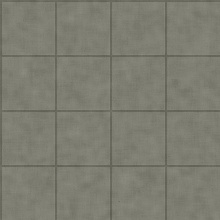 Procedural Stamped Sidewalk Concrete PBR Texture
 Procedural Fine Asphalt Road PBR Texture
 Procedural Pitted Concrete PBR Texture
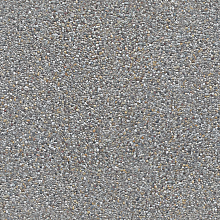 Seamless Concrete Pebble PBR Texture in 4K Resolution
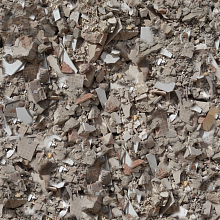 Seamless PBR Concrete Rubble Texture with Debris and Fragments
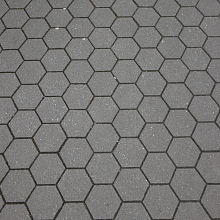 Seamless Hexagonal Concrete Tile PBR Texture 4K
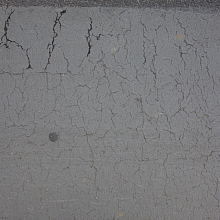 Cracked Asphalt Texture with Weathering