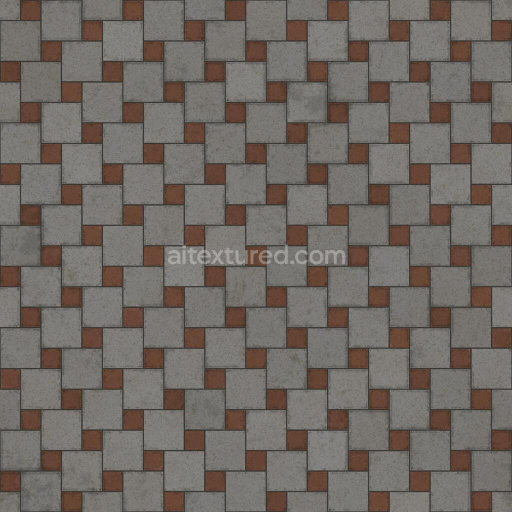
Square Concrete Paving Blocks in Alternating Colours | Free PBR
Seamless texture (tileable) · PNG, WEBP, PBR ZIP.
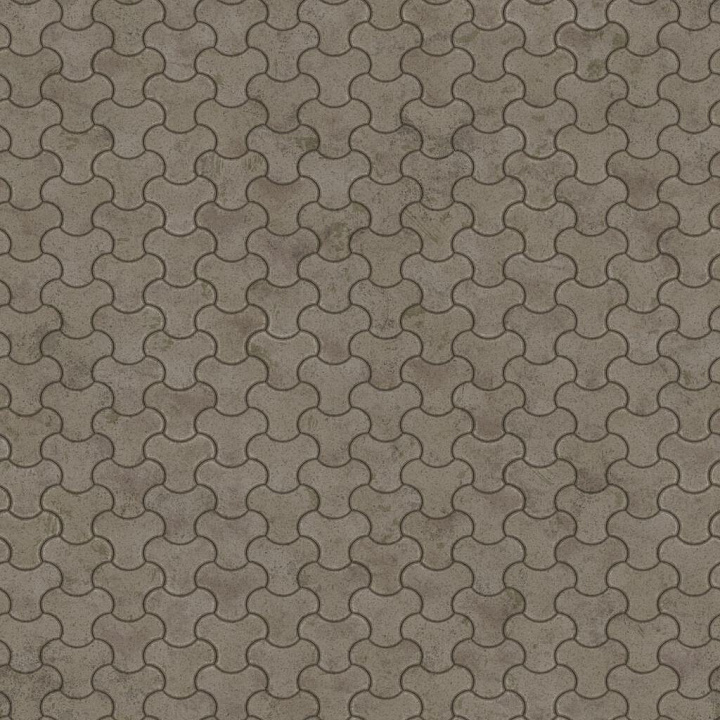
| ID | old-y-shape-concrete-bricks-for-pavement-free-pbr |
|---|---|
| Category | Brick |
| Formats | PNG, WEBP, PBR ZIP |
| Size | 1k (1024x1024px), 2k (2048x2048px), 4k (4096x4096px), 8k (8192x8192px) |
| Tileable | Yes |
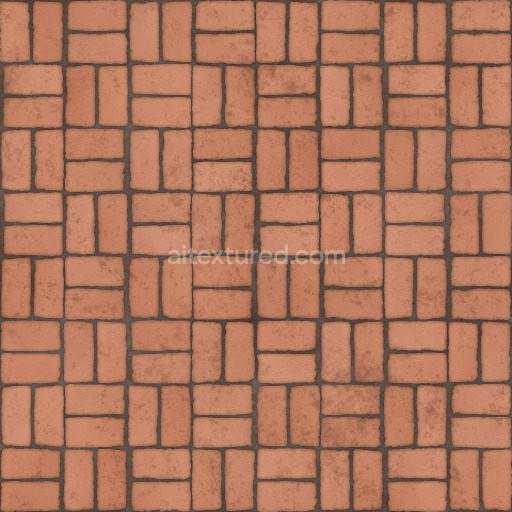
The Old Y-Shape Concrete Bricks for Pavement (Tiles 0083) feature a distinctive interlocking design, formed from aged cement-based blocks that create a durable and visually appealing surface commonly found in public areas. These bricks are primarily composed of mineral aggregates such as crushed stone and sand, bound together with Portland cement as the primary adhesive. The mixture results in a robust, weather-resistant substrate with moderate porosity, which allows for subtle aging effects such as surface wear and slight discoloration over time. The Y-shape geometry enhances mechanical interlock, improving load distribution and minimizing shifting under pedestrian or vehicular traffic.
In terms of material composition, the concrete’s surface finish exhibits a slightly rough texture typical of cast cement, with no additional polishing but natural abrasion that emphasizes its utilitarian character. Coloration arises from a combination of gray cement matrix tinted by fine oxide pigments and mineral impurities within the aggregate, producing a natural variation in tone and subtle mottling. These details are faithfully captured in the PBR texture channels: the BaseColor (Albedo) maps the muted gray hues and pigment variations; the Normal map defines the surface relief and interlocking edges; Roughness encodes the matte, slightly gritty finish; Metallic remains near zero, reflecting the non-metallic nature of concrete; Ambient Occlusion highlights crevices between bricks; and Height/Displacement channels represent the subtle elevation changes inherent in the patterned surface.
This texture set is offered at up to 8K resolution, ensuring exceptional detail suitable for high-fidelity visualization in Blender, Unreal Engine, and Unity projects. Such resolution allows for close-up views without pixelation, making it ideal for architectural visualization, urban environment design, and game asset creation. For practical use, it is recommended to carefully adjust the UV scale to match real-world brick dimensions, as this preserves the natural proportions of the Y-shape pattern and prevents distortion. Additionally, fine-tuning the roughness value can help simulate different levels of weathering, from freshly laid concrete to heavily worn pavement, enhancing realism in various lighting conditions.
Import the texture maps into Blender with sRGB color space for albedo/base color and Non-Color for normal, roughness, metallic, AO, height, and ORM maps. Connect normal maps through a Normal Map node, then adjust UV scale with a Mapping node so the material repeats naturally on your model.
For the full step-by-step setup, see How to Use Seamless Textures in Blender. Browse related material examples in wood, concrete, and metal.
Yes. This texture is designed as a seamless tileable PBR material, so it can repeat across large surfaces without visible borders.
Use the download controls on this page: they expose the available PNG, WEBP or engine ZIP choices and supported resolutions for this asset.
Use the engine ZIP choices to package compatible source maps for Blender, Unreal Engine or Unity, then verify the imported material in the target application.
Commercial-use permission is not verified for this record. Confirm the original source and license before production use.
Generate maps from existing images, preview materials, convert channels, and package compatible inputs for Blender, Unity, and Unreal Engine.
Choose a verified workflow for generating maps, previewing tiling, converting channels, or starting from the texture catalog.
Derive Normal, Roughness, AO, Metallic, Height and optional ORM maps from one or more source images, then review the results.
Instant WebGL viewer: inspect materials on a sphere, plane, and cube. Check tiling and lighting in real time.
Re-packages maps per engine: Unreal (BaseColor + ORM), Unity (Mask/MetallicSmoothness), Blender (separate channels).
PNG ↔ JPG ↔ SVG: fast convert, SVG rasterize, embed/trace options, quality & background controls.