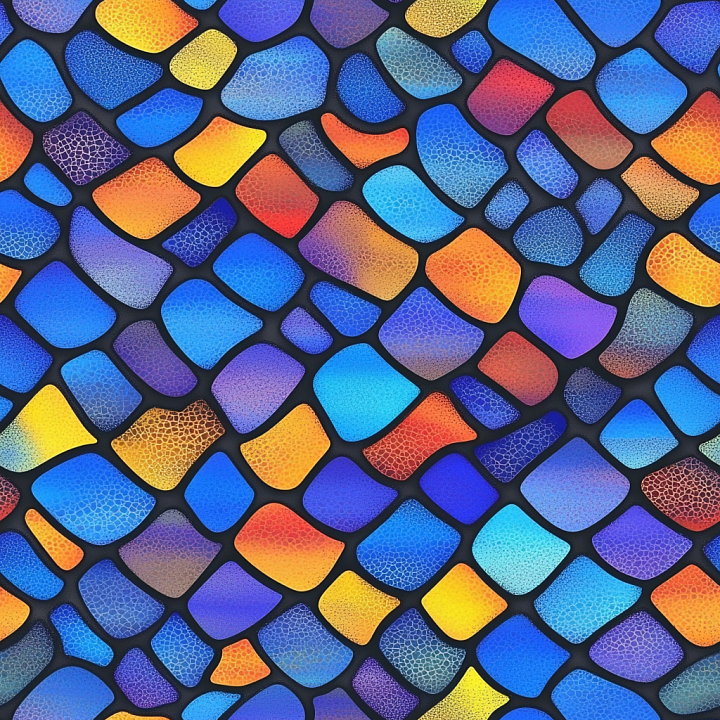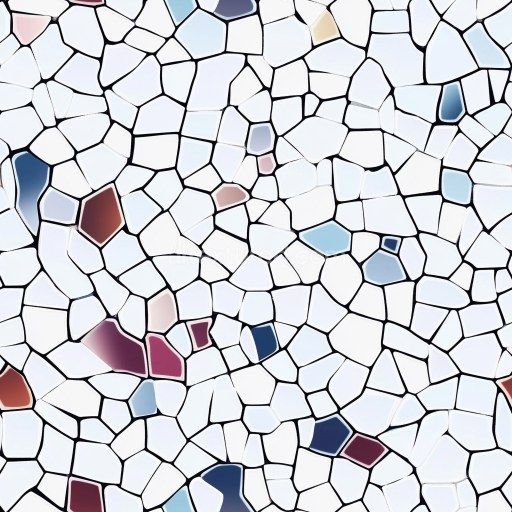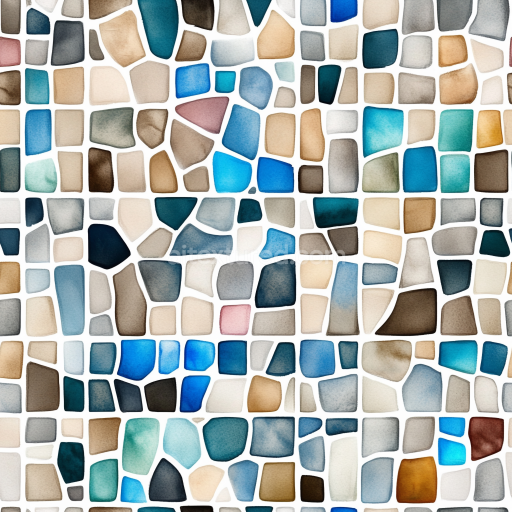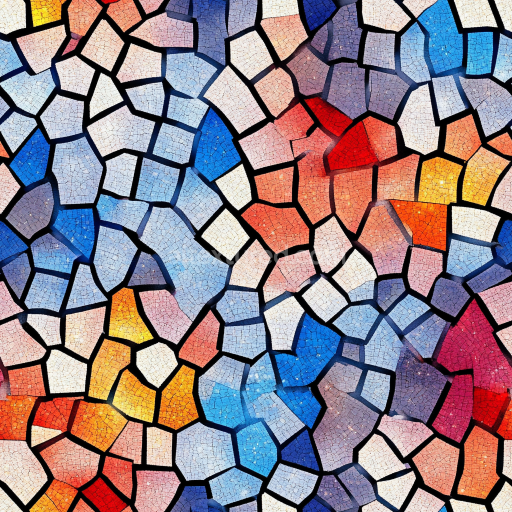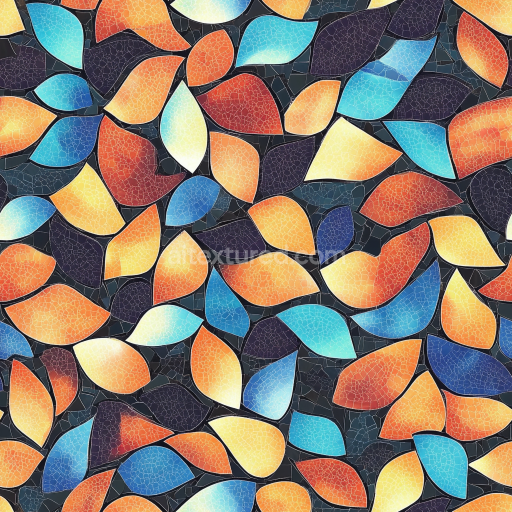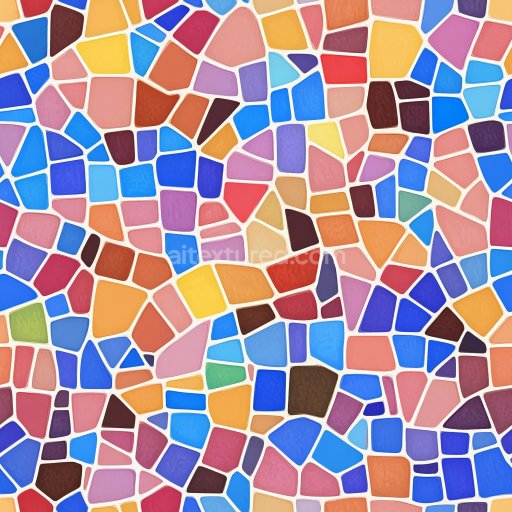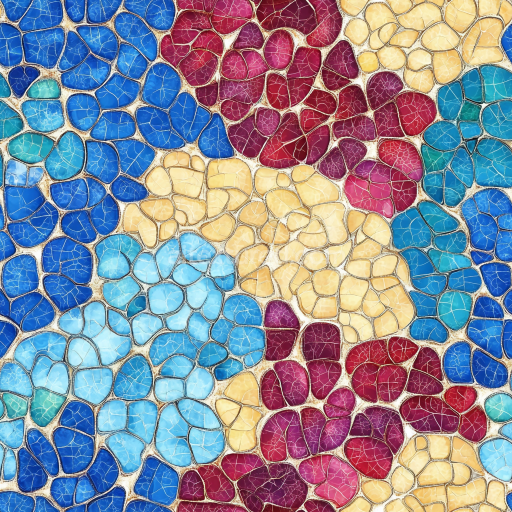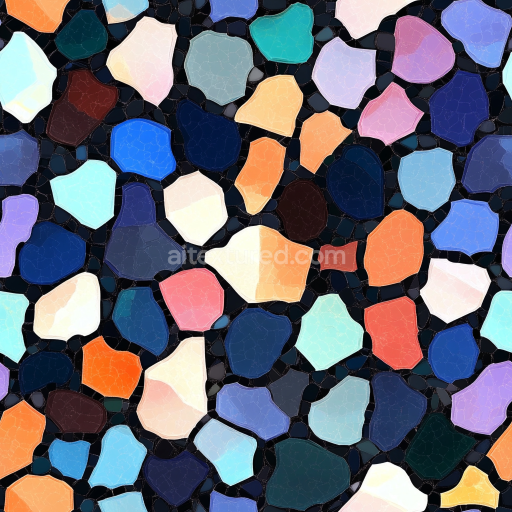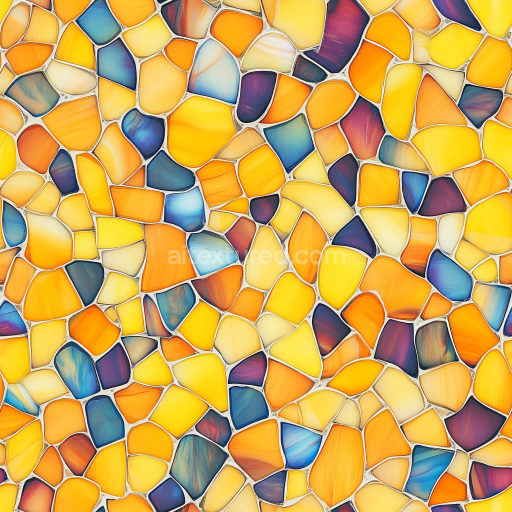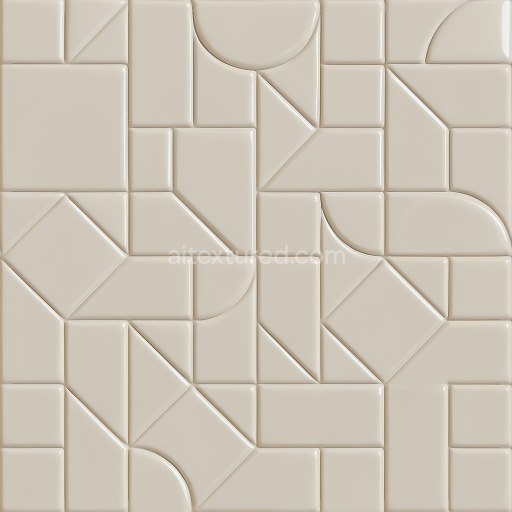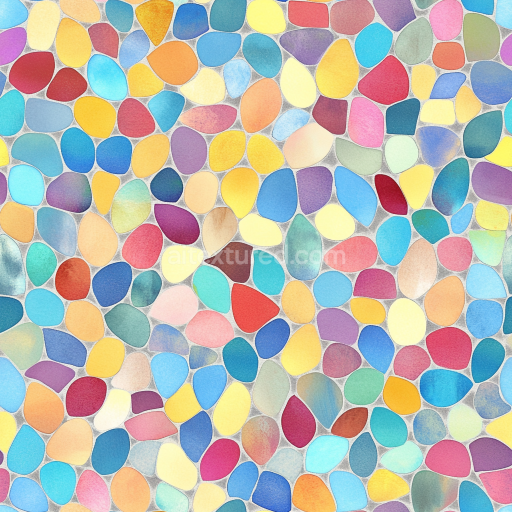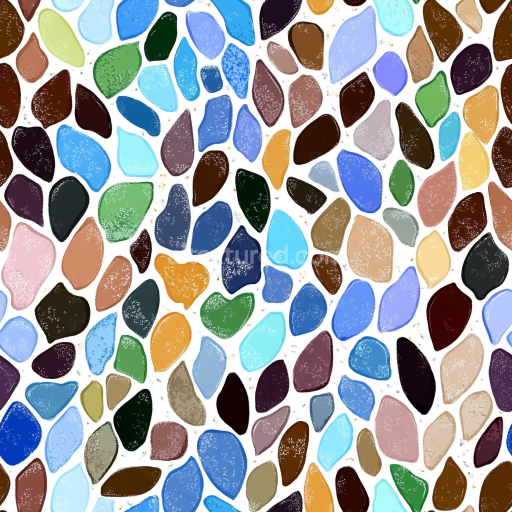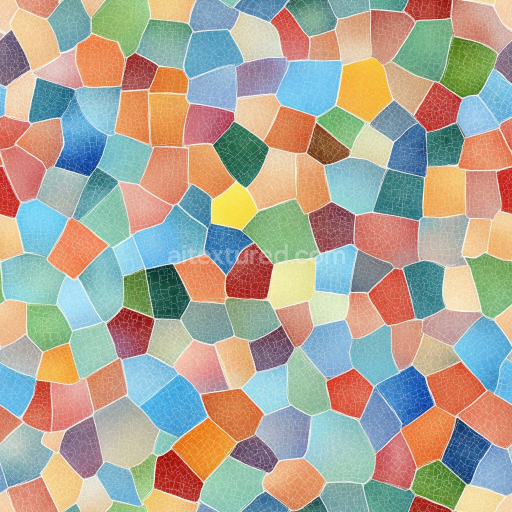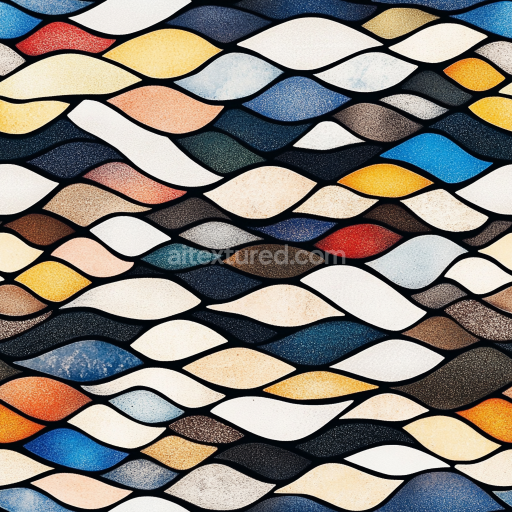
This unique mosaic texture features an array of irregularly shaped tiles with a distinctive cracked surface pattern, creating a visually appealing and dynamic layout. The tiles are predominantly smooth with subtle, organic edges forming a non-uniform tessellation. Each tile boasts a lively color palette blending shades of blue, purple, yellow, and orange, enhanced by a gentle gradient that adds depth and a hand-crafted artistic flair. The cracked pattern on each tile surface provides intricate detail and texture, contributing to a slightly translucent or glazed ceramic-like finish that subtly reflects light, producing a soft sheen without heavy gloss. The grout lines are thin, dark, and consistent, accentuating the bright tiles and enhancing the overall contrast. This mosaic pattern repeats seamlessly, making it perfectly tileable for large-scale architectural visualizations or game environments. As a PBR-ready texture, it integrates flawlessly with 3D software like Blender, Unreal Engine, Unity, 3ds Max, and Cinema 4D, enabling realistic renderings with physically accurate lighting responses. Its vibrant and artistic design suits decorative walls, feature surfaces, artistic floors, or stylized spaces that demand a splash of color and complexity, such as Mediterranean-inspired courtyards, indoor pools, modern bathrooms, or creative commercial interiors. This pattern's vivid tonal variety and irregular shapes make it a standout choice for projects requiring a playful, eye-catching mosaic aesthetic, while its seamless nature ensures versatile application without visible tiling. Perfect for 3D artists and designers seeking a high-quality texture to enrich scenes with dynamic color combinations and subtle surface detail.
Best Uses for This Texture
seasonal mosaic materials
stylized game props and level dressing
Blender, Unreal Engine and Unity materials
packaging mockups, textile prints and decorative surfaces
tileable backgrounds for archviz, motion graphics and product renders
How to Use These Seamless PBR Textures in Blender
This quick guide shows how to connect a seamless PBR texture set in Blender using
Principled BSDF. The workflow works for tileable materials used in
Blender, Unreal Engine, Unity, archviz, and game environments.
What Is Included
albedo or base color for the visible surface color
normal for fine surface relief
roughness for gloss and reflectivity control
metallic for metal or dielectric response
ao for ambient occlusion in cavities
height for bump, parallax, or displacement
ORM packed maps for optimized real-time workflows
Example node layout for a standard PBR material in Blender.
Quick Start
Open the Shader Editor and create a new material.
Add an Image Texture node for each map you want to use.
Set Color Space to sRGB for Albedo and to Non-Color for Normal, Roughness, Metallic, AO, Height, and ORM.
Connect the maps to the matching inputs on Principled BSDF.
Recommended Connections
Albedo -> Base Color
Roughness -> Roughness
Metallic -> Metallic
Normal -> Normal Map node -> Normal
Height -> Bump or Displacement, depending on your render setup
Add an Image Texture node before assigning the downloaded maps.
Using ORM Maps
If your download includes a packed ORM texture, split its RGB channels:
R = AO, G = Roughness, B = Metallic.
This is useful for Unreal Engine and other optimized real-time pipelines.
Tiling and UV Scale
Because these textures are seamless, you can repeat them across large surfaces without
visible seams. Use a Mapping node to increase or reduce tiling density
on floors, walls, terrain, props, and modular assets.
Common Mistakes
Using sRGB on non-color maps
Connecting a Normal map directly without a Normal Map node
Overdriving Height or Bump values so the surface looks unnatural
Ignoring texture scale, which makes seamless materials look repetitive
Load the downloaded texture set and wire the maps to Principled BSDF.
Build, preview, and export seamless PBR materials. Generate full map sets from a single image, inspect them in a real-time WebGL viewer, and re-package maps for Unreal, Unity, and Blender—directly in your browser.