Creating Seamless PBR Textures for Realistic 3D Fabric Patterns and Embroidery
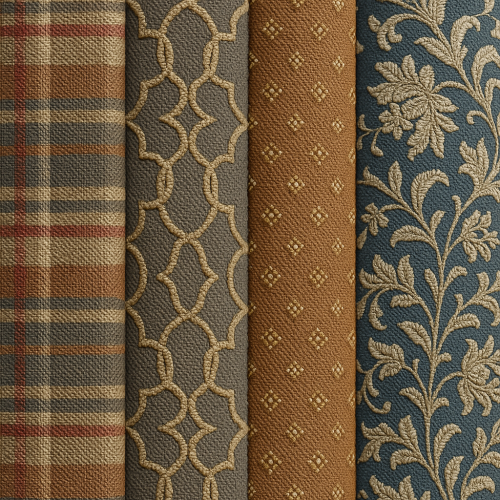
Physically Based Rendering (PBR) has become the cornerstone of modern material creation pipelines, underpinning the pursuit of photorealism in interactive and offline 3D applications. Within this paradigm, fabric and embroidery textures present a unique and formidable challenge. Their visual richness arises not merely from color or pattern but from the intricate interplay of weave structures, fiber anisotropy, micro-surface variations, and subtle subsurface scattering effects. Consequently, crafting seamless PBR textures that convincingly replicate these complexities is essential for elevating the fidelity of 3D fabric assets across games, architectural visualization (archviz), and VFX.
At the core of the PBR approach lies the decomposition of material appearance into a set of physically meaningful texture maps—typically albedo, roughness, normal, ambient occlusion (AO), height (or displacement), and metallic. For textiles, each of these maps must be carefully authored or acquired to reflect the nuances of the underlying fiber structure and weave geometry. The albedo map, for instance, encodes the diffuse color but must also capture the subtle color shifts caused by fiber orientation and the interlacing of threads. Unlike flat, uniform materials, fabric albedo often contains fine-grained chromatic variations and mottling that influence perceived softness and depth. Achieving this level of detail necessitates high-resolution scanning or meticulous hand-painting informed by photographic references, often supplemented by procedural noise to emulate fiber-level irregularities.
Roughness maps are equally critical, as they dictate how light reflects off the fabric surface at varying microfacets. Textile surfaces rarely behave as ideal Lambertian diffusers; instead, their roughness varies across the surface due to thread tightness, fiber coarseness, and surface wear. Embroidery elements—typically composed of thicker, shinier threads—introduce localized roughness contrasts that must be preserved to avoid flattening the material’s visual hierarchy. Accurate roughness calibration is often achieved through photometric measurements or calibrated reference captures, aligning the map’s tonal values to real-world glossiness levels. When authoring roughness maps manually, artists must consider the directional nature of fiber reflectance, sometimes embedding anisotropic roughness data or leveraging engine-specific anisotropy settings to simulate satin or silk threads convincingly.
Normal maps translate the micro-geometry of the fabric into surface perturbations that interact dynamically with lighting. For woven textiles, this involves capturing the subtle undulations created by intersecting warp and weft threads, as well as the raised profiles of embroidered patterns. High-quality normal maps can be derived from photogrammetry, micro-CT scans, or hand-sculpted high-poly models baked down to low-poly meshes. The normal map’s fidelity directly impacts the perception of thread depth and relief, especially during close-up shots or dynamic lighting scenarios. One technical challenge is ensuring that normal maps tile seamlessly without visible repetitions, which requires careful editing and blending of edge boundaries, often supported by specialized texture synthesis tools or procedural noise layering.
Ambient occlusion (AO) maps add another layer of realism by simulating self-shadowing within the fabric structure. The fine cavities between threads and the folds in embroidery create subtle occlusions that enhance depth perception and volume. While AO is frequently baked from high-poly meshes, its accuracy is particularly vital for fabrics, as insufficient occlusion can result in a “flat” or plasticky appearance. In PBR workflows, AO is often multiplied with the albedo or integrated within the shading model, so its calibration must be balanced to avoid overly darkening the texture or washing out details. Additionally, AO maps can be optimized by leveraging engine-specific features such as baked indirect lighting or screen-space ambient occlusion, reducing texture size and memory footprint without sacrificing visual fidelity.
Height maps or displacement maps serve to accentuate the macro-geometry of fabric surfaces, especially important for close-range rendering and when using tessellation or parallax occlusion mapping in real-time engines like Unreal Engine or Blender’s Eevee. These maps capture the elevation differences between the fabric base and the raised embroidery stitches or thicker yarns. Correctly calibrated height maps help convey the tactile nature of the material, reinforcing the perception of dimensionality beyond what normal maps alone can provide. However, height maps must be carefully optimized to prevent artifacts such as aliasing or exaggerated surface distortion, often requiring multi-channel packing strategies or mipmap adjustments to maintain consistency across varying levels of detail.
Unlike metallic or conductive materials, fabrics generally have a metallic map set to zero, given their non-metallic nature. Nevertheless, subtle exceptions exist in embroidered elements that may incorporate metallic threads or reflective fibers. In such cases, the metallic channel must be judiciously painted or masked to reflect these localized properties without compromising the overall dielectric behavior of the textile. This selective approach enables the accurate simulation of hybrid materials, such as silk fabrics with gold or silver thread embroidery, which are common in high-end costume or architectural assets.
One of the most demanding aspects of fabric PBR texture creation is achieving seamless tiling without introducing visible repetition or pattern artifacts. Textiles inherently possess repetitive weaves, but when tiled across large surfaces, even minor discrepancies in texture edges or uniform patterns become glaringly apparent. To address this, artists employ a combination of micro-variation techniques and procedural noise overlays to break uniformity. Micro-variation involves subtle shifts in color, roughness, or normal data within the texture to simulate the natural imperfections and irregularities found in real fabrics—such as stray fibers, minor dye inconsistencies, or slight thread misalignments. Integrating these variations often requires custom shaders or engine-specific material graph setups that blend base textures with detail maps and noise generators, especially within engines like Unreal Engine, which offers robust node-based material editing.
Calibration and optimization are paramount throughout the PBR workflow to ensure that texture maps not only look accurate but also perform efficiently in the target rendering environment. Calibration begins with accurate color profiling of albedo maps, often utilizing physical light measurement tools or color charts during photographic capture to ensure linearity and consistent gamma correction. Roughness and height maps benefit from empirical testing under engine lighting conditions, adjusting values iteratively to balance realism with performance constraints. Optimization strategies include texture resolution management, channel packing (for example, combining AO, roughness, and metallic into a single texture to reduce draw calls), and employing compression formats that preserve critical data fidelity. In real-time engines, mipmap biasing and streaming prioritization help maintain sharpness in close-up views while minimizing memory usage at distance.
Importantly, the integration of these textures within engines like Unreal Engine or Blender requires understanding their respective shading models and material systems. Unreal Engine’s physically based shading pipeline supports advanced features such as anisotropic reflections, tessellation, and subsurface scattering, which are invaluable for realistic fabric rendering. Properly authored PBR maps can leverage these features to simulate silk’s sheen, velvet’s plush depth, or the metallic glint of embroidery threads. Blender’s Cycles and Eevee renderers also provide robust PBR workflows, with node-based materials that allow granular control over texture input and shader behavior. Artists must tailor texture maps to engine-specific requirements, such as texture coordinate spaces, normal map formats (OpenGL vs. DirectX), and shader parameter ranges, to ensure consistent appearance across platforms.
In summary, the creation of seamless PBR fabric and embroidery textures is a multidisciplinary endeavor that merges precise data acquisition, meticulous map authoring, and sophisticated shading integration. The goal is not merely to replicate surface color but to encapsulate the fabric’s physical and optical complexity—its weave structure, fiber anisotropy, micro-geometry, and variable reflectance—within a coherent PBR framework. Achieving this elevates the realism of 3D assets, enabling artists and technical directors to deliver visually compelling fabrics that respond authentically under diverse lighting and viewing conditions, thereby enhancing the immersive quality of games, archviz scenes, and cinematic VFX.
Achieving photorealistic PBR textures for fabric and embroidery hinges critically on the fidelity and precision of the underlying surface data acquisition. The nuanced interplay of fiber weave, stitch topology, and thread reflectance necessitates capturing micro-details at resolutions and modalities that traditional texture photography often fails to deliver. This section delves into advanced acquisition techniques—photogrammetry, high-resolution scanning, and procedural generation—that empower artists and technical directors to construct seamless, physically accurate PBR maps essential for modern rendering engines like Unreal Engine and Blender’s Eevee or Cycles.
Photogrammetry remains a foundational method for harvesting base color (albedo) and spatial detail, but fabric and embroidery pose unique challenges. The inherently repetitive and fine-grained nature of textile surfaces results in feature-poor regions that can confound point matching algorithms. To mitigate this, controlled lighting setups with diffuse dome illuminations are essential, minimizing specular highlights that obscure thread details. Using high-resolution DSLRs with macro lenses or dedicated industrial cameras, one should capture a dense angular sweep around the fabric sample, ensuring at least 60-80% overlap between images to maximize photogrammetric reconstruction accuracy. Supplementary polarized filters can help isolate diffuse reflectance by reducing surface glare, crucial for extracting a clean albedo map devoid of baked-in specular highlights.
However, photogrammetry alone is insufficient to resolve the intricate topology of embroidery stitches or the subtle anisotropy of woven fibers. Here, high-resolution scanning techniques—such as structured light or laser scanning—excel. Structured light scanners project known patterns onto the fabric surface, capturing micro-relief with sub-millimeter precision. When paired with telecentric lenses, these systems can accurately map the three-dimensional displacement of raised embroidery threads, enabling generation of precise height and normal maps that faithfully reproduce stitch contours and thread layering. The output raw meshes or displacement maps must be carefully post-processed to remove noise while preserving fine detail; Gaussian blurs or bilateral filters can smooth scanning artifacts without erasing critical micro-geometry.
For capturing ambient occlusion (AO) and roughness maps, integrating the scanning data with calibrated lighting rigs is indispensable. AO can be approximated by rendering the scanned geometry under hemispherical occlusion models or through baked global illumination passes in offline renderers, capturing shadowing within thread interstices. Roughness, a parameter profoundly influenced by fiber material and surface finish, benefits from a combination of direct measurement and informed extrapolation. Spectrophotometric devices or gonioreflectometers can yield reflectance data across varying incidence angles, enabling derivation of roughness and specular response curves. When such equipment is unavailable, multi-light photometric stereo setups can approximate surface normals and reflectance characteristics, facilitating roughness estimation through variation in specular highlight sharpness correlated to thread orientation and material properties.
Metallic maps, though typically negligible for fabric, become relevant when textiles incorporate metallic threads or embroidery with metal-coated yarns. Capturing metallicity demands careful spectral analysis and visual inspection under direct lighting to isolate metallic reflections from diffuse fibers. This data is often integrated into the albedo or roughness channels via masking, ensuring the metallic contribution modulates the PBR shader accurately.
Height maps derived from scanning or photogrammetry require meticulous calibration for seamless tiling. Given the repetitive nature of fabric patterns, it is critical to ensure that edge data aligns perfectly to avoid visible seams in displacement or parallax occlusion mapping. Techniques such as edge blending, mirror tiling, or Fourier domain seam removal can be applied during texture authoring. Additionally, introducing controlled micro-variation—small-scale randomized noise or subtle color shifts—breaks up uniform repetition and enhances realism by simulating manufacturing inconsistencies and wear.
Procedural generation complements physical acquisition by filling gaps where scanning proves impractical or to extend texture sets at arbitrary resolutions. Procedural fiber-level detail generation can be achieved using node-based material creation tools within Blender or Substance Designer, leveraging noise functions, anisotropic normal synthesis, and directional roughness maps to emulate thread patterns. Procedural methods excel at creating tileable base textures that can be layered with scanned or photographed data, offering artist-controlled variation without the burden of exhaustive physical capture. Hybrid workflows often blend scanned albedo and normal maps with procedurally generated roughness or height details to optimize performance and memory footprint while retaining visual fidelity.
Calibration across these modalities is paramount. Aligning photogrammetric albedo with scanned normals and height maps requires consistent spatial scaling and orientation. This is typically achieved via marker-based registration during capture and refined with iterative closest point (ICP) algorithms in post-processing. Color calibration targets and reflectance standards included in capture sets provide reference points for linearizing albedo data and ensuring consistency across multiple texture maps. These calibrated textures, once imported into engines like Unreal or Blender, maintain physical accuracy when paired with standardized material models—such as Unreal’s Metallic-Roughness or Specular-Gloss workflows—ensuring predictable light interaction.
Optimization strategies are integral to practical deployment. Raw scanned data often exceeds real-time engine constraints; thus, decimation, normal map baking, and mipmapping with anisotropic filtering are employed to balance detail with performance. Attention must be paid to maintaining visual coherence across LOD transitions, particularly in tessellated or displacement-mapped surfaces. In Blender, baking high-poly scanned geometry onto low-poly meshes consolidates detail into efficient normal and height maps. Unreal Engine’s material editor facilitates layering scanned and procedural maps with vertex painting or masks for localized wear and dirt effects, enhancing authenticity without excessive texture memory usage.
In summary, capturing the subtle complexities of fabric and embroidery for seamless PBR texture creation demands a multidisciplinary approach. Photogrammetry delivers high-fidelity color and macro-detail, high-resolution scanning quantifies micro-geometry critical for stitch realism, and procedural generation infuses controlled variation and scale independence. Rigorous calibration and thoughtful optimization ensure these data sources coalesce into physically accurate, engine-ready materials that convincingly reproduce the tactile richness of textiles in interactive 3D environments. Mastery of these acquisition techniques empowers artists to push beyond photographic fidelity, enabling the nuanced portrayal of fabric and embroidery essential for next-generation digital storytelling.
Physically Based Rendering (PBR) relies fundamentally on a suite of texture maps that collectively define how a surface interacts with light, and mastering these maps is critical when aiming for authentic fabric and embroidery materials. Each map—albedo, roughness, normal, ambient occlusion (AO), height, and metallic—serves a distinct role, but their interplay is where realism truly emerges, especially for textiles where micro-variations and subtle surface details are paramount.
The albedo map forms the chromatic base of your fabric or embroidery, encoding the diffuse color without any lighting or shadow information. Unlike simpler diffuse textures, the albedo must exclude baked-in shadows or highlights to maintain physical accuracy across different lighting environments. For fabrics, this means careful color capture or painting that respects the weave and color variations intrinsic to the material—such as slight color shifts at fiber intersections or subtle mottling in dyed threads. When authoring albedo, high-resolution source imagery or scans of fabric samples are invaluable, but these often require meticulous cleanup to remove lighting artifacts. Techniques like retouching or using high-pass filtering can help isolate pure color information. In the case of embroidery, albedo should capture the thread color and any dye inconsistencies, ensuring the stitches’ subtle tonal shifts are present while avoiding any baked shadowing that would limit PBR’s dynamic lighting response.
Roughness maps control the microsurface scattering of light, crucial for simulating fabric’s tactile qualities. Fabrics rarely have uniform roughness; instead, they exhibit micro-variations caused by fiber direction, weave tightness, and thread types. For example, satin threads will have a lower roughness (glossier appearance) compared to matte cotton fibers. When authoring roughness, subtle noise and gradient variations reflect these micro-variations, preventing the surface from appearing unnaturally flat. One effective approach is to derive roughness variations from high-resolution scans or photographs, which can be desaturated and contrast-adjusted to emphasize fiber-level roughness differences. Procedural noise layers can augment this by simulating fuzziness or pilling on wool or knitted fabrics. Calibration of roughness values should be done in-engine (e.g., Unreal Engine or Blender’s Principled BSDF shader) to ensure the map behaves realistically under the intended lighting conditions. Overly smooth or uniform roughness will result in unrealistic specular highlights that break the illusion of fabric’s inherently complex surface.
Normal maps translate microstructural surface details into directional lighting cues, significantly enhancing the perception of depth and tactile fidelity. For fabrics and embroidery, normal maps must capture not only the weave pattern—such as the raised and recessed thread intersections—but also fine details like stitch edges, thread twist, or embroidered patterns’ raised surfaces. When authoring normal maps, photogrammetry or high-resolution normal map baking from detailed mesh models can yield excellent results, but these often require cleanup to remove noise or baking artifacts. Alternatively, normal maps can be generated from high-quality grayscale height maps using tools like Substance Designer or xNormal, allowing precise control over the apparent thread height and stitch relief. Importantly, normal maps should preserve subtle directional cues that simulate the anisotropic reflection typical of fabrics, such as the linear fibers in velvet or twill weaves. Some workflows incorporate tangent space anisotropy into the normals to enhance realism further, although this requires engine support and careful calibration.
Ambient occlusion maps provide critical shadowing cues by simulating how ambient light is occluded by surface geometry at a local scale. Although AO is often baked from high-poly mesh data, for fabrics and embroidery, it must capture the intricate occlusion patterns created by overlapping threads and stitch depth. Fine occlusion in embroidery can dramatically improve the sense of volume and layering, especially where threads cross or where embroidered patterns rise above the base fabric. When authoring AO maps, ensure they complement rather than overpower the lighting; excessive AO can flatten the look by darkening areas unnaturally. Techniques such as selective blurring or channel blending can soften AO to simulate the diffuse shadowing characteristic of ambient light in real-world fabric environments. In real-time engines like Unreal, AO maps are often multiplied into the base color or added as a separate pass, so testing their influence in context is essential.
Height maps encode scalar displacement information, essential for parallax effects and tessellation, which bring out the physicality of fabric patterns and embroidery raised details. Unlike normal maps that only alter lighting, height maps can be used to modify actual geometry or simulate depth via parallax occlusion mapping. For fabrics, height maps capture the raised threads in a weave, the slight bumps of knit patterns, or the intricate relief of embroidered stitches. Authoring height maps demands precise grayscale gradients that reflect true relative elevations; overshooting ranges can cause artifacts in tessellation, while undershooting leads to a flat appearance. High-resolution photogrammetry or manual painting in tools like Substance Painter or Mari can produce detailed height maps. Additionally, micro-variation noise layered into height maps introduces realistic surface irregularities such as fuzz or fiber frays. In engines like Unreal, height maps must be calibrated alongside tessellation factors to prevent popping or clipping artifacts, and in Blender, displacement modifiers require careful subdivision to maintain performance while maximizing detail.
The metallic map, while a cornerstone in PBR workflows, plays a uniquely minimal role in fabric and embroidery texturing. Most natural fibers and threads are non-metallic, so the metallic channel is typically black (zero) for these materials. Exceptions occur in embroidered fabrics that incorporate metallic threads or embellishments like gold or silver filaments. In these cases, the metallic map should precisely isolate the metallic fibers, as metallic reflections dramatically differ from dielectric materials. Careful masking ensures that only the metallic threads contribute to specular reflections and the associated Fresnel effects, preserving the overall realism without contaminating the non-metallic fabric portions. When authoring metallic maps, grayscale masks from scanned or painted sources can be thresholded and refined to capture these fine metallic details. Calibration in real-time engines is crucial, as metallic values influence how reflections and energy conservation are computed in the shader pipeline.
Tiling and micro-variation are particularly significant for fabric and embroidery PBR textures due to the repetitive nature of woven patterns and the need to avoid visible seams or unnatural uniformity. Seamless tiling requires that all PBR maps—especially normal and roughness—wrap flawlessly, with micro-variations introduced either procedurally or through layered detail maps to break repetition and simulate the organic irregularities found in real textiles. Techniques like overlaying subtle noise layers or using detail masks in Substance Designer can inject this randomness, improving visual richness without increasing texture resolution excessively. Furthermore, leveraging engine features such as Unreal’s virtual texturing or Blender’s multi-layer materials can optimize performance while maintaining detail fidelity.
Calibration and optimization go hand in hand when preparing PBR maps for fabrics and embroidery. Ensuring that albedo colors are linearized correctly, roughness values map accurately to perceived glossiness, and normal maps conform to the correct tangent space conventions prevents shading anomalies. Regular in-engine testing under varied lighting conditions, including directional and environment lights, helps identify discrepancies early. Optimization strategies include packing maps efficiently—such as combining roughness, metallic, and AO into a single texture’s channels—and adjusting resolution to balance detail with memory constraints. For embroidery, where small-scale details are essential, higher resolution maps may be justified, but these should be selectively applied via masks or decals to maintain overall scene performance.
In sum, crafting the essential PBR maps for fabrics and embroidery demands a nuanced understanding of both physical material properties and the technical constraints of real-time rendering. By meticulously authoring albedo to capture pure color, roughness to simulate fiber-level scattering, normal and height to convey microgeometry, AO to enhance volumetric shading, and metallic to isolate metallic threads, artists can achieve a level of realism that convincingly replicates the complexity of woven and embroidered materials. The integration of micro-variation, careful calibration, and thoughtful optimization ensures these textures not only look authentic but perform reliably across platforms like Unreal Engine and Blender, empowering 3D artists and technical directors to push the boundaries of textile realism in digital environments.
FAQ
What is covered in this guide?
This guide explains Creating Seamless PBR Textures for Realistic 3D Fabric Patterns and Embroidery with practical notes for seamless PBR materials, texture setup, and production use.
Can I use these texture techniques in Blender, Unreal Engine, and Unity?
Yes. The workflow focuses on standard PBR maps and tileable materials that can be used in Blender, Unreal Engine, Unity, archviz, games, and VFX pipelines.
Where can I find textures for this workflow?
Use the AITextured texture library and the related texture links on this page to find seamless PBR materials and preview them before download.
Related Textures
 Procedural Lime Plaster Wall PBR Texture
 Procedural Stamped Sidewalk Concrete PBR Texture
 Procedural Fine Asphalt Road PBR Texture
 Procedural Pitted Concrete PBR Texture
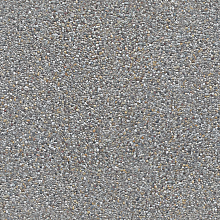 Seamless Concrete Pebble PBR Texture in 4K Resolution
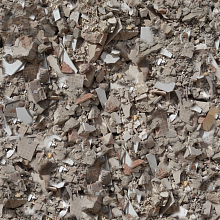 Seamless PBR Concrete Rubble Texture with Debris and Fragments
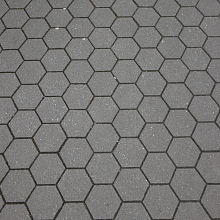 Seamless Hexagonal Concrete Tile PBR Texture 4K
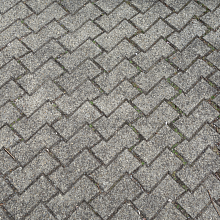 Realistic Concrete Paving Brick Pattern Texture