Seamless PBR Tire Print Textures for Realistic 3D Environments
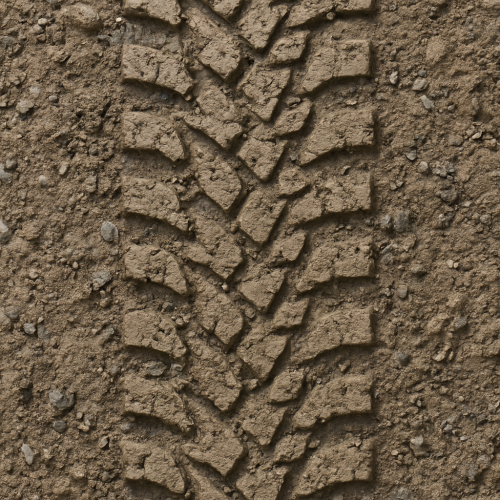
Capturing tire print textures for physically based rendering (PBR) workflows requires a nuanced approach that balances fidelity, material accuracy, and practical constraints inherent to the environment and substrate. Tire prints, by nature, are complex imprints characterized by intricate tread patterns combined with environmental artifacts such as mud splashes, snow compression, or gravel displacement. Achieving a high-quality PBR texture set—encompassing albedo, roughness, normal, ambient occlusion (AO), height, and occasionally metallic maps—demands precise acquisition techniques tailored to preserve these details while ensuring seamless integration into real-time engines like Unreal Engine or offline renderers such as Blender’s Cycles.
High-resolution photogrammetry stands as one of the most effective methods for capturing tire prints, particularly when working with natural substrates. This technique involves capturing a dense array of overlapping photographs under controlled or natural lighting conditions. The advantage of photogrammetry lies in its ability to reconstruct both spatial geometry and surface reflectance, which are essential for generating accurate normal, height, and AO maps. However, the technique demands careful calibration of camera parameters, focal length, and lighting consistency to minimize noise and artifacts. When capturing tire prints in environments like mud or snow, diffuse lighting—such as overcast sky conditions—helps reduce harsh shadows that can obscure subtle tread details and environmental residue. Employing a polarizing filter can further mitigate specular highlights, which might otherwise interfere with albedo extraction.
In muddy substrates, one of the primary challenges during acquisition is the preservation of the mud’s textural nuances, such as splashes and smears that often accompany tire prints. These features contribute significantly to the realism of the final texture but can be fragile or prone to deformation. To address this, it is advisable to document the print immediately after formation or before environmental factors (wind, drying, melting) alter its appearance. Multi-angle photography with a macro lens can capture micro-variations in the mud’s surface, essential for creating convincing roughness and height maps. For accurate roughness data, it is beneficial to supplement photogrammetry with controlled reflectance measurements or to employ image-based roughness estimation techniques sensitive to the substrate’s moisture content and particulate composition.
Snow presents a different set of acquisition challenges. The highly reflective, often specular surface of snow can cause overexposure and loss of detail in standard photography. To mitigate this, using exposure bracketing combined with high dynamic range (HDR) imaging allows for capturing the full tonal range of the snow surface and the compressed tire tread. Additionally, snow’s transient state—prone to melting and sublimation—necessitates rapid capture workflows. Combining photogrammetry with structured light scanning can yield better depth precision, as the projected patterns accentuate subtle depressions and ridges within the snow print. This hybrid approach supports the generation of detailed height and normal maps that capture the crisp edges of snow compaction, which are critical in the roughness channel to simulate the differential reflectivity between compressed and loose snow.
Gravel substrates introduce yet another level of complexity. Tire prints on gravel involve displacement and compaction of irregular, often multi-scale particles. Capturing such heterogeneous surfaces requires a combination of photogrammetry and close-range 3D scanning techniques, such as handheld structured light scanners or laser triangulation. The geometry acquired from these scans provides an accurate base for height maps and can inform the normal map generation process to reflect micro-variations in gravel orientation and depth. However, gravel’s multi-material nature—stones of varying albedo, roughness, and sometimes metallic content—calls for careful separation during texture authoring. Multispectral imaging or using calibrated color charts during acquisition can help maintain albedo fidelity and facilitate the generation of physically accurate roughness maps. This is critical because in PBR workflows, the roughness channel directly affects light scattering and reflectivity, and gravel’s heterogeneous character must be represented with enough granularity to avoid a visually flat texture.
Once raw data is acquired, post-processing becomes crucial for creating tileable textures and preserving natural variation, which prevents repetitive patterns and enhances realism in engine use. Tiling tire print textures can be particularly challenging due to the directional nature of tread patterns and the often unique environmental artifacts. One effective technique is to capture multiple overlapping scans or photographs of the tire print at different locations, then blend these samples in texture authoring software such as Substance Designer or Quixel Mixer. This allows the creation of micro-variation maps—subtle, stochastic detail layers that overlay the primary tread pattern to break uniformity and simulate natural wear, dirt accumulation, or partial occlusion by mud and gravel. Generating separate detail normal maps and blending them via shader networks in Unreal Engine or Blender’s node editor helps maintain sharpness at close-up distances without sacrificing performance.
Calibration of texture maps during authoring is another vital consideration. Height maps derived from photogrammetry or 3D scanning must be normalized to consistent ranges that correspond to realistic displacement or parallax mapping values in the engine. Over-exaggerated height can lead to shading artifacts or UV distortion, while insufficient height flattening can reduce the perceived depth of the tread. Similarly, roughness maps often require manual correction after initial derivation, as raw data may not fully capture the physical properties of wet mud versus dry dirt or frozen snow. Introducing curvature-based roughness adjustments or ambient occlusion-driven roughness modulation can enhance visual fidelity, especially in engine shaders that rely on physically plausible reflectance models.
Preserving natural impressions, such as mud splashes or gravel marks, is essential for authenticity but also presents optimization challenges. These secondary features can be represented as separate overlay maps or decals in Unreal Engine, allowing artists to control their density and blending without increasing the base texture resolution. In Blender, layered material setups using masks derived from the acquisition data can simulate the interaction between the tire print and substrate more flexibly. Careful use of opacity or blend modes ensures that these features integrate seamlessly with the primary albedo and roughness maps, avoiding visual dissonance or texture bleeding.
For real-time applications, optimization strategies include baking high-resolution photogrammetry data into lower-poly meshes and corresponding texture sets. Normal and AO maps can be baked from the high-poly to the low-poly geometry to retain detail while maintaining performance budgets. In Unreal Engine, the use of virtual texture streaming and texture atlases can further enhance efficiency, especially when deploying large-scale environments featuring numerous tire prints with varying substrates. Utilizing engine features like tessellation or displacement mapping can accentuate height data from acquisition, but this should be balanced against GPU cost and platform constraints.
In summary, acquiring tire print textures for PBR involves a comprehensive workflow starting with environment-aware capture techniques—high-resolution photogrammetry augmented by 3D scanning where appropriate—followed by meticulous post-processing to generate calibrated, tileable texture sets enriched with micro-variation. Challenges posed by mud, snow, and gravel substrates require adaptive strategies to preserve natural impressions and accurately represent the physical interaction between tire tread and terrain. When integrated thoughtfully into engines like Unreal or Blender, these textures enable highly realistic material reproduction that responds dynamically to lighting and viewpoint, crucial for immersive and believable 3D scenes.
Creating realistic tire print textures for physically based rendering (PBR) workflows demands a meticulous balance between photographic fidelity and procedural flexibility. The synergy of photographic sources and procedural generation techniques enables artists to craft seamless, dynamic tire tread patterns that convincingly adapt to various terrain types while maintaining material consistency. This approach addresses common challenges such as achieving natural micro-variations, replicating overlapping tread impressions, and optimizing texture resources for real-time engines like Unreal Engine or offline renderers within Blender’s shading environment.
The foundational step involves high-quality photographic acquisition of actual tire prints. Capturing these requires careful lighting and surface preparation to accentuate the fine tread details without introducing excessive specular highlights or shadows that distort the true albedo and height information. A diffuse, evenly lit setup—often utilizing polarized light or cross-polarization filters—helps suppress surface reflections and preserve the sharp contrast between raised tread elements and recessed dirt or substrate. Multiple photographs at various angles and scales facilitate extraction of normal, height, and ambient occlusion (AO) maps through photogrammetry or photometric stereo techniques. These maps form the groundwork for accurate surface interaction in the PBR pipeline.
Once the raw photographic data is procured, the next challenge is seamless tiling. Tire prints, by nature, are repetitive yet require subtle variation to avoid obvious pattern repetition in extended surfaces. Here, procedural generation proves invaluable. Using software such as Substance Designer or Blender’s node-based texture compositor, the photographic base tiles can be combined with noise functions, random grunge overlays, and directional warping to break uniformity. For instance, blending a high-frequency procedural noise into the height and normal maps introduces micro-variations that emulate subtle substrate inconsistencies and debris accumulation typically seen in real-world prints. This noise must be carefully calibrated in amplitude and frequency to avoid artificial roughness that conflicts with the physical behavior of rubber tread and compressed soil.
Moreover, procedural masks can simulate natural wear and dirt occlusion, which often varies along the tire print due to differential pressure and ground contact dynamics. These masks are generated by analyzing the curvature and depth of the height maps and modulating roughness and albedo accordingly. For example, the raised tread rubber tends to be smoother and less dusty, exhibiting lower roughness values, whereas recessed areas accumulate dirt and micro-debris, increasing roughness and subtly darkening the albedo. This nuanced variation enhances realism and avoids the flat, uniform appearance common in purely photographic textures.
Replicating overlapping tire prints introduces an additional layer of complexity. In actual terrains, tires rarely leave isolated, perfectly repeated impressions; rather, multiple passes create intersecting patterns with varying degrees of imprint strength. Procedural layering techniques can recreate this effect by stacking multiple tire print patterns with controlled blending modes and displacement offsets. Each layer can be assigned unique rotation, scale, and translation parameters, generated either randomly within constrained ranges or driven by user input to simulate deliberate track layouts. The displacement or height maps from each layer combine additively or via maximum value blending to reflect the physical stacking of tire impressions, while AO maps blend multiplicatively to preserve shadow occlusion consistency.
This layering approach extends naturally to integrating the tire prints with different terrain types, such as mud, gravel, or asphalt. By procedurally modulating the albedo and roughness based on the underlying terrain texture’s parameters, artists can ensure that the tire print adapts visually and physically to the substrate. For instance, an asphalt base might have a higher metallic and lower roughness baseline, but the tire tread residues—typically rubber and embedded dirt—should retain their characteristic PBR values. Using vertex painting or runtime engine parameters, the blend between tire print and terrain can be dynamically controlled to simulate drying mud, wet soil, or dusty surfaces, enhancing environmental responsiveness.
Calibration of the final textures is critical for maintaining PBR accuracy across rendering engines. The albedo map must be linearized and gamma-corrected to match the engine’s color space, ensuring that the diffuse color corresponds precisely to measured reflectance values. Roughness maps require careful inversion or remapping depending on the source photographic data and engine pipeline; for example, Unreal Engine uses smoothness (the inverse of roughness), often necessitating channel remapping. Normal maps generated from height data should be verified for correct handedness and channel orientation to prevent lighting artifacts. Additionally, ambient occlusion maps need to be integrated as a multiplication factor rather than an additive one, preserving physically plausible shadowing in the engine’s global illumination context.
Optimization plays a significant role in real-time applications. While high-resolution photographic details provide authenticity, they can be costly in memory and performance. Utilizing mipmap chains with carefully authored normal and roughness detail maps allows for level-of-detail (LOD) transitions that maintain visual fidelity at varying camera distances. Procedural detail noise can be baked or generated on-the-fly using shader instructions, reducing texture memory footprint. Where engine support exists—such as Unreal Engine’s virtual texture system—combining tiled base textures with runtime procedural overlays enables efficient streaming and dynamic variation, crucial for expansive environments featuring multiple tire tracks.
In Blender, the procedural and photographic texture maps can be composed within the Shader Editor using a principled BSDF node setup, leveraging normal, height (via bump mapping or displacement modifiers), roughness, and AO inputs. Height maps, in particular, benefit from displacement mapping in Blender’s Cycles or Eevee renderers, providing tangible surface deformation that enhances contact realism. When authoring seamless textures, Blender’s procedural noise and vector warp nodes allow precise control over micro-variation and pattern distortion, facilitating the integration of photographic elements without visible seams or tiling artifacts.
Practically, artists should adopt an iterative workflow that alternates between photographic capture, procedural refinement, and engine preview. This loop ensures that subtle details—such as dirt accumulation patterns or micro-scratches—translate effectively from authoring tools to final renders. Using engine viewport feedback, parameters like roughness contrast, AO intensity, and normal map strength can be fine-tuned to harmonize with dynamic lighting and post-processing effects. Additionally, layering procedural masks for dirt, wear, and overlapping prints can be exposed as material parameters, enabling designers or technical artists to adjust track appearance contextually in-game or during animation sequences.
In summary, combining photographic sources with procedural generation unlocks a robust, flexible methodology for authoring tire print PBR textures that are both physically accurate and artistically dynamic. Through careful acquisition, seamless tiling, calibrated map baking, and strategic layering, artists can produce rich tire tread appearances that convincingly interact with varying terrain types and environmental conditions. This integrated approach optimizes texture detail and performance, ensuring that tire prints contribute meaningfully to the visual storytelling and physical believability of 3D scenes.
Creating physically based rendering (PBR) maps for tire print textures demands a rigorous approach to accurately capture the complex interplay between material properties, surface geometry, and environmental influences. Tire prints are inherently composite in nature—featuring a combination of rubber residue, compressed soil, displaced debris, and sometimes moisture—each contributing distinct optical and tactile characteristics. Achieving believable, versatile PBR textures for these marks requires careful generation and calibration of the essential maps: albedo (base color), roughness, metallic, normal, height, and ambient occlusion (AO). This process must also address the variability introduced by different substrates and weather conditions to ensure realistic rendering across diverse scenarios.
The albedo map is the foundation of the tire print’s visual identity, capturing the diffuse color information without any lighting or shadowing influence. For tire prints, albedo acquisition typically involves high-resolution photography or photogrammetry of real-world prints on various ground types such as wet mud, dry dirt, or asphalt. It is crucial to desaturate specular highlights and shadows during post-processing to avoid baked-in lighting effects that would undermine the physically based workflow. When authoring albedo maps, one must consider the subtle color variations introduced by soil moisture, organic matter, and tire rubber residue. Incorporating these micro-variations into the albedo texture enhances realism, especially when tiling the texture across large surfaces. Careful use of high-frequency detail masks or procedural noise overlays can simulate the heterogeneity of real tire prints, preventing the texture from appearing artificially uniform.
Roughness maps dictate the microsurface scattering behavior and are vital in replicating the tactile quality of tire prints. Unlike uniform materials, tire prints exhibit significant roughness variation within a small spatial range. Areas where soil is compressed and compacted by tire tread will appear smoother and more reflective, while displaced or loose soil particles will contribute to rougher, more diffuse reflections. To generate accurate roughness maps, it is effective to use a combination of direct measurement techniques such as gloss meter readings on physical samples, or indirect methods like analyzing specular reflections in calibrated photographs. When authoring the roughness map, it is advisable to invert grayscale values from specular reflection intensity—dark values indicating smooth, reflective surfaces, and lighter values for rougher regions. Because tire prints interact dynamically with moisture, roughness maps should be calibrated against different hydration states by adjusting values to simulate wetness, which generally lowers roughness and increases specular intensity.
Metallic maps, though often trivial for organic or soil-based materials, can be relevant when tire prints interact with surfaces containing metal fragments, asphalt aggregates with metallic sheen, or embedded debris from road surfaces. In typical tire print PBR textures, the metallic map is predominantly black (non-metallic), but providing localized metallic values where necessary improves realism in game engines or renderers with strict metal/ dielectric workflows such as Unreal Engine’s shading model. Metallic values must be carefully masked to avoid unintended reflections, and their presence should be validated through empirical observation or reference capture.
Normal maps play a critical role in enhancing the perceived depth and complexity of tire prints by encoding surface microgeometry that is not captured by displacement or height maps alone. These maps simulate subtle indentations, raised tread patterns, and fine soil granularity, contributing to realistic light interaction. Effective normal map generation for tire prints often involves photogrammetric capture or high-resolution scanning of actual prints, followed by processing with software like xNormal or Substance Designer to extract accurate normal data. When authoring normals procedurally, it is essential to combine multi-scale details: macro-scale tread impressions with micro-scale soil texture. Care must be taken to avoid over-exaggeration of normal details, which can cause lighting artifacts or visual noise, especially when the texture is tiled in large areas.
Height maps, or displacement maps, provide per-pixel elevation information that can be used in tessellation or parallax occlusion mapping to simulate the pronounced depth of tire tread impressions in the ground. Height maps are indispensable for tire prints on uneven terrain, as they deliver convincing silhouette and shadowing effects. Generating height maps with high fidelity involves capturing depth data via photogrammetry or structured light scanning, followed by careful normalization and smoothing to ensure compatibility with real-time rendering constraints. In practice, height maps for tire prints should emphasize the contrast between recessed tread grooves and raised soil ridges, while also capturing subtle soil compression gradients around the print edges. Calibration of height values is crucial; excessive height exaggeration can produce unnatural silhouettes and collision issues in physics simulations, while insufficient height diminishes the tactile impact of the print.
Ambient occlusion (AO) maps complement normal and height maps by simulating the self-shadowing effects caused by crevices and occluded areas within the tire print. AO enhances depth perception and improves the material’s response under diffuse lighting environments. For tire prints, AO generation can be performed via baking from high-poly geometry or using software-based screen space ambient occlusion (SSAO) techniques. When authoring AO maps, it is important to balance the intensity and radius of occlusion to avoid excessively darkened areas that can obscure albedo details. Integration of AO with roughness or curvature maps can also yield more convincing shading models, especially in engines like Unreal Engine, which support complex material layering.
Tiling and micro-variation are critical considerations for tire print PBR textures intended for use in large-scale environments such as roadways, off-road tracks, or construction sites. Perfectly tiled textures with repetitive patterns quickly break immersion, so introducing subtle micro-variations in albedo, roughness, and normal maps is necessary. Procedural noise, randomized displacement offsets, and multi-channel blending techniques can be employed to break uniformity. Moreover, layering multiple tire print textures with varied scale and orientation can simulate the effect of overlapping tracks, enhancing authenticity.
Calibration of tire print PBR maps under varied lighting conditions is essential for ensuring consistent material response in different rendering engines and environments. Since tire prints are often viewed in outdoor contexts with dynamic lighting—from harsh sunlight to overcast skies and wet conditions—maps must be adjusted to maintain physical plausibility. This involves iteratively testing textures under HDRI lighting setups in software like Blender’s Eevee or Cycles and Unreal Engine’s physically based shading pipeline. Observing reflections, shadowing, and overall contrast guides the fine-tuning of roughness and height maps. Additionally, incorporating wetness simulation through dynamic material parameters or layered textures allows the tire print to adapt visually to rain or mud, by reducing roughness and increasing specular highlights dynamically.
Optimization is a key practical concern when deploying tire print PBR textures into real-time engines. Given the high detail required to capture the subtle nuances of tire tread and soil interaction, balancing texture resolution and performance is paramount. Utilizing tiled textures with appropriately sized UV sets, combined with efficient mipmapping and compression, can maintain visual quality without excessive memory use. Normal and height maps should be stored in signed formats to preserve detail, and packed texture channels (e.g., roughness in the alpha channel of the albedo map) help reduce draw calls. Furthermore, leveraging engine-specific features such as Unreal Engine’s virtual texturing or Blender’s adaptive subdivision facilitates high-fidelity rendering while keeping resource consumption manageable.
In summary, the creation of PBR maps for tire print textures demands a comprehensive workflow that integrates precise acquisition, authoring, and calibration techniques. By faithfully capturing albedo variations, microsurface roughness, nuanced normal and height data, and appropriate ambient occlusion, artists can simulate the intricate surface interactions of tire prints across a variety of substrates and environmental conditions. Proper attention to tiling, micro-variation, and engine optimization ensures these textures perform robustly in both offline and real-time contexts, delivering convincing visual fidelity that holds up under diverse lighting and weather scenarios.
FAQ
What is covered in this guide?
This guide explains Seamless PBR Tire Print Textures for Realistic 3D Environments with practical notes for seamless PBR materials, texture setup, and production use.
Can I use these texture techniques in Blender, Unreal Engine, and Unity?
Yes. The workflow focuses on standard PBR maps and tileable materials that can be used in Blender, Unreal Engine, Unity, archviz, games, and VFX pipelines.
Where can I find textures for this workflow?
Use the AITextured texture library and the related texture links on this page to find seamless PBR materials and preview them before download.
Related Textures
 Procedural Stamped Sidewalk Concrete PBR Texture
 Procedural Fine Asphalt Road PBR Texture
 Procedural Pitted Concrete PBR Texture
 Seamless Concrete Pebble PBR Texture in 4K Resolution
 Seamless PBR Concrete Rubble Texture with Debris and Fragments
 Seamless Hexagonal Concrete Tile PBR Texture 4K
 Cracked Asphalt Texture with Weathering