Seamless Plaid PBR Textures for Stylized 3D Design and Visualization
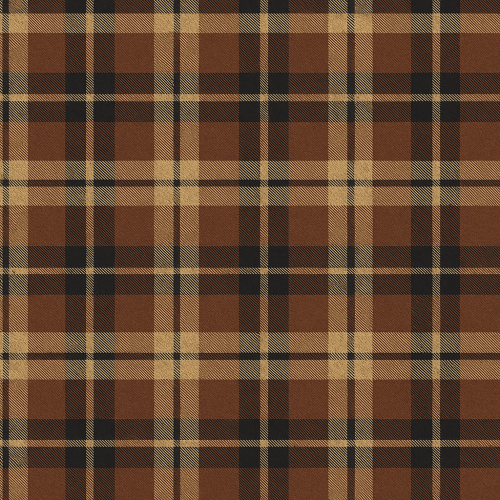
Acquiring high-quality plaid PBR textures requires a meticulous approach tailored to the unique challenges posed by the fabric’s complex weave, repeating geometric motifs, and subtle interplay of surface properties. Unlike simpler materials, plaid patterns demand precision not only in capturing accurate color data but also in faithfully reproducing the textile’s microstructure, luster variations, and depth cues that contribute to realism in physically based rendering (PBR). This section explores effective acquisition techniques, emphasizing high-resolution scanning and photogrammetry workflows, while detailing the subsequent preparation steps necessary for seamless, tileable plaid textures optimized for real-time engines such as Unreal Engine and rendering suites like Blender.
The foundation of any robust plaid texture set begins with capturing the albedo or base color map. For plaid, this involves obtaining an image with faithful color rendition across the entire pattern, preserving the subtle transitions between yarn-dye variations and the optical mixing that occurs at the fabric scale. High-resolution flatbed scanning or DSLR-based macro photography under controlled lighting conditions is often preferred. A flatbed scanner offers consistent, diffuse illumination and eliminates shadows, which is beneficial for extracting pure albedo information without baked lighting or shading artifacts. However, scanners may struggle with depth and sheen, so pairing scans with photographic captures under linear lighting setups—such as using a light dome or cross-polarized illumination—can help isolate diffuse color and remove specular highlights, critical for creating an accurate base color map.
Photogrammetry introduces another viable approach, particularly when working with physical fabric samples. Multiple high-resolution photographs are captured from varying angles around the plaid surface, enabling the generation of dense 3D point clouds and mesh reconstructions. This method excels at capturing the three-dimensionality of the weave, yarn intersections, and surface irregularities. When combined with calibrated reflectance data, photogrammetry can produce spatially accurate normal and height maps that reflect the fabric’s microtopography. A critical consideration here is the illumination setup: using a neutral, diffuse light source minimizes shadows and specular contamination, while subsequent image processing can extract separate texture channels. Cross-polarized photography, where polarizing filters on both the light source and camera lens are aligned orthogonally, effectively removes surface glare, isolating diffuse reflectance and enabling cleaner albedo extraction.
In both scanning and photogrammetry workflows, calibrating color fidelity is paramount. Employing color calibration targets such as X-Rite ColorChecker charts ensures that the captured albedo maps adhere to a consistent color space, avoiding color shifts that can break the visual cohesion of the plaid pattern. Raw or linear image formats should be maintained throughout the pipeline to prevent gamma encoding artifacts that complicate downstream PBR workflows. Post-capture, images must be converted to linear space before any baking or channel extraction to maintain physical correctness in shading.
Once the base color is acquired, attention turns to roughness and specular reflectance, which in textiles like plaid are subtle yet crucial. The roughness map encodes the microsurface variations that dictate how light scatters and reflects, influencing the fabric’s perceived softness and sheen. Capturing roughness directly is challenging; often, it requires specialized equipment such as gonioreflectometers or multi-angle photometric setups that can measure bidirectional reflectance distribution functions (BRDF). In the absence of such hardware, artists infer roughness from photographic references by isolating specular highlights through image subtraction techniques or employing cross-polarization workflows to separate specular and diffuse components. Alternatively, roughness may be hand-painted or generated procedurally based on the weave pattern, employing subtle noise to mimic micro-variations in fiber orientation and finish. For plaid fabrics, roughness variations often coincide with yarn boundaries and color intersections, as different dyes or fiber types can affect surface scattering properties.
Normal and height maps demand precise extraction to convey the tactile quality of the woven fabric. High-resolution normal maps can be derived from photogrammetry meshes or from height maps generated through displacement captures or height-from-shading algorithms. Accurate height maps are instrumental for parallax occlusion mapping or tessellation in engines like Unreal Engine, enhancing the perception of depth in the weave without incurring the computational cost of dense geometry. When generating normal maps, it is critical to ensure the source height data preserves the directional structure of the fabric’s weave, capturing the ridges where threads overlap and the depressions in the woven gaps. Careful filtering and edge preservation during normal map baking avoid blurring key pattern boundaries, which can degrade the sharpness of the plaid’s characteristic stripes.
Ambient occlusion (AO) maps complement the normal and height data by simulating self-shadowing within the fabric’s intricate geometry. AO is typically baked from high-poly to low-poly geometry or generated via curvature maps derived from height data. For plaid fabrics, AO enhances the perception of depth in the interlacing yarns and subtle folds in the fabric surface. However, AO must be carefully balanced to avoid overly darkening the albedo, which can distort the fabric’s color fidelity. In PBR workflows, AO textures are often multiplied with the base color or incorporated into the engine’s shader to modulate indirect lighting, so maintaining consistent scale and density across the texture set is crucial.
When metallic properties are applicable, such as in plaid textiles incorporating metallic threads or reflective fibers, acquiring accurate metallic maps becomes essential. Metallic maps are binary or grayscale masks indicating regions with conductive materials. These can be derived from hyperspectral imaging or inferred from visual cues in the source material. Given their rarity in typical plaid fabrics, metallic maps are usually sparse but must be precisely defined to avoid unrealistic reflections.
After acquisition, source images must be meticulously prepared for seamless tiling. Plaid patterns, by their nature, consist of repeating grids of stripes and checks, demanding pixel-perfect alignment across texture edges. Manual or semi-automated techniques in software such as Substance Designer or Photoshop can aid in creating seamless UV tile sets. Techniques include offsetting the texture by half or quarter pattern repeats, cloning and blending edges, and adjusting color transitions to prevent visible seams. Maintaining the integrity of the pattern’s geometric precision is vital, as misalignment can be particularly jarring in plaid due to its structured, repetitive nature.
To introduce micro-variation and break repetitiveness in tiled textures, subtle procedural noise or secondary detail maps can be layered. These may simulate minor color shifts, fiber fuzziness, or slight surface irregularities, enhancing realism in large surfaces without compromising the pattern’s clarity. In PBR shaders within Unreal Engine or Blender’s Shader Editor, these micro-variations can be blended into roughness or normal maps, dynamically modulated by parameters controlling wear or fabric aging.
Calibration between texture channels is critical to ensure consistent physical response in the final material. The roughness map must align with the normal map’s microstructure, and AO intensity should correspond with height map contrast to preserve believable shadowing effects. Additionally, color bleeding from the albedo should not contaminate roughness or normal channels, which can occur if source channels are poorly isolated during capture or extraction. Employing linear workflows and physically based shader models in rendering engines helps maintain these relationships, preserving the fidelity of the plaid fabric under diverse lighting conditions.
Optimization follows acquisition and authoring, focusing on balancing resolution and performance. High-resolution scans yield detailed textures but can be prohibitively large for real-time applications. Techniques such as mipmap generation, anisotropic filtering, and texture compression formats (e.g., BC7 for albedo, BC5 for normals) are employed to maintain quality at various viewing distances. Within Unreal Engine, texture streaming and LOD systems help manage memory usage while preserving visual fidelity. Blender users can utilize baking workflows to generate optimized maps and leverage procedural shaders to complement texture data, reducing reliance on extremely large bitmaps.
Finally, testing plaid PBR textures in target engines is indispensable. Real-time preview under multiple lighting environments, including HDRI setups and dynamic light sources, reveals potential issues with tiling, color shifts, or shading inaccuracies. Adjustments to roughness or normal intensity often follow initial tests to better match the fabric’s characteristic sheen and tactile qualities. Cross-validation between offline renders in Blender’s Cycles or Eevee and real-time previews in Unreal Engine ensures consistency and predictive quality of the final material.
In summary, acquiring plaid PBR textures demands a holistic approach that combines precise high-resolution capture methods, rigorous calibration of texture channels, and careful preparation for seamless tiling and micro-variation. Whether through flatbed scanning augmented by specialized photographic techniques or photogrammetry enhanced with sophisticated lighting setups, the goal remains consistent: to faithfully reproduce the intricate interplay of pattern, color, and surface response that defines plaid fabrics, delivering assets optimized for physically based rendering pipelines across diverse platforms.
Plaid patterns, with their characteristic grid and checkered structures, present unique challenges and opportunities when integrated into physically based rendering (PBR) workflows. Achieving a convincing plaid texture requires more than simply layering intersecting lines of color; it demands careful consideration of the underlying material properties and how these interact with lighting and surface detail. In this context, both procedural generation and photographic authoring play pivotal roles, especially when working with cool aqua and teal palettes that can lend a stylized yet believable aesthetic to textile, ceramic, or composite surfaces.
Procedural authoring of plaid textures begins with the mathematical precision of pattern generation. Unlike photographic sources, procedural tools enable infinite tiling without visible seams, as well as the flexibility to introduce subtle micro-variations critical for breaking uniformity in a physically plausible manner. In software like Blender or Substance Designer, plaid patterns are typically constructed by combining multiple directional gradients and masks to form the intersecting bands of color. For cool aqua and teal tones, base color layers are often created using linear or radial gradients that modulate color saturation and brightness, mimicking the dye diffusion and fabric weave variation found in natural textiles.
A key advantage of procedural generation is the ability to embed roughness and height information directly into the texture graph. For example, the crossing points of the plaid bands can be assigned slightly elevated height values to simulate the weave intersections, which can then be converted into normal map data to enhance the tactile realism under varying lighting conditions. The roughness channel benefits from subtle modulation across the pattern: thicker bands might be assigned marginally higher roughness to emulate the denser yarn bundles, while thinner lines or background areas maintain a smoother finish. This nuanced variation supports the PBR principle of energy conservation and improves the material’s response to specular highlights in engines like Unreal Engine or Blender’s Eevee and Cycles.
Calibration of color and material response is essential when working procedurally. Cool aqua and teal hues often involve a delicate balance of chromaticity and luminance to avoid unnatural saturation or flatness. When authoring the albedo channel, it is important to keep shadows and lighting cues out of the base color, reserving such details for ambient occlusion and normal maps. A procedural approach allows the isolation of color from lighting effects, which is critical for accurate real-time rendering. Furthermore, by integrating a subtle sheen effect—implemented as a secondary specular layer or a Fresnel-based falloff on the roughness map—one can simulate the soft luster common to woven fabrics or glazed ceramics that feature plaid designs. This sheen is often modulated along the direction of the threads, enhancing anisotropic specular response that adds depth and realism.
Photographic authoring, on the other hand, starts with high-quality image sources that capture real-world plaid patterns, often shot under controlled lighting to minimize shadows and reflections. When working with cool aqua and teal tones, it is advisable to photograph samples under neutral or slightly diffused daylight to maintain color fidelity. These photographic bases serve as the albedo or base color maps but require extensive editing to separate pattern from lighting effects. Using tools such as Adobe Photoshop or Substance Alchemist, artists remove shadows and specular highlights, employing techniques like frequency separation or channel blending to isolate the pure color pattern.
From the photographic source, additional texture maps must be derived or generated. The ambient occlusion (AO) map can be baked from high-poly scans or approximated through grayscale conversion and curvature analysis to emphasize the intersections and folds typical in plaid textiles. Height maps are extracted through edge detection and contrast enhancement, highlighting thread overlaps and fabric texture. Using these height maps, normal maps are created either through dedicated software or procedural filters, capturing the micro-relief necessary for accurate light interaction.
Roughness maps, critical for PBR accuracy, are often the most challenging to derive from photographic sources. Since photographic images inherently contain lighting information, roughness must be painted or generated procedurally to reflect the material’s physical properties rather than its appearance under specific lighting. This is often done by sampling the fabric type and its sheen characteristics; for example, cotton plaids tend to have higher roughness with moderate micro-variation, whereas silk or satin variants exhibit smoother surfaces with directional highlights. For cool aqua and teal colors, roughness maps may incorporate subtle gradients to simulate the interplay of light along thread orientations, enhancing anisotropic effects in rendering engines.
Tiling and optimization are crucial considerations in both procedural and photographic approaches. Procedural plaid textures inherently support seamless tiling due to their algorithmic nature, but care must be taken to avoid repetitive artifacts. Introducing noise layers or slight random offsets within the procedural graph can simulate the natural imperfections found in woven materials, such as irregular thread thickness or color variation. These micro-variations prevent the pattern from appearing artificially uniform, especially when viewed at close range.
Photographic textures require meticulous edge cleanup and sometimes manual cloning or patching to ensure seamless tiling. This process includes color correction at tile borders and sometimes the use of advanced blending modes to mask discontinuities. Once seamless, photographic plaid textures must be optimized for engine performance. This entails generating mipmaps with consistent color and detail fidelity, compressing the textures while preserving the integrity of the pattern, and maintaining balanced channel usage to avoid redundant information in the metallic or height maps.
When importing plaid textures into engines such as Unreal Engine, specific attention should be paid to the material setup to fully leverage the PBR maps. The albedo map should be gamma-corrected and assigned without baked lighting. Roughness inputs must be linearized and connected to the roughness slot, ensuring that the material reacts correctly to dynamic lighting. Normal maps derived from procedural or photographic sources must be configured with the correct normal space (often tangent space) and compression settings to avoid artifacts. Ambient occlusion can be combined multiplicatively with roughness or base color within the material graph to enhance shadowing effects at thread intersections.
In Blender, procedural plaid textures can be integrated directly within the node editor, enabling real-time tweaking of gradients, line thickness, and color parameters. This setup allows artists to iterate rapidly, adjusting the cool aqua and teal tones to fit the scene’s lighting conditions and artistic direction. Photographic textures, meanwhile, benefit from Blender’s baking tools, which can generate AO, normal, and height maps from high-resolution geometry or displacement-modified planes. Blender’s shader nodes also support anisotropic specular models, which can be driven by the plaid’s directional data extracted from procedural gradients or vector maps baked from photographic sources.
In practice, combining procedural and photographic methods often yields the most robust results. For instance, a base photographic albedo may be layered with procedural height and roughness variations to inject micro-detail and break uniformity. Alternatively, a fully procedural plaid pattern can be overlaid with subtle photographic noise or fabric grain, adding an organic quality difficult to achieve with pure algorithmic generation.
Ultimately, mastering plaid PBR textures in cool aqua and teal tones requires a disciplined approach to separating pattern from material properties, carefully calibrating each texture channel, and optimizing for seamless tiling and engine compatibility. Whether procedurally generated or photographically derived, the goal is to produce a stylized yet physically plausible surface that responds naturally to light and environment, enhancing realism and artistic intent in demanding real-time and offline workflows.
Creating a comprehensive set of PBR maps for plaid textures requires a meticulous approach to capturing both the inherent geometric complexity of woven fabrics and the distinctive visual interplay of color and surface properties that define the pattern. Unlike uniform materials, plaid textures demand careful attention to how individual threads interact with light across their interlacing planes, while maintaining a crisp, repetitive pattern that holds up under close inspection and varying lighting conditions. To achieve this, the workflow must integrate traditional PBR map authoring techniques with specialized considerations for pattern fidelity, micro-surface variation, and subtle transitions that lend the texture both realism and stylized clarity.
The albedo map for a plaid texture forms the visual foundation and must be crafted to reflect the intricate interplay of colored threads without baked-in shading or lighting information. This map is most often authored in a high-resolution 2D painting or photo-editing application, or derived from high-quality photographic captures of fabric samples with controlled, diffuse lighting setups to avoid specular highlights that could bias the base color data. When working from photographs, color calibration is critical; the captured colors must be balanced to a neutral gray or reference white target to ensure accurate reproduction of the fabric’s hues in engine rendering. The plaid pattern itself is typically constructed from a series of overlapping colored stripes with carefully modulated opacity and edge softness to simulate the semi-translucent nature of woven threads, where colors blend at intersections. This blending is often achieved by layering multiple passes of color channels with soft gradients or using procedural pattern generators that mimic thread interlacing, allowing for precise control over the transitions between colors and enhancing the visual coherence of the pattern when tiled.
Tiling is an essential concern for plaid textures, as the pattern relies on strict geometric repetition to maintain the characteristic grid without visible seams or distortions. The albedo map should be designed with pixel-perfect tile alignment in mind, ensuring that lines and color blocks meet seamlessly across texture borders. Using a square, power-of-two resolution (e.g., 1024x1024 or 2048x2048) facilitates compatibility with most real-time engines like Unreal Engine or Blender’s Eevee and Cycles renderers. To avoid noticeable repetition artifacts on large surfaces, introducing subtle micro-variations through secondary detail maps or noise overlays blended into the albedo can break uniformity without compromising the overall pattern integrity.
The roughness map controls how light scatters across the surface, directly influencing the perceived material quality of the fabric. For plaid textures, roughness must reflect the natural variability of woven textiles, where individual threads and yarns create a heterogeneous surface with micro-facets that scatter light differently. Unlike metals, textiles are generally non-metallic, so the roughness values typically range from medium to high, indicating a predominantly diffuse reflection with occasional specular highlights on smoother yarns. Authoring roughness maps for plaid textures often involves painting or generating grayscale masks that correspond to the different thread types and weave densities. For example, tightly spun yarns or synthetic fibers integrated into the fabric may exhibit slightly glossier properties, represented by lower roughness values, while coarser, natural fibers will have higher roughness. Subtle gradient transitions between these zones help avoid harsh boundaries that can visually break the pattern’s continuity. Procedural noise or subtle directional streaks aligned with the weave direction can be introduced to simulate micro-surface irregularities, increasing realism by mimicking the anisotropic scattering found in some woven materials.
The metallic map is usually trivial or uniform for plaid fabrics, as textiles rarely exhibit metallic properties. However, in cases where the plaid design incorporates metallic threads or reflective fibers—common in decorative or fashion textiles—this map must selectively flag those areas with non-zero values. This selective metallic masking requires careful alignment with the albedo and roughness maps to ensure consistent material response. The metallic map should be kept binary or near-binary to maintain a physically plausible metal/dielectric transition, avoiding ambiguous mid-range grays that could cause rendering artifacts.
Normal maps are paramount for simulating the fine surface detail of the woven structure and thread relief. Since the plaid pattern is formed by intersecting warp and weft threads, the normal map must encode the subtle surface undulations caused by overlapping yarns, thread twists, and fabric texture. Creating a high-quality normal map can be approached through several methods: photogrammetry of real fabric samples with high-resolution scanning, baking from detailed 3D models of yarn bundles, or hand-painting/sculpting in tools such as Substance Designer or ZBrush. Photogrammetry often yields the most accurate microgeometry but requires careful calibration and cleanup to isolate surface detail without unwanted noise. Baking from 3D yarn models allows for precise control over thread thickness, curvature, and overlap, ensuring the normal map aligns perfectly with the underlying pattern geometry. The normal map must be seamlessly tiled and aligned with the albedo to preserve the illusion of depth and thread interlacing across the repeated pattern.
Height or displacement maps complement normal maps by providing explicit depth information, which can be exploited in tessellation or parallax occlusion mapping in real-time engines. For plaid textures, height maps emphasize the raised and recessed areas created by the weave’s over-under structure. The height map is typically a grayscale image where brighter values represent elevated thread tops and darker values indicate recesses between yarns. When authoring height maps, the challenge lies in striking a balance between exaggerating surface relief for added realism and avoiding excessive displacement that disrupts the planar nature of the fabric or introduces aliasing artifacts. In Unreal Engine, height maps can be used with tessellation shaders to dynamically enhance surface detail at runtime, but this comes at a performance cost, so optimization via mipmapping and LOD adjustments is essential. Alternatively, Blender’s displacement modifiers or shader-based bump mapping can utilize height data for subtle micro-relief effects without heavy geometry overhead.
Ambient Occlusion (AO) maps are often included to simulate the self-shadowing within the fabric weave, where threads intersect and create small occluded crevices. AO maps for plaid textures can be baked from high-poly models of the yarn geometry or generated procedurally to approximate the occlusion effect. This map enhances the perception of depth and material complexity by darkening the intersections and folds subtly, grounding the fabric within a scene’s lighting environment. When integrating AO maps into shader workflows, it is important to blend them carefully with indirect lighting to avoid over-darkening or flattening the texture’s visual impact.
Throughout the entire map creation process, calibration against reference materials and real-world fabric samples is crucial. Using physical samples under neutral lighting and cross-referencing them with your texture outputs helps ensure that the albedo colors remain true, roughness and metallic responses behave realistically, and the normal and height maps convey the correct surface microgeometry. In practice, testing the texture in target engines like Unreal Engine or Blender’s viewport renderer under multiple lighting scenarios—directional, HDRI, and area lights—will reveal any inconsistencies or unnatural transitions that need refinement. Utilizing engine-specific tools such as Unreal’s material editor preview or Blender’s shader nodes can assist in tweaking map parameters interactively and verifying tiling performance.
Optimization is another vital consideration. Given the repetitive nature of plaid textures, consider employing detail maps or trim sheets to add micro-variation without increasing the base tile resolution excessively. Channel packing—combining roughness, metallic, and AO into a single texture’s different color channels—is a standard practice to reduce texture memory footprint and improve rendering performance. Compression settings should be tested to ensure that subtle gradient transitions in roughness or height maps survive without banding or artifacting. For better mipmapping results, generate normal maps with correct swizzling and consider normal map compression formats that preserve detail, such as BC5 or ASTC.
In summary, crafting a full suite of PBR maps for plaid textures demands a workflow that carefully balances the pattern’s sharp geometric repetition with nuanced surface variation and realistic material response. By rigorously controlling albedo color accuracy, tailoring roughness to thread variability, selectively applying metallic where appropriate, and meticulously generating normal and height maps that capture the weave’s microgeometry, artists can achieve a plaid material that holds up under close scrutiny and diverse lighting conditions. Coupled with ambient occlusion and optimized texture packing, these maps enable efficient, physically plausible rendering in engines like Unreal and Blender, providing both fidelity and performance for complex plaid materials in real-time and offline workflows.
FAQ
What is covered in this guide?
This guide explains Seamless Plaid PBR Textures for Stylized 3D Design and Visualization with practical notes for seamless PBR materials, texture setup, and production use.
Can I use these texture techniques in Blender, Unreal Engine, and Unity?
Yes. The workflow focuses on standard PBR maps and tileable materials that can be used in Blender, Unreal Engine, Unity, archviz, games, and VFX pipelines.
Where can I find textures for this workflow?
Use the AITextured texture library and the related texture links on this page to find seamless PBR materials and preview them before download.
Related Textures
 Procedural Lime Plaster Wall PBR Texture
 Procedural Stamped Sidewalk Concrete PBR Texture
 Procedural Fine Asphalt Road PBR Texture
 Procedural Pitted Concrete PBR Texture
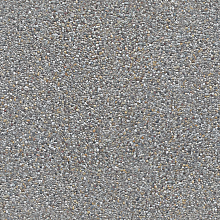 Seamless Concrete Pebble PBR Texture in 4K Resolution
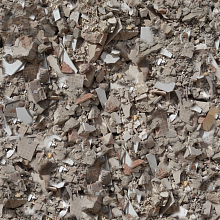 Seamless PBR Concrete Rubble Texture with Debris and Fragments
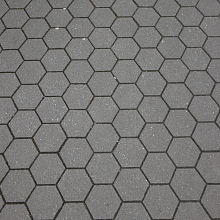 Seamless Hexagonal Concrete Tile PBR Texture 4K
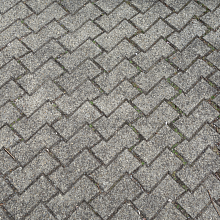 Realistic Concrete Paving Brick Pattern Texture