Creating Seamless PBR Textures for Realistic Organic Soil and Earth Surfaces
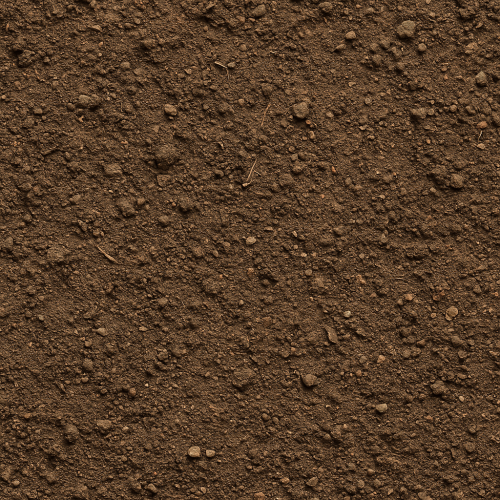
Organic soil and earth surfaces present a uniquely intricate challenge when it comes to the creation of physically based rendering (PBR) textures, requiring a nuanced understanding of their complex, multi-scale characteristics and how these translate into digital material representations. Unlike synthetic or man-made surfaces, soil and earth are inherently heterogeneous, composed of an amalgamation of mineral particles, organic matter, moisture content, and biological activity, all of which contribute to their visual and tactile properties. Capturing these subtle variations is essential for achieving photorealism in 3D environments, especially in applications such as game worlds, virtual landscaping, and environmental simulations where immersive authenticity is paramount.
At the core of PBR texture creation lies the accurate depiction of a material’s interaction with light, which is governed by the physical and chemical properties encoded in distinct texture maps. For organic soil and earth, this means carefully crafting and calibrating maps such as albedo, roughness, normal, ambient occlusion (AO), height, and metallic—each serving a specific role in conveying the surface’s micro- and macro-structure. The albedo map, for instance, must reflect the natural chromatic complexity arising from soil mineralogy, organic content, and moisture-induced chroma shifts. Unlike flat, uniform surfaces, soil exhibits a broad palette ranging from deep browns and reddish tints to grayish and even greenish hues due to decomposed plant material and microbial colonization. These subtle color gradations often occur at scales smaller than the texture tile, requiring the use of procedural micro-variation or high-resolution photographic source materials taken under controlled lighting conditions to ensure accurate color fidelity.
Moisture is a critical component influencing not only color but also the reflectance behavior of soil, impacting the roughness and specular response encoded in PBR maps. Wet soil typically appears darker and glossier due to increased surface smoothness and water film presence, whereas dry soil is rougher and more matte. Capturing this variability necessitates either authoring multiple texture sets representing different moisture states or implementing shader-driven blending techniques that interpolate roughness and albedo values dynamically based on environmental parameters. This approach, however, requires precise calibration to avoid visual artifacts; roughness maps need to encode subtle variations in microsurface detail that correspond realistically to wetness levels without compromising performance.
Normal and height maps are indispensable for conveying the granular, uneven topology characteristic of organic soil. The micro-relief of soil particles, aggregate clumps, tiny gravel inclusions, and organic debris can be effectively simulated through these maps, enhancing light interaction through accurate shadowing and light displacement effects. When authoring these maps, it is crucial to balance the amplitude of height information with the scale of the texture tile to prevent repetitive patterns from becoming visually jarring upon tiling. Techniques such as blending high-frequency detail normal maps over lower-frequency base height maps, or integrating procedural noise with scanned data, can introduce micro-variation that disrupts tiling repetition while maintaining physical plausibility.
Ambient occlusion maps further accentuate the perception of depth and soil porosity by simulating the occlusion of ambient light in crevices and pores. For soil surfaces, AO must be carefully authored to respect the irregularity of particle clusters and organic inclusions, avoiding overly uniform shading that would flatten the material’s appearance. Achieving this often involves baking AO from high-poly scanned models augmented with procedural detail or leveraging advanced software tools capable of generating multi-scale AO that captures both broad and fine shadowing effects.
Metallic maps, while typically minimal or zero for natural soils, can occasionally be relevant in specific scenarios such as contaminated earth or soils with mineral veins containing metals. In standard organic soil textures, metallic values remain near zero, but it is essential to maintain this consistency to prevent unintended specular highlights that contradict physical reality. This underscores the importance of rigorous calibration of all PBR maps against real-world reference data and photogrammetric scans to ensure that each channel adheres to plausible physical parameters.
The process of acquiring source data for soil PBR textures often involves high-resolution photogrammetry, multispectral imaging, and careful controlled lighting setups to isolate diffuse and specular components. Photogrammetric scans provide detailed geometry and surface normals, while multispectral imaging can help differentiate organic matter and moisture levels through spectral signatures invisible to standard RGB cameras. When direct scanning is unavailable, hand-authoring these textures demands a keen eye for natural variation and the integration of procedural noise layers to mimic the randomness inherent in soil structure.
Tiling and micro-variation strategies are especially critical given the inherently repetitive nature of digital textures and the large surface areas typically covered by soil in 3D scenes. Employing techniques such as texture rotation, multi-channel blending, and randomized overlay maps can mitigate visible seams and repetitive patterns. In engines like Unreal or authoring tools such as Blender, shader networks can be constructed to dynamically blend between multiple texture sets based on world position or vertex color masks, introducing stochastic variation that enhances realism without incurring prohibitive memory costs.
Optimization is a necessary consideration, particularly for real-time applications where high-resolution textures and complex shader operations can impact performance. Leveraging texture compression formats optimized for PBR workflows, such as BC7 or ASTC, can preserve visual fidelity while reducing memory footprint. Additionally, judicious use of mipmaps and level-of-detail (LOD) systems ensures that texture detail scales appropriately with camera distance, preserving fine soil granularity up close while conserving resources for distant terrain.
Calibration against physically measured soil samples and cross-referencing with real-world photographic references is indispensable throughout the texturing pipeline. This iterative refinement process helps to align the albedo’s diffuse reflectance with measured spectral reflectance curves of soil, while roughness and normal maps are adjusted to match observed surface interactions under various lighting conditions. Tools within Blender’s shader editor or Unreal’s material editor facilitate real-time previewing of these effects, enabling artists to fine-tune PBR parameters interactively.
In summary, the creation of seamless PBR textures for organic soil and earth surfaces demands a comprehensive approach that respects the material’s physical complexity and heterogeneous nature. By meticulously capturing micro-details such as soil granularity, moisture content, organic matter, and natural chromatic variation through carefully crafted PBR maps, and by implementing sophisticated tiling and calibration strategies, 3D artists and technical directors can achieve a level of realism that convincingly integrates these materials into diverse digital environments. The interplay of accurate data acquisition, procedural enhancement, and engine-specific optimization ensures that these textures not only look authentic but also perform efficiently across a wide range of real-time and offline rendering scenarios.
Acquiring high-fidelity base data is a foundational step in creating physically based rendering (PBR) textures for organic soil and earth surfaces that convincingly respond to light and environment. The quality, versatility, and authenticity of your final texture maps—albedo, roughness, normal, ambient occlusion (AO), height, and metallic—hinge on how well you capture and process initial data. For organic soil, where micro-variations in granularity, moisture, and organic matter create complex surface interactions, capturing nuanced detail is paramount. Two primary pipelines dominate the acquisition landscape: photogrammetry scanning and procedural generation. Each offers distinct advantages and challenges, and understanding their technical nuances will empower you to optimize your workflow for seamless, tileable PBR textures compatible with modern engines like Unreal Engine and Blender’s shader systems.
Photogrammetry scanning involves capturing multiple high-resolution photographs of a physical soil sample or terrain patch from various angles under controlled lighting. This method excels at capturing authentic surface color variation, micro-geometry, and subtle albedo shifts driven by organic inclusions such as small rocks, twigs, or damp patches. When executed with precision, photogrammetry produces dense point clouds and detailed mesh reconstructions, which can be baked into normal and height maps that encode the intricate surface topology essential for realistic shading. The albedo extracted from these photographs inherently contains physically accurate color and reflectance data, minimizing guesswork in base color calibration. However, photogrammetry requires careful control of lighting conditions to avoid unwanted shadows or specular highlights that can corrupt albedo data and complicate roughness map extraction.
To mitigate lighting inconsistencies, it is advisable to use diffuse, uniform illumination—such as a light tent or overcast sky conditions—and capture reference images for calibration. Reflectance standards in the scene, like grey cards, allow for white balancing and exposure normalization across captures, ensuring consistent albedo output. Post-capture, these images undergo color correction and tone mapping to linear color space, aligning with PBR shader expectations. Baking tools in software like RealityCapture, Meshroom, or Agisoft Metashape generate the mesh and texture maps but require careful parameter tuning to balance mesh density with computational efficiency, especially for tiling textures where excessive mesh complexity can hinder real-time performance.
One practical challenge in photogrammetry for soil is achieving seamless tiling. Soil patterns are inherently stochastic, and arbitrary texture crops can create visible seams when tiled. To address this, one approach is to capture a sufficiently large area and generate height and albedo maps that can be subdivided into tiles with overlapping borders. These borders are then blended or patched to minimize discontinuities. Alternatively, projecting the mesh onto a planar UV layout followed by texture synthesis techniques—such as patch-based image quilting or frequency separation blending—can help enforce seamlessness without sacrificing detail. High-frequency normal detail can be preserved by baking micro-variations from the mesh, while low-frequency height information can assist in blending transitions between tiles. Engine-specific shader tricks in Unreal Engine include utilizing world-space triplanar mapping with detail normal overlays and procedural masks to break repetitive patterns further, enhancing visual realism.
Procedural generation offers a complementary, often more flexible, approach to soil texture acquisition, particularly when photogrammetry resources are limited or when infinite variation and seamlessness are required by design. Procedural methods leverage noise functions, cellular algorithms, and physically inspired models of soil composition and erosion to synthesize texture maps algorithmically. For example, multi-octave Perlin or Worley noise can simulate granularity, while erosion algorithms mimic natural sediment displacement, generating height maps that inform normal and AO maps. Procedural albedo maps can incorporate color variation based on simulated moisture gradients or organic content, calibrated against real-world soil samples for physical plausibility.
The advantage of procedural generation lies in inherent tileability and parametric control. Because the texture is mathematically defined, it can be seamlessly tiled without visible edges, and parameters such as roughness variation, color shifts, and bump intensity can be dynamically adjusted to fit diverse terrain contexts or biomes. Furthermore, procedural workflows integrate well with shader graph systems in Blender and Unreal Engine, allowing real-time tweaking and optimization for performance budgets. However, procedural textures often lack the photorealistic nuance and subtle imperfections of captured data, potentially reducing authenticity unless carefully calibrated with reference imagery.
Combining photogrammetry and procedural methods can yield the best of both worlds. For instance, capturing a base albedo and height map from photogrammetry provides a physically accurate foundation, while procedural noise overlays can introduce micro-variation and break tile repetition. In practice, this means baking photogrammetry data into a base set of PBR maps, then layering procedural roughness or AO maps using blending modes in texture authoring tools like Substance Designer or Quixel Mixer. This hybrid approach demands precise calibration between maps, ensuring roughness values correlate with height variations and albedo reflectance, maintaining energy conservation principles critical in PBR workflows.
Preparation and processing of source images are critical to maintaining data integrity through the pipeline. Initially, raw captures should be converted to linear color space, stripping gamma correction to preserve physical light response. Albedo maps must exclude shadows and specular highlights, which should be baked separately or synthesized via roughness maps. Normal maps derived from photogrammetry meshes require smoothing and filtering to remove noise artifacts without erasing fine details; tools like xNormal or the baking systems in Blender can assist here. Generating ambient occlusion maps can be achieved by ray casting on the reconstructed mesh or approximated through procedural curvature analysis, providing subtle shading cues that enhance depth perception in the shader.
Height maps extracted from photogrammetry meshes require normalization to a fixed range and, for tiling purposes, edge blending or mirroring techniques to avoid discontinuities. Metallic maps are typically minimal or zero for organic soil, reflecting the non-metallic nature of earth surfaces, but any mineral inclusions with metallic properties should be accounted for if present. Optimization for real-time engines involves compressing texture maps with formats like BC5 for normals and BC7 for albedo to balance fidelity and performance. Mipmapping strategies should preserve detail at varying distances, with normal maps often using signed normalized formats to avoid artifacts.
In Unreal Engine, seamless soil textures benefit from integration with landscape materials that leverage layered blend maps and tessellation, which utilize height maps to displace vertices subtly, enhancing realism. Blender’s node-based shader editor allows procedural blending of texture maps with customizable roughness and bump inputs, enabling artists to fine-tune the interaction of light with the soil surface. Both engines support anisotropic filtering and detail map layering, which further refine the organic look of soil by simulating fine-scale irregularities.
Ultimately, the decision between photogrammetry and procedural acquisition is guided by project constraints and desired outcomes. Photogrammetry demands more upfront effort in capture and processing but yields unparalleled authenticity in soil texture detail, critical for close-up shots or high-end visualization. Procedural generation excels in generating vast, seamless terrains with controllable variation and lower resource overhead, ideal for real-time applications with large open worlds. Mastery in preparing, calibrating, and blending these data sources—attuned to the physical properties encoded in PBR maps—ensures that the resulting soil and earth textures convincingly convey the tactile richness and environmental interaction inherent to organic ground surfaces.
Creating physically accurate PBR textures for organic soil and earth surfaces begins with a meticulous approach to map creation and calibration. Each map—albedo, roughness, normal, ambient occlusion (AO), height, and metallic—plays a pivotal role in simulating the complex interplay of light and matter characteristic of real-world soil. The challenge lies not only in generating these maps with high fidelity but also in calibrating them to represent subtle variations in moisture, organic content, and granular roughness that define soil’s appearance and tactile quality. This section dissects the technical workflow and calibration strategies essential for delivering seamless, physically plausible textures optimized for modern rendering engines such as Unreal Engine and Blender’s Cycles and Eevee.
The foundation is the albedo map, which encodes the diffuse reflectance of the soil surface without any shading or lighting information. For organic soil, the albedo is rarely uniform; it must capture heterogeneity stemming from mineral particles, organic matter like decomposing leaves, roots, and subtle coloration changes induced by moisture levels. High-quality albedo maps are often derived from calibrated photogrammetry or macro photography under controlled lighting conditions to minimize specular highlights and shadowing. When authoring or processing these images, it is critical to linearize the color data and remove any baked-in shading, often achieved through techniques such as polynomial fitting or using neural network-based intrinsic image decomposition. Calibration here involves matching the albedo’s luminance and chromaticity to reference soil samples, ensuring the base color values remain within physically plausible ranges—typically a reflectance below 0.5 in the linear RGB spectrum for most organic soils. This avoids overbright albedo values that break energy conservation in PBR workflows.
Roughness maps are essential for defining microfacet distribution and thus the soil’s specular response. Organic soils exhibit a wide range of roughness depending on particle size, surface compaction, and moisture content. Moist soil tends to have lower roughness due to water smoothing microfacets, while dry, loose soil features higher roughness from exposed grains and organic debris. Generating roughness maps can be approached through direct capture using roughness-sensitive imaging techniques—such as gloss meter readings or cross-polarized photography—or, more commonly, by authoring from grayscale height or albedo data. When authoring, it is critical to calibrate roughness values against physical measurements or high-quality references, often involving iterative shader previews in the target engine. For example, in Unreal Engine, using the Material Editor’s roughness input with a calibrated grayscale allows artists to fine-tune the specular highlights under directional lighting. Calibration must ensure roughness values correlate with the expected moisture content; wetter soil requires roughness values typically in the 0.3 to 0.5 range, whereas arid soil approaches 0.7 to 0.9. Employing noise textures at micro scales can introduce natural micro-variation, preventing visually flat surfaces and enhancing realism.
Normal maps encode fine surface details that perturb surface normals to simulate small-scale geometry without additional mesh complexity. For soil, normal maps capture granular texture, organic matter protrusions, and subtle undulations. These are often generated from high-resolution height maps acquired via photogrammetry or displacement scans, then converted using software like xNormal, Substance Designer, or Blender’s baking tools. When authoring normal maps, care must be taken to maintain consistent tangent space orientation and avoid artifacts such as seams or unnatural smoothing. Calibration involves ensuring that the normal map’s intensity corresponds to the physical scale of surface features; exaggerated normal strength produces unrealistic shading, while too subtle a normal map flattens detail. A typical calibration approach is to compare rendered shading with real-world soil under similar lighting angles and adjust the normal map intensity until the micro-shadowing and highlight patterns match. Additionally, layering multiple normal maps—such as combining a high-frequency noise map with a broader undulation map—can simulate the complex multi-scale roughness inherent in soil surfaces.
Ambient occlusion maps add baked-in shadowing effects that simulate self-occlusion of microgeometry. For organic soils, AO helps emphasize crevices between soil particles, organic detritus accumulations, and compaction-induced depressions. Generating AO maps can be done through high-poly mesh baking or procedural methods in tools like Substance Painter or Blender. Calibration of AO intensity is crucial; excessive AO darkens the texture unnaturally, while insufficient AO reduces depth perception. A practical calibration technique involves cross-referencing AO maps with physical soil samples imaged under diffuse lighting, ensuring that occlusion shadows correspond to visible crevice depth and particle interstices. In PBR engines such as Unreal, AO maps are typically multiplied with the ambient lighting term, so maintaining realistic midtone values (often around 0.4 to 0.7) ensures subtle but effective occlusion without flattening the overall appearance.
Height maps or displacement maps encode macro-scale surface variations crucial for realistic parallax effects and tessellation displacement in rendering engines. For soil, height maps capture features like compacted patches, root impressions, small clods, and erosion patterns. These maps are often derived from photogrammetric depth captures or carefully authoring grayscale images that represent elevation relative to a baseline. Calibration requires normalization of height values to a physically meaningful range, often on the order of millimeters or centimeters depending on the scale. Unreal Engine’s tessellation displacement and Blender’s adaptive subdivision modifiers rely on these values to generate accurate geometry offsets, so height maps must be carefully tested using engine tools to avoid excessive distortion or clipping artifacts. Additionally, integrating height maps with normal maps through normal-from-height conversion techniques can enhance micro-detail consistency.
Metallic maps are generally less prominent in organic soils because soil is predominantly dielectric rather than metallic. However, minor metallic values can appear in soil rich in certain mineral content like iron oxides or in anthropogenically influenced soils containing metallic particles. Typically, metallic maps for soil are black or near-zero, reflecting the non-metallic nature of the material. If metallic content is present, it should be derived from spectroscopic analysis or mineralogical data and translated into grayscale values accordingly. Calibration involves ensuring metallic values do not artificially increase specular reflectance beyond physically plausible limits, as metallic shading drastically affects energy conservation and Fresnel reflections in PBR workflows.
Tiling and micro-variation are paramount for avoiding obvious repetition, especially in large terrain renders. Soil surfaces are inherently heterogeneous, so seamless tiling must incorporate randomized detail variation at multiple scales. This is achieved by authoring texture sets with subtle color shifts, noise overlays, and spatial variation in roughness and normal intensity. Procedural texturing tools like Substance Designer excel at embedding such micro-variation through noise generators, directional masks, and curvature maps. Calibration of these variations involves visual inspection under dynamic lighting and adjusting parameters so that transitions remain imperceptible while maintaining physical plausibility. In engines like Unreal, techniques such as texture blending, world-aligned mapping, and stochastic tiling can further mitigate repetition artifacts.
Optimization is equally critical, especially for real-time applications. While high-resolution maps (4K and above) provide detailed fidelity, they must be balanced with memory constraints and performance budgets. Techniques such as channel packing—where roughness, metallic, and AO are combined into different channels of a single texture—can reduce texture fetches and improve performance. Calibration here means ensuring that channel packing does not introduce unintended color bleeding or compression artifacts, which degrade accuracy. Additionally, mipmapping and anisotropic filtering settings must be tuned to preserve detail fidelity at varying viewing distances and angles.
Finally, practical tips for calibration involve iterative testing within the target rendering environment. For instance, using Unreal Engine’s physically based sky and directional lights provides a consistent lighting setup for evaluating soil materials. Adjustments to roughness and normal map intensities can be made in real-time, with shader complexity minimized to isolate the effects of each map. Similarly, Blender offers shader nodes that allow fine control over each PBR input, enabling quick previews and fine-tuning with its viewport renderer. Cross-referencing rendered results with real soil photographs under similar lighting conditions ensures that calibrated maps produce believable material responses. Using reference charts for soil reflectance and glossiness, alongside physically accurate HDR environment maps, further enhances the fidelity of the final textures.
In sum, the creation and calibration of PBR maps for organic soil materials demand a rigorous approach that integrates accurate data acquisition, careful authoring, and iterative calibration against physical references. By addressing the nuances of soil moisture, organic content, and surface roughness through calibrated albedo, roughness, normal, AO, height, and metallic maps, artists and technical directors can achieve seamless, physically plausible soil textures that respond realistically across diverse lighting conditions and rendering engines.
FAQ
What is covered in this guide?
This guide explains Creating Seamless PBR Textures for Realistic Organic Soil and Earth Surfaces with practical notes for seamless PBR materials, texture setup, and production use.
Can I use these texture techniques in Blender, Unreal Engine, and Unity?
Yes. The workflow focuses on standard PBR maps and tileable materials that can be used in Blender, Unreal Engine, Unity, archviz, games, and VFX pipelines.
Where can I find textures for this workflow?
Use the AITextured texture library and the related texture links on this page to find seamless PBR materials and preview them before download.
Related Textures
 Procedural Stamped Sidewalk Concrete PBR Texture
 Procedural Fine Asphalt Road PBR Texture
 Procedural Pitted Concrete PBR Texture
 Seamless Concrete Pebble PBR Texture in 4K Resolution
 Seamless PBR Concrete Rubble Texture with Debris and Fragments
 Seamless Hexagonal Concrete Tile PBR Texture 4K
 Cracked Asphalt Texture with Weathering