Advanced Techniques for Creating and Optimizing UDIM-Based PBR Textures in Modern 3D Pipelines
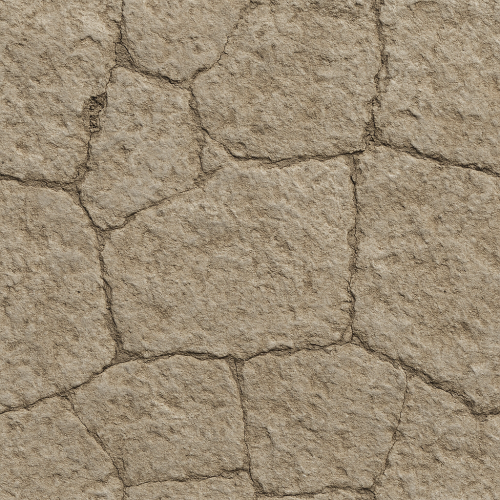
The Universal Description, Identification, and Management (UDIM) system has profoundly reshaped the landscape of texture authoring workflows in physically based rendering (PBR) pipelines, particularly for complex 3D assets requiring ultra-high-resolution detail. Unlike traditional single-tile UV layouts, which constrain an entire model’s surface to a single 0-to-1 UV space, UDIM expands texture coordinates into a series of discrete tiles, each representing a unique 1x1 UV square. This paradigm shift facilitates the mapping and management of multiple high-resolution texture sets simultaneously, allowing artists and technical directors to maintain exquisite surface fidelity without the limitations inherent in single-tile approaches.
From an acquisition standpoint, UDIM workflows enable the capture and projection of high-resolution texture data onto a model with far greater granularity. When scanning or photographing real-world surfaces for photogrammetry or texture baking, the ability to assign multiple texture tiles means that each segment of the mesh can be textured at an optimal resolution. This drastically reduces the distortion and resampling artifacts commonly encountered in single-tile UV setups, where large, complex models are forced into a constrained texture space, leading to pixel density inconsistencies and visible seams. By partitioning the model’s surface into multiple tiles, UDIM workflows ensure uniform texel density and allow for localized optimizations tailored to specific areas of the asset, which is crucial for maintaining visual fidelity in close-up shots or interactive environments.
In the context of PBR texturing, the advantages of UDIMs extend beyond mere resolution management. Physically based workflows rely on a suite of linear and nonlinear texture maps—albedo, roughness, normal, ambient occlusion (AO), height, and metallic—to accurately simulate surface interactions with light. UDIM architecture supports the organization and calibration of these diverse maps across multiple tiles, facilitating a coherent, seamless material response on complex geometries. For example, roughness and metallic maps benefit from being authored in the same tile space as albedo, ensuring that micro-surface variations and metalness transitions correspond precisely with the underlying color and geometric details. This alignment is critical to avoid shading artifacts and maintain perceptual consistency in the rendered output.
Moreover, UDIM workflows encourage sophisticated tiling and micro-variation strategies that enhance realism in PBR materials. Rather than relying on repetitive, low-resolution tiling textures, artists can integrate subtle variations across tiles—whether by injecting noise, decals, or localized weathering effects—without breaking continuity. This approach diminishes the telltale tiling patterns that undermine immersion, especially in game and architectural visualization projects where large surfaces are often exposed to the camera for extended periods. The spatial allocation of texture detail afforded by UDIMs also supports the layering of procedural effects during authoring, where height maps and AO channels can be dynamically combined and fine-tuned per tile to achieve nuanced surface depth and shadowing that respond faithfully to the lighting environment.
Calibration is another core aspect where UDIM workflows demonstrate their superiority. Each tile can be independently color-graded and normalized, allowing artists to fine-tune albedo values and ensure energy conservation across the material. This is particularly relevant when integrating multi-source texture data or blending scanned assets with hand-painted elements. The precision control over roughness and metallic parameters per tile also mitigates inconsistencies that could otherwise cause unrealistic reflections or specular highlights. During the baking process, UDIMs enable targeted resolution allocation, where tiles covering visually critical areas—such as a character’s face or a vehicle’s cockpit—can be assigned higher resolution maps, while less prominent sections receive lower resolution to optimize memory footprint without sacrificing quality.
In practical terms, modern 3D engines and content creation tools have embraced UDIM workflows, underscoring their industry-wide importance. Unreal Engine, for instance, offers robust support for UDIM textures, allowing seamless import and assignment of multiple texture tiles to a single material slot. Its shader pipeline can efficiently sample and blend UDIMs, maintaining real-time performance even with dense texture sets. Additionally, Unreal’s texture streaming system dynamically loads tiles based on camera proximity, optimizing GPU memory usage while preserving high-resolution detail where needed. Similarly, Blender’s texture painting and shading systems have evolved to accommodate UDIM workflows, providing artists with the ability to paint directly onto multiple tiles, preview seamless material responses, and bake PBR maps with tile-aware precision. The integration of UDIMs into the shader graph and node-based materials further enhances procedural texturing capabilities, empowering technical artists to build complex, tile-aware materials without resorting to cumbersome workarounds.
Optimizing UDIM-based textures involves a delicate balance between resolution, compression, and tiling strategy. While UDIMs allow for massive texture atlases, indiscriminately increasing tile counts or resolution can lead to prohibitively large file sizes and GPU memory consumption. Therefore, artists are encouraged to judiciously allocate texture resolution, leveraging tile hierarchy and LOD systems native to modern engines. For example, critical tiles can be authored at 4K or 8K resolution, while peripheral tiles may use 2K or even 1K maps. Additionally, the use of texture compression formats that preserve channel fidelity—such as BC7 or ASTC—ensures that critical PBR maps maintain their accuracy without introducing compression artifacts that can degrade roughness or normal map quality. Micro-variation textures, when incorporated as detail maps layered on top of UDIMs, can be tiled at smaller scales to minimize memory overhead while enhancing surface complexity.
From a pipeline perspective, maintaining consistency across UDIM tiles requires rigorous naming conventions and version control. Automated tools can assist in verifying UV tile alignment, detecting seams, and ensuring that all PBR maps share the same UDIM layout. Baking tools that support UDIM, such as Marmoset Toolbag or Substance Painter, facilitate the generation of high-fidelity PBR textures directly onto UDIM coordinates, streamlining the transition from authoring to real-time rendering engines. Furthermore, shader authoring workflows benefit from tile-aware sampling nodes and UV coordinate manipulation, enabling dynamic blending between tiles or the application of procedural detail maps that complement the baked textures.
Ultimately, the UDIM system has become indispensable for artists and technical directors seeking to push the boundaries of visual fidelity in PBR texturing workflows. Its ability to deliver high-resolution, seamless materials across sprawling or intricate assets makes it the preferred choice for game development, architectural visualization, and VFX production pipelines alike. By enabling precise control over texture resolution, map alignment, and material calibration, UDIM workflows empower creators to produce assets that not only look photorealistic but also perform efficiently within modern rendering engines. Mastery of this system is thus essential for any professional aiming to excel in the contemporary 3D content creation ecosystem.
Acquiring high-fidelity PBR textures for UDIM workflows demands a nuanced understanding of both capture methodologies and procedural creation techniques, as well as their subsequent integration into tiled UV spaces. The core aim is to produce a coherent set of physically based maps—albedo, roughness, normal, ambient occlusion (AO), height, and metallic—that maintain consistent material response across multiple UDIM tiles. Achieving this balance requires meticulous calibration of source data and careful consideration of the downstream engine requirements, whether targeting real-time platforms like Unreal Engine or offline renderers within Blender.
Photogrammetry remains a gold standard for producing richly detailed, physically accurate texture data, especially when the goal is to replicate complex organic or hard-surface materials with intricate micro-geometry and subtle color variations. The process begins with the controlled capture of a high-density image set, typically ranging from 50 to several hundred photos, ensuring overlapping coverage at various angles and lighting conditions. Uniform, diffuse lighting is paramount to minimize shadows and specular highlights, which can otherwise introduce artifacts in the extracted albedo maps. Utilizing polarizing filters and calibrated light sources further reduces reflective noise, aiding in the accurate separation of diffuse and specular components—a critical step for isolating albedo from baked reflections.
Once captured, images undergo photogrammetric reconstruction to generate dense point clouds and mesh geometry, from which high-resolution texture maps are projected. The challenge in a UDIM setting lies in the seamless segmentation of these maps into tiles while preserving continuity. This is where meticulous UV unwrapping and strategic tile layout become vital, ensuring that texture detail density remains consistent per tile and that edge seams correspond to natural breaks or transitions in the surface geometry. It is advisable to employ automated tools within photogrammetry suites that support UDIM export formats, such as RealityCapture or Agisoft Metashape, which can bake and export multiple PBR channels aligned to UDIM grids.
During baking, special attention must be given to generating roughness and metallic maps from the captured data. While albedo and normal maps can be directly baked from photogrammetric outputs, metalness and roughness often require additional processing. Techniques include extracting scalar roughness based on microfacet scattering derived from specular variance in the images or leveraging auxiliary data like multispectral scans. Ambient occlusion is typically baked using raytracing methods on the reconstructed mesh, then projected into UDIM tiles to enhance shadowed crevices without bleeding across tile boundaries. Height maps, used for displacement or parallax effects, benefit from high-precision mesh data refined via retopology and normal map baking workflows, ensuring that subtle surface undulations are preserved at tile edges.
Calibration of the captured texture sets against known physical standards is crucial to maintain PBR fidelity. Color calibration can be achieved by including reference color charts in the capture environment and using color management workflows that linearize and standardize albedo textures for linear workflow pipelines. Similarly, roughness calibration may involve comparing baked roughness values against physical samples or measured BRDF data to ensure that specular responses behave predictably in real-time engines. This step is particularly important when textures are intended for Unreal Engine's PBR shading model, which assumes linear roughness inputs and a specific metallic workflow. In Blender’s Cycles or Eevee, the same maps can be reused but may require node adjustments to match shader expectations for roughness and metallic inputs.
Complementing photogrammetry, procedural texture generation has gained traction as a flexible and scalable means of producing UDIM-compatible PBR maps, especially for hard-surface materials or terrains where tiling and micro-variation are paramount. Procedural workflows leverage mathematical noise functions, masks, and layered generators to synthesize albedo, roughness, and other PBR channels directly in software like Substance Designer or Houdini. A notable advantage here is the ability to generate seamless tile sets that incorporate controlled randomness at the micro-level, mitigating repetitive patterns that can break visual immersion when tiled across large surfaces.
When authoring procedural textures for UDIM layouts, artists must design base patterns that tile flawlessly within each UDIM tile while introducing stochastic variation between tiles. This inter-tile variability is achieved through randomized seed inputs or mask blending that shifts parameters like color hue, roughness intensity, or normal map perturbations subtly from one tile to another. This technique prevents obvious repetition and enhances perceived detail at scale. Furthermore, procedural height maps can be carefully layered to produce believable surface relief that translates into accurate normal and ambient occlusion maps via baking or real-time shader generation. Metallic maps, often binary or gradient-based, emerge from material identification nodes within procedural graphs, allowing precise control over conductive versus dielectric areas.
A key best practice when working procedurally is to maintain consistent texel density and resolution across all UDIM tiles. This consistency ensures uniform material quality and simplifies engine import workflows. Both Unreal Engine and Blender support UDIM textures natively, but performance considerations favor optimized tile sizes and channel packing strategies. For instance, packing roughness, AO, and metallic maps into separate channels of a single texture can reduce memory bandwidth, provided the engine’s material system supports such packing. Additionally, procedural workflows benefit from exporting textures in linear color space with appropriate bit depths (e.g., 16-bit float for height and normal maps) to minimize quantization artifacts during tiling and filtering.
Integrating photogrammetry and procedural techniques can yield powerful hybrid texturing pipelines. For example, a photogrammetry-derived base can be supplemented with procedural overlays that add surface wear, dirt, or specific material variations on a per-tile basis. This approach not only extends the lifespan of captured assets but also enhances material realism by introducing controlled, context-sensitive detail that pure photogrammetry cannot readily provide. Such hybrid workflows demand rigorous alignment of UV layouts and careful channel management to avoid conflicts between baked and generated maps.
Optimization remains a central concern throughout acquisition and authoring. High-resolution UDIM sets can quickly balloon in size, impacting storage, loading times, and runtime performance. Employing techniques like mipmap generation with perceptually weighted filtering, adaptive resolution scaling per tile based on camera importance, and lossless compression formats that preserve linear data fidelity are essential for maintaining texture integrity. In Unreal Engine, utilizing virtual texture streaming further enables efficient handling of large UDIM sets by loading only visible tiles. Blender users can leverage multi-resolution texture painting and bake caching to iteratively refine texture data while minimizing memory overhead.
In conclusion, mastering acquisition methods for UDIM-based PBR textures involves a sophisticated balance between precise photogrammetric capture and intelligent procedural generation, each with their inherent strengths and constraints. Ensuring that source materials are captured or generated with calibration and optimization in mind guarantees that tiled PBR maps maintain physical accuracy and visual continuity across UDIM boundaries. This rigor ultimately empowers artists and technical directors to push the fidelity and scalability of modern 3D assets within demanding real-time and offline rendering pipelines.
Creating high-quality PBR maps within the UDIM framework demands meticulous attention to both the individual tile fidelity and the seamless integration across the entire UV layout. As UDIMs partition a model’s texture space into multiple tiles—each typically 1k to 4k resolution—the challenge lies not only in generating detailed, artifact-free maps for each segment but also in ensuring the perceptual and physical consistency of the material under varying lighting and viewing conditions. This consistency is paramount across all core PBR channels: albedo, roughness, normal, ambient occlusion, height, and metallic, which collectively define the material’s appearance and interaction with light in modern render engines like Unreal Engine or Blender’s Cycles and Eevee.
The starting point in the creation pipeline is the acquisition or authoring of base maps that respect the UDIM segmentation while maintaining harmonized tonal and textural characteristics. Albedo maps, for instance, must be devoid of baked-in lighting or shadows and should reflect the true diffuse color of the surface. Within the UDIM context, it is critical to calibrate color profiles and gamma settings across tiles before texturing begins. This often involves linearizing input scans, photographs, or painted textures and establishing a color-managed workflow—typically ACES or sRGB linear workflows—to ensure that no tile diverges in hue or brightness due to inconsistent color spaces or bit-depth compression. When using photogrammetry or texture scanning, preprocessing steps such as retouching seams and color correction in software like Mari or Substance Painter help bridge subtle shifts that naturally arise from multiple captures or lighting conditions.
Roughness maps require an even more nuanced approach because they directly influence microfacet distribution and thus the perceived glossiness and reflectivity of the surface. Maintaining uniform roughness perception across UDIM tiles hinges on consistent grayscale calibration and the avoidance of banding or posterization artifacts, which can be exacerbated by compression or mipmapping. Artists often employ procedural noise layers or micro-variation textures tiled subtly over the base roughness maps to introduce controlled surface irregularities without breaking the overall material uniformity. These micro-variations simulate the fine-grained surface imperfections that real-world materials exhibit and are crucial for avoiding overly flat or synthetic appearances, especially when the camera moves across tile boundaries.
Normal maps, arguably the most detail-sensitive channel, require precise alignment and blending across UDIM edges to avoid visible seams in the shading. Because normal maps encode directional data in tangent space, even minor inconsistencies in tangent basis calculation across tiles can cause shading discontinuities. To mitigate this, it is essential to generate normal maps within software tools that support UDIM-aware normal baking, such as xNormal, Marmoset Toolbag, or the bake system within Mari and Substance Painter, which can output per-UDIM tile maps while preserving global tangent space coherence. Additionally, a common technique is to use a shared “base” normal map for large-scale forms and layer fine details as separate normal map overlays—implemented as detail maps with blending modes—thereby reducing discrepancies at tile borders and enabling efficient texture reuse.
Ambient occlusion (AO) maps, though often less visible directly, play a critical role in grounding the material in the scene’s global illumination context. When generating AO within a UDIM workflow, it is advisable to bake the AO maps at the highest mesh resolution possible and then project or split the bakes into UDIM tiles without re-sampling excessively. This ensures that shadowing and self-occlusion details remain crisp and consistent. Furthermore, baked AO can be combined with procedural or curvature-based masks to enhance local shadowing effects and help direct roughness or albedo variations subtly, thereby enriching the visual complexity. AO maps must be carefully calibrated to avoid overly dark or light areas that could desaturate the albedo when multiplied, or cause unnatural shading in real-time engines like Unreal Engine, where AO is often integrated into the base color or multiplied during the lighting pass.
Height maps, used primarily for parallax occlusion mapping (POM) or displacement workflows, require precision in depth information across UDIM tiles to prevent popping or discontinuities during tessellation. Unlike normal maps, height maps are scalar and must be linearized and normalized uniformly across tiles. The challenge arises because height data is often authored or derived from different sources for different tiles, especially in scanned or photorealistic assets. To maintain smooth interpolation at tile edges, artists must employ either a global height normalization strategy or utilize software tools capable of stitching and blending height data seamlessly. Blender’s displacement modifiers and Unreal’s virtual texture displacement systems are particularly sensitive to these discontinuities, necessitating careful baking and filtering. In practice, height maps are often generated as separate channels or packed into composite textures to optimize memory usage while ensuring consistent displacement intensity.
Metallic maps, which define the dichotomy between conductive and dielectric surfaces, require a binary or near-binary precision across UDIM tiles to prevent visual artifacts. Since metallic values typically toggle between 0 and 1 with occasional intermediate values for complex blends or coatings, maintaining strict channel consistency and preventing compression artifacts is critical. When authoring metallic maps, it is common to leverage masks and procedural generators within Substance Designer or Mari to produce sharp, tile-consistent metallic transitions. Furthermore, the metallic channel should be calibrated against engine-specific shading models; for example, Unreal Engine expects metallic maps to align with its physically based shading pipeline, where values outside the [0,1] range or partial metallicity can cause unrealistic reflections or energy conservation issues.
Automation plays a crucial role in managing the complexity of UDIM-based PBR texture production. Contemporary texturing suites such as Substance Painter facilitate painting and baking directly onto models segmented into UDIM tiles, automatically exporting each tile as a separate texture while maintaining cross-tile consistency through shared material layers and procedural masks. Mari offers advanced projection painting and UDIM-aware bake tools that allow artists to maintain a high degree of control over individual tiles while propagating global adjustments. In addition, scripting and batch-processing pipelines within software like Blender or Houdini can automate the generation of micro-variation overlays, normalization passes, and texture packing, significantly reducing manual intervention and human error.
Optimization is another imperative consideration. While UDIM workflows enable ultra-high-resolution texturing, the cumulative memory footprint can become prohibitive for real-time applications or complex scenes. Techniques such as channel packing—combining roughness, metallic, and ambient occlusion into a single texture—must be executed carefully to avoid channel bleed or compression artifacts that might degrade physical accuracy. Mipmapping strategies should also consider the unique characteristics of each map type; for example, albedo mipmaps must preserve color fidelity without darkening, while normal mipmaps require specialized filters like “normal-aware” filtering to retain vector integrity. Tools like Unreal’s virtual texturing system can leverage UDIM tiles efficiently by streaming only visible tiles, but the input maps must be consistent and well-optimized to avoid streaming artifacts or sudden LOD transitions.
Ultimately, the creation of high-quality PBR maps within the UDIM framework is a synergistic process combining careful color and tonal calibration, precise baking and map generation, and sophisticated automation and optimization techniques. Mastery of these elements ensures that 3D assets not only achieve photorealistic material fidelity but also maintain performance and visual coherence in modern render engines, empowering artists and technical directors to push the boundaries of digital realism.
FAQ
What is covered in this guide?
This guide explains Advanced Techniques for Creating and Optimizing UDIM-Based PBR Textures in Modern 3D Pipelines with practical notes for seamless PBR materials, texture setup, and production use.
Can I use these texture techniques in Blender, Unreal Engine, and Unity?
Yes. The workflow focuses on standard PBR maps and tileable materials that can be used in Blender, Unreal Engine, Unity, archviz, games, and VFX pipelines.
Where can I find textures for this workflow?
Use the AITextured texture library and the related texture links on this page to find seamless PBR materials and preview them before download.
Related Textures
 Procedural Lime Plaster Wall PBR Texture
 Procedural Stamped Sidewalk Concrete PBR Texture
 Procedural Fine Asphalt Road PBR Texture
 Procedural Pitted Concrete PBR Texture
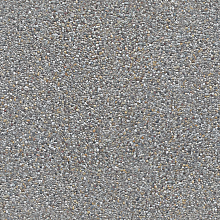 Seamless Concrete Pebble PBR Texture in 4K Resolution
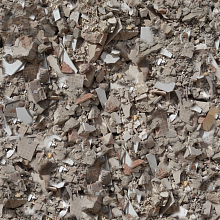 Seamless PBR Concrete Rubble Texture with Debris and Fragments
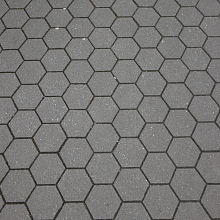 Seamless Hexagonal Concrete Tile PBR Texture 4K
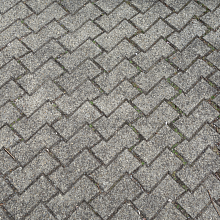 Realistic Concrete Paving Brick Pattern Texture