Comprehensive Guide to Generated Textures in PBR Workflows for Games and VFX
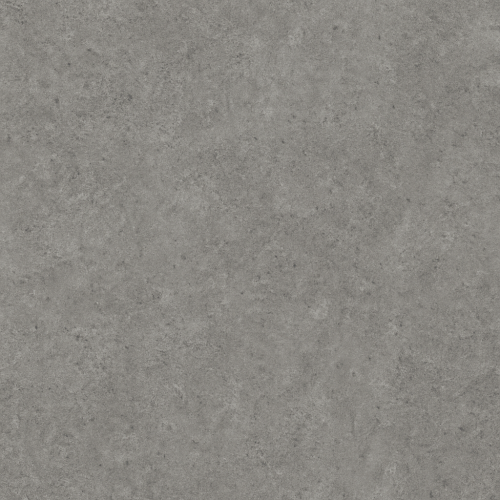
Generated textures have become a foundational element in modern physically based rendering (PBR) workflows, offering a versatile alternative to traditional scanned or hand-painted materials. Unlike textures derived from photographic sources or manually crafted maps, generated textures are algorithmically created, often procedurally, enabling precise control over their visual and physical attributes. This approach aligns well with the stringent requirements of PBR pipelines, where accurate representation of material properties—such as albedo, roughness, normal, ambient occlusion (AO), height, and metallicity—is essential for achieving consistent and realistic shading across diverse lighting environments.
One of the core advantages of generated textures is their inherent tileability and seamlessness. In real-time rendering contexts, such as game engines like Unreal Engine or open-source software like Blender, textures need to repeat without visible seams or artifacts to cover large surfaces efficiently. This is particularly critical in applications where memory and performance constraints limit texture resolution and variety. Procedural generation techniques allow artists and technical directors to produce infinitely tileable maps that maintain visual coherence across UV seams, thereby minimizing the need for large, unique texture sets and reducing overall resource consumption. This seamlessness is not merely aesthetic but also functional, as it prevents shading discontinuities that can break immersion or reveal technical limitations.
From the perspective of material definition, generated textures facilitate granular control over micro-variation and surface detail that are often challenging to capture through traditional scanning methods. Scanned textures, while photorealistic, may lack sufficient variability at a micro-level, resulting in repetitive patterns when tiled extensively. Generated textures can incorporate noise functions, fractal algorithms, or hybrid procedural techniques that simulate subtle imperfections, grain, and wear patterns intrinsic to real-world materials. These micro-variations are crucial for PBR workflows because they influence the scattering of light on surfaces, affecting roughness and normal maps that define how gloss and highlights behave under different lighting conditions. By fine-tuning these parameters algorithmically, artists can ensure that generated textures respond predictably within physically based shading models, maintaining consistency across different engines and rendering setups.
Calibration is a significant aspect of working with generated textures in PBR pipelines. Because these textures are created from scratch rather than sampled from real-world examples, it is essential to ensure that their physical parameters align with PBR standards. For instance, albedo maps must adhere to realistic reflectance values, avoiding colors that exceed physical plausibility, while roughness maps should be carefully mapped to the correct range to yield believable microfacet distributions. Metallic maps, where applicable, require precise binary or gradient values to distinguish between dielectric and metal surfaces accurately. This calibration process often involves iterative testing within target rendering engines like Unreal Engine’s physically based shading system or Blender’s Cycles/Eevee renderers, validating that the generated maps interact as expected with global illumination and dynamic lighting. Tools and plugins that support real-time preview of PBR materials can accelerate this calibration, allowing artists to adjust procedural parameters interactively and immediately observe the impact on the rendered output.
Optimization is another critical consideration when integrating generated textures into workflows. Procedural generation can be computationally expensive, especially when complex noise layers or multi-channel maps are involved. To address this, artists must balance the level of detail with the intended application’s performance budget. For example, in a real-time game environment, it is often preferable to bake generated textures into compact bitmap maps after finalizing procedural parameters rather than generating them at runtime. This approach reduces runtime overhead and ensures consistent visual quality across different hardware configurations. Additionally, generated textures can be designed to leverage channel packing, combining multiple grayscale maps—such as roughness, metallic, and AO—into a single texture to minimize texture fetches and memory usage. This optimization technique is widely supported in engines like Unreal, which expect specific channel arrangements for material inputs, and it enhances rendering efficiency without sacrificing visual fidelity.
In practical terms, the authoring of generated textures typically involves specialized software tools or shader languages capable of procedural content creation. Substance Designer, for example, is a prominent node-based platform that allows artists to craft complex procedural materials with parametric controls for each PBR channel. Blender also supports procedural texturing through its node editor, enabling the creation of physically accurate textures entirely within the software’s ecosystem. Understanding the underlying algorithms—such as Perlin noise, Worley noise, cellular patterns, and curvature-based masks—is essential to harnessing the full potential of generated textures. These algorithms serve as building blocks for replicating natural phenomena like wood grain, stone erosion, fabric weave, or rust accumulation. Effective procedural authoring requires not only technical proficiency but also a deep understanding of material science and how light interacts with various surfaces to ensure that generated maps translate correctly into the PBR shading model.
Engine integration further influences the workflow around generated textures. In Unreal Engine, generated textures can be imported as bitmap assets or, in some cases, recreated using material functions and procedural nodes within the engine’s material editor. This flexibility allows for dynamic material variations without the need for extensive texture libraries, which is valuable for creating modular assets or runtime material customization. Blender’s shader nodes offer similar capabilities, with procedural textures being directly used in the node graph, enabling artists to iterate quickly without the intermediate step of exporting textures. However, when targeting high-fidelity offline rendering or VFX pipelines, baking these procedural textures to high-resolution images remains a common practice to ensure compatibility with compositing pipelines and to facilitate texture sharing across different departments.
While generated textures provide numerous advantages, their successful application demands rigorous attention to detail in matching the physical behavior expected from real-world materials. This includes ensuring that normal maps accurately represent surface micro-geometry without introducing artifacts, that height maps correspond to plausible displacement ranges, and that AO maps reflect realistic occlusion zones without over-darkening shadowed areas. Moreover, artists must be mindful of the interplay between channels; for example, roughness values will influence how metallic reflections appear, and height information can affect shadowing and parallax effects. The procedural nature of generated textures allows for parametric adjustments that can account for these relationships, but it requires a systematic approach to testing and refinement.
In summary, generated textures serve as a powerful toolset within PBR workflows, delivering seamless, tileable, and physically calibrated material definitions that excel in both real-time and VFX contexts. Their algorithmic origin empowers artists to create highly customizable and optimized textures that integrate seamlessly with modern rendering engines. Understanding the nuances of texture generation, calibration, and engine-specific implementation is crucial for maximizing their effectiveness, enabling the creation of realistic materials that maintain consistency, scalability, and performance across a range of applications.
Acquiring high-quality base textures for physically based rendering (PBR) workflows through scanning and photogrammetry has become a cornerstone technique in modern material authoring pipelines. These methods enable the capture of real-world surface detail and reflectance characteristics with a fidelity that is difficult to replicate through purely procedural or hand-painted approaches. However, leveraging these acquisition techniques effectively requires a comprehensive understanding of the equipment, capture strategies, and post-processing workflows to produce PBR-ready assets that integrate seamlessly into engines such as Unreal Engine or authoring platforms like Blender.
At the foundation of scanning and photogrammetry workflows lies the necessity to capture not only the diffuse albedo or base color but also the surface’s microstructure and reflectance properties—parameters critical to PBR shading models. This typically involves gathering multiple texture maps: albedo, roughness, normal, ambient occlusion (AO), height or displacement, and metallic where applicable. Each map must be derived from the raw data with careful calibration to ensure accurate physical representation and consistency under engine lighting conditions.
Scanning methods, particularly those employing structured light or laser scanning, excel in capturing precise surface geometry. These devices project patterns or laser dots onto a surface and measure distortion to reconstruct high-resolution height data. This geometric information is paramount for generating accurate normal and height maps that convey micro-variations in the material surface, which translate to realistic light interaction such as specular highlights and shadowing in PBR. However, these scanners typically do not capture color or reflectance information, necessitating a parallel acquisition step—usually high-resolution photography under controlled lighting to obtain albedo and other reflectance-related maps.
Photogrammetry, by contrast, reconstructs 3D geometry from overlapping photographs taken at multiple angles, making it a more accessible and versatile approach for many artists. The key to successful photogrammetric capture lies in consistent, diffuse lighting and careful camera calibration to minimize lens distortion and parallax errors. High dynamic range (HDR) imaging is often employed to gather a broad luminance range, crucial for retrieving accurate albedo without baked-in shadows or highlights, which can corrupt the base color map. These photographs are then processed in specialized software such as RealityCapture, Agisoft Metashape, or Meshroom, which generate dense point clouds and textured meshes.
In both scanning and photogrammetry, lighting consistency during capture is a critical, yet frequently underestimated factor. Uneven or directional lighting introduces shadows and specular reflections that become baked into the diffuse texture, violating the PBR principle that albedo maps should represent the surface color independent of lighting conditions. To address this, capture setups often employ diffuse light tents or domes, which scatter light uniformly and minimize directional shadows and highlights. Additionally, cross-polarization techniques can be used where linear polarizing filters on both light sources and cameras reduce specular reflections, isolating diffuse reflectance necessary for clean albedo extraction.
Once raw data is collected, the challenge shifts to data cleanup and map extraction. Meshes generated by photogrammetry or scanning often contain noise, holes, and non-manifold geometry that must be repaired using tools like Blender’s sculpting and retopology features or dedicated software such as ZBrush or 3D-Coat. The cleaned mesh serves to bake high-resolution surface details into normal and height maps. Baking is typically performed on a low-poly retopologized mesh to optimize engine performance, while high-poly scans preserve micro-detail for map generation. During baking, attention must be paid to cage setup and ray distance to avoid artifacts like projection errors or self-intersections.
Extracting roughness and metallic maps directly from scanned data remains a complex task because these maps depend on the material’s physical properties that are not inherently captured by geometry or color. One approach is to use multi-spectral or multi-angle imaging to infer reflectance parameters, but this requires specialized equipment and complex calibration. More commonly, roughness and metallic values are hand-authored or procedurally generated, informed by visual references and physical knowledge of the material class. Ambient occlusion maps are baked from the geometry as well, accentuating crevices and occluded areas to simulate indirect shadowing in the PBR shading model.
Another critical consideration in producing generated textures from scanned or photogrammetric data is addressing tiling and micro-variation. High-resolution captures often cover limited spatial extents and therefore do not tile seamlessly. To create tileable textures suitable for large surfaces, artists employ techniques such as edge blending, offset cloning, or texture synthesis algorithms that preserve surface detail while eliminating visible seams. Introducing controlled micro-variation—subtle randomization of color, roughness, or normal detail—prevents repetitive patterns that degrade realism. In practice, this might involve layering scanned textures with procedural noise or detail maps within the engine or authoring software.
Calibration between captured textures and the rendering engine is paramount to achieving faithful material reproduction. For instance, albedo textures must be linearized and gamma-corrected to match the engine’s color space expectations—Unreal Engine uses linear color space internally, so textures captured in sRGB must be properly converted. Similarly, roughness maps require inversion or remapping depending on the capture method and software conventions. Normal maps should conform to the engine’s tangent space orientation, with consistent handedness to avoid lighting artifacts.
Optimization is another vital aspect, particularly when integrating scanned assets into real-time environments. Raw scans are often excessively dense, and texture resolutions can be prohibitively large. Artists must balance detail fidelity with performance by baking details into smaller, compressed maps, employing mipmapping, and leveraging engine features like virtual texturing or texture streaming. Blender’s texture baking tools and Unreal Engine’s material editor facilitate iterative refinement and testing of these maps, allowing for real-time preview and adjustment of parameters such as roughness intensity or normal map strength.
In summary, scanning and photogrammetry-based acquisition methods provide a powerful foundation for generating high-fidelity PBR textures by capturing authentic surface color and geometry. However, realizing their full potential demands meticulous attention to capture conditions—especially lighting and calibration—rigorous post-processing workflows for mesh cleanup and map extraction, and thoughtful integration strategies for tiling, micro-variation, and engine compatibility. Mastery of these processes enables artists and technical directors to produce physically accurate, visually rich materials that hold up under diverse lighting environments, thereby elevating the realism and immersion of 3D scenes.
Procedural and photo-based texture authoring represent two foundational approaches to generating the diverse and physically accurate maps required in a PBR workflow, each offering distinct advantages and challenges. Their integration, increasingly augmented by AI-driven tools, forms a robust pipeline for producing scalable, high-fidelity materials suitable for real-time engines like Unreal Engine or offline rendering environments such as Blender’s Cycles or Eevee.
Procedural texture generation fundamentally relies on algorithmic methods to synthesize surface detail and color information without direct photographic input. This approach excels in producing infinite variations and intricate micro-details that are often impractical to capture photographically or paint manually. Procedural workflows typically involve the use of node-based systems or scripting languages within software like Substance Designer or Blender’s Shader Editor, where noise functions, fractals, and mathematical patterns are combined to simulate natural and man-made surfaces. Crucially, procedural authoring affords complete control over parameters such as scale, roughness distribution, and pattern repetition, enabling artists to tailor textures precisely to the needs of a given asset or environment.
In a PBR context, procedural generation is not limited to albedo or base color maps; it extends critically to roughness, normal, ambient occlusion (AO), height, and metallic maps. For instance, noise-based height maps can be used as input for generating normal maps, contributing to convincing surface micro-geometry that reacts realistically to lighting. Procedural roughness maps can mimic subtle variations in glossiness caused by surface wear or material heterogeneity, a key factor in breaking up uniform reflections that would otherwise betray the synthetic origin of a texture. When creating metallic maps, procedural masks help define the boundaries between conductive and non-conductive areas, essential for materials like rusted metals or scratched coatings.
One of the core strengths of procedural texturing lies in its seamless tiling capabilities. Because the algorithms underpinning these textures are mathematical, they can be designed to tile perfectly without visible seams, an important consideration for large surface areas in games or architectural visualizations. Additionally, procedural texturing supports non-destructive workflows, where parameters can be tweaked at any stage without loss of fidelity, facilitating iterative refinement and rapid prototyping. Artists often employ layered procedural approaches, combining multiple noise types and blending modes to achieve complex surface variations and avoid repetitive patterns that disrupt visual realism.
Photo-based texture authoring, by contrast, is grounded in real-world data acquisition. High-resolution photographs capture the inherent complexity and nuance of materials—color variation, fine detail, and subtle imperfections—that are difficult to replicate procedurally. The process begins with careful image capture, often involving controlled lighting setups and specialized equipment such as macro lenses or photogrammetry rigs, to ensure uniform exposure and minimal distortion. These photographs serve as the raw material for extracting albedo maps free from shadows and highlights, which is critical for physically accurate PBR workflows.
Beyond the albedo, photo-based approaches typically involve generating roughness and metallic maps through manual painting or automated extraction techniques. For example, roughness can be inferred from specular reflections captured in multiple images or approximated from the texture’s luminance contrast. Height and normal maps often derive from displacement data gathered via photogrammetry or can be synthesized through software like xNormal or the baking features in Blender. Ambient occlusion maps may be baked from high-poly geometry or approximated using curvature maps generated from the base mesh. The fidelity of photo-based textures depends heavily on proper calibration and correction steps, including color balancing, perspective correction, and removal of camera-specific artifacts, to ensure that the final textures integrate seamlessly into PBR pipelines.
Integration of AI-driven tools has become a transformative addition to both procedural and photo-based workflows. Neural networks and machine learning models can synthesize new texture variations, enhance resolution, and automate map generation with unprecedented speed and accuracy. For example, AI upscaling techniques, such as those based on generative adversarial networks (GANs), allow artists to increase the resolution of photo textures while preserving and even enhancing fine detail. AI tools can also infer missing maps—such as roughness or normal—from a single input image, significantly accelerating the authoring process. However, generated content requires rigorous validation and often manual correction to adhere to PBR standards, particularly ensuring that roughness and metallic values correspond to physically plausible material behaviors.
In practical terms, combining procedural and photo-based authoring techniques often yields the best results. Procedural methods can fill in gaps where photographic data lacks sufficient detail or variation, adding micro-roughness or noise that enhances realism without introducing obvious tiling or repetition. Conversely, photo-based textures can ground procedural surfaces in real-world accuracy, providing a natural color base that procedural overlays can augment with wear, dirt, or other secondary details. This hybrid approach is especially valuable in game development pipelines using Unreal Engine, where physically accurate material shaders rely on well-calibrated input maps to achieve correct light interaction and energy conservation.
Optimization remains a critical consideration throughout texture authoring. Procedural textures, while flexible, can be computationally expensive if evaluated at runtime; therefore, baking procedural maps into texture sets for engine use is common practice. In Blender, this involves generating and baking procedural shaders into texture maps that can then be exported and imported into game engines as PBR assets. This baking process must maintain consistency across all maps—albedo, roughness, normals, etc.—to avoid artifacting or shading errors. For photo-based textures, optimization focuses on balancing resolution and compression to minimize memory footprint without sacrificing visible detail, a crucial factor for real-time performance.
When authoring textures with tiling in mind, both procedural and photo-based approaches require special attention to edge continuity. Procedural noise functions can be designed to be tileable natively, but the complexity of layered procedural networks often necessitates additional blending or masking to avoid seams. For photo-based textures, edge matching techniques, including clone-stamping and seamless tiling filters in Photoshop or Substance Painter, are essential. AI tools are increasingly capable of automating seamless tiling by predicting and filling edge discontinuities, but manual oversight remains important to ensure physical plausibility.
Calibration of textures to match physical reference materials is a final but crucial step. This involves comparing rendered materials in target engines against real-world samples under controlled lighting conditions. Adjustments to roughness, metallic, and normal map intensities are often required to achieve the correct response to direct and indirect lighting. For instance, roughness maps might need re-scaling to account for engine-specific glossiness curves, or normal maps may require inversion depending on the coordinate conventions of the rendering system. Consistent color space management—working in linear space for albedo and proper gamma correction for roughness and metallic—is vital to maintain fidelity across pipelines.
In summary, procedural and photo-based texture authoring are complementary methodologies that, when combined thoughtfully and supported by AI-driven tools, enable the creation of rich, physically accurate PBR materials. Procedural algorithms offer unparalleled flexibility and control over micro-detail and variation, while photo-based methods provide the foundational realism necessary for believable surfaces. Mastery of calibration, tiling, optimization, and engine-specific nuances ensures these generated textures perform effectively in both offline and real-time rendering contexts, supporting the demanding visual standards of modern 3D workflows.
FAQ
What is covered in this guide?
This guide explains Comprehensive Guide to Generated Textures in PBR Workflows for Games and VFX with practical notes for seamless PBR materials, texture setup, and production use.
Can I use these texture techniques in Blender, Unreal Engine, and Unity?
Yes. The workflow focuses on standard PBR maps and tileable materials that can be used in Blender, Unreal Engine, Unity, archviz, games, and VFX pipelines.
Where can I find textures for this workflow?
Use the AITextured texture library and the related texture links on this page to find seamless PBR materials and preview them before download.
Related Textures
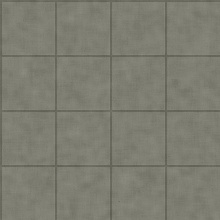 Procedural Stamped Sidewalk Concrete PBR Texture
 Procedural Fine Asphalt Road PBR Texture
 Procedural Pitted Concrete PBR Texture
 Seamless Concrete Pebble PBR Texture in 4K Resolution
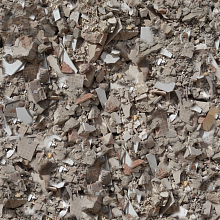 Seamless PBR Concrete Rubble Texture with Debris and Fragments
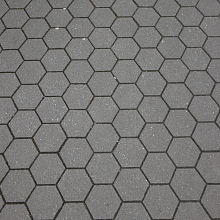 Seamless Hexagonal Concrete Tile PBR Texture 4K
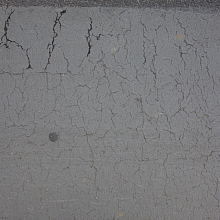 Cracked Asphalt Texture with Weathering