Leveraging AI and Machine Learning for Next Generation PBR Texture Creation
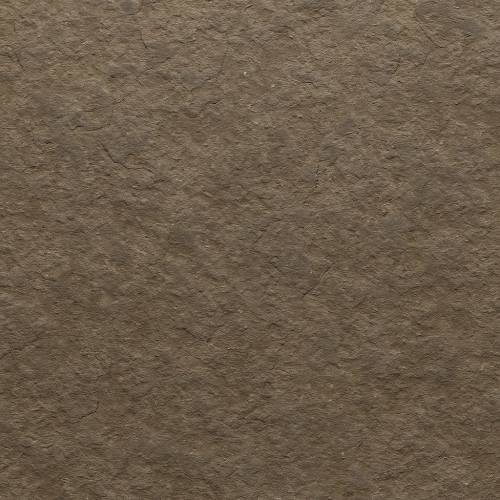
Physically Based Rendering (PBR) has become the cornerstone of modern material representation in real-time and offline rendering pipelines, leveraging a set of standardized texture maps—albedo, roughness, normal, ambient occlusion (AO), height, and metallic—to simulate the complex interplay of light and surface properties with unprecedented fidelity. Traditionally, the creation of these texture maps has relied heavily on manual authoring workflows, photogrammetry, or scanning techniques, followed by painstaking calibration and optimization to ensure seamless integration within rendering engines such as Unreal Engine or Blender’s Cycles and Eevee. However, the advent of artificial intelligence (AI) and machine learning (ML) is poised to revolutionize this domain, offering transformative capabilities that augment and accelerate the PBR texture pipeline.
At its core, AI encompasses a broad spectrum of computational techniques designed to replicate or simulate intelligent behavior, with machine learning—a subset of AI—focused on enabling systems to learn patterns and make decisions from data without explicit programming. In the context of PBR texture creation, ML algorithms, particularly deep learning architectures like convolutional neural networks (CNNs), generative adversarial networks (GANs), and autoencoders, have been adapted to analyze, generate, and refine texture maps by learning from vast datasets of material scans, artist-created textures, and real-world photographs.
One of the most significant intersections between AI/ML and PBR workflows lies in the acquisition and authoring stages. Traditional photogrammetry and scanning methods capture high-resolution surface detail but often require extensive manual cleanup and retouching to produce usable textures with correct tileability and micro-variation. AI-driven tools can automate these processes by intelligently filling in missing data, removing noise, and predicting complementary maps from a single input source. For example, it is now feasible to generate a physically plausible roughness or metallic map directly from a captured albedo texture by training models on correlated datasets, significantly reducing the need for multi-modal scanning equipment and manual map derivation.
Moreover, AI techniques excel at addressing the challenge of tiling and micro-variation—critical aspects for creating believable and non-repetitive materials in large-scale environments. Traditional tiling approaches often result in visible repetition, breaking immersion. Machine learning models can synthesize seamless texture variations, applying learned micro-structural details that mimic the natural randomness found in surfaces such as stone, wood grain, or rust. These methods extend beyond simple texture blending by generating new, contextually appropriate patterns that maintain consistency across the PBR property maps, ensuring coherent light interaction without sacrificing artistic control.
Calibration between texture maps and rendering engines is another domain where AI introduces efficiency gains. PBR workflows demand precise alignment of albedo, roughness, metallic, normal, AO, and height maps to maintain physical plausibility. Achieving this calibration manually is laborious and prone to errors, especially when adapting textures to different engine-specific shader models or lighting conditions. AI-powered tools can analyze the statistical distribution of the maps and optimize parameters to match the target engine’s shading model, such as Unreal Engine’s physically based metallic-roughness workflow or Blender’s principled BSDF shader. This automated calibration not only streamlines cross-platform compatibility but also facilitates real-time feedback loops, enabling artists to iterate rapidly with confidence that their textures will behave predictably under varied lighting scenarios.
Optimization represents another critical phase in PBR texture pipelines that benefits from AI. High-fidelity textures often come with large file sizes and complex maps that can strain rendering budgets, particularly in game development or VR applications where performance is paramount. Machine learning-based compression and super-resolution techniques can reduce texture resolutions without perceptible quality loss by learning perceptually relevant features and reconstructing fine details during rendering. Additionally, AI can assist in generating adaptive mipmaps or level-of-detail (LOD) variants for each PBR map, tailored to specific engine requirements, thereby balancing visual quality and resource consumption dynamically.
From a practical standpoint, integrating AI and ML into existing workflows requires a nuanced understanding of both the underlying algorithms and the technical constraints of rendering engines. For instance, while GANs can produce impressively realistic textures, their outputs may occasionally introduce artifacts or inconsistencies in normal or height maps that disrupt shading. Therefore, hybrid workflows that combine generated base textures with traditional hand-tuned adjustments often yield the best results. Artists and technical directors should also be mindful of input data quality, as ML models are highly sensitive to training datasets; biases or insufficient diversity in source materials can limit generalization and produce less convincing textures when applied to novel surfaces.
Leading software tools and platforms are beginning to incorporate AI-assisted features, enabling artists to leverage these advancements without deep ML expertise. Applications like Substance Designer and Painter have introduced AI-driven filters and material generators that infer missing maps or enhance existing ones. Similarly, Blender’s open ecosystem supports plugins and add-ons that harness neural networks for texture synthesis and upscaling. Unreal Engine’s material editor and runtime also accommodate procedural textures augmented by generated data, enabling dynamic texture variation and on-the-fly calibration within complex scenes.
In summary, AI and machine learning are not mere buzzwords in the realm of PBR texture creation but foundational technologies that expand the boundaries of what is achievable in material authoring. By automating routine or technically challenging tasks—such as map generation, tiling correction, calibration, and optimization—these technologies empower artists to focus more on creative expression and less on technical overhead. As AI models continue to evolve in sophistication and accessibility, their integration into PBR pipelines will become increasingly seamless, delivering more realistic, efficient, and adaptable material workflows that meet the escalating demands of next-generation rendering engines and interactive experiences.
The evolution of physically based rendering (PBR) workflows has been markedly accelerated by the integration of AI and machine learning techniques, particularly in the domain of texture acquisition and map generation. Traditional methods of gathering high-fidelity texture data—while effective—often involve labor-intensive pipelines such as multi-view photogrammetry, manual scanning, and painstaking hand-painting of maps. AI-driven approaches now offer transformative enhancements, enabling not only more efficient capture of real-world materials but also intelligent synthesis and refinement of the critical PBR texture maps that underpin realistic shading in modern engines like Unreal and Blender.
At the heart of AI-enhanced texture acquisition lies the refinement of photogrammetry workflows. Photogrammetry inherently relies on capturing multiple overlapping images of a surface to reconstruct high-resolution geometry and texture information. However, classical pipelines suffer from noise, inconsistent lighting, and misalignment, which propagate into the resulting texture maps, requiring extensive cleanup and manual correction. Deep learning models, particularly convolutional neural networks (CNNs), have been deployed to preprocess raw image datasets, standardizing color profiles, correcting lighting inconsistencies, and denoising inputs prior to reconstruction. This preconditioning significantly improves the fidelity of the base albedo capture by minimizing baked-in shadows and specular highlights, which are notoriously difficult to separate in conventional photogrammetric diffuse textures.
Beyond preprocessing, AI models also facilitate direct extraction of PBR-specific maps from raw imagery without exhaustive manual intervention. For instance, neural networks trained on large datasets of paired material captures and ground-truth maps can infer roughness, metallic, and ambient occlusion maps from a single or few photographs. These models learn complex correlations between subtle surface reflections, microfacet distributions, and material types, effectively disentangling diffuse and specular contributions. This is particularly valuable for the roughness map, whose accurate representation of microsurface variance critically influences light scattering and perceived material realism. The automated generation of metallic maps through AI is another breakthrough, as the metallic property is often binary but can exhibit nuanced gradations in mixed materials; machine learning classifiers can segment and label metallic regions with high accuracy, supporting hybrid materials without manual masking.
Normal and height maps, indispensable for conveying micro-geometry and surface detail beyond base mesh resolution, benefit from AI's ability to infer plausible micro-variations from flat images. Deep neural networks trained on extensive datasets of high-resolution normal maps paired with corresponding albedo or height maps can synthesize accurate normal maps that capture fine-scale bumps, scratches, and engravings without requiring costly laser or structured light scanning. This synthesis is instrumental in generating seamless tiling textures where micro-variation is critical to avoid repetitive patterns that break immersion. Furthermore, AI-driven procedural synthesis models use generative adversarial networks (GANs) and variational autoencoders (VAEs) to extrapolate texture detail across extended surfaces, ensuring self-similarity without obvious repetition. These generative models can produce infinite variations from a single exemplar texture, a capability especially beneficial in game engines and real-time renderers where memory budgets constrain unique assets.
Calibration and optimization form another crucial aspect where AI methodologies excel. Once generated maps are produced, they must be calibrated to ensure physically accurate energy conservation across the PBR shader inputs. For example, roughness maps must align with the corresponding normal and albedo maps to maintain consistent microfacet reflectance, while metallic maps influence both base color interpretation and surface reflectivity. AI-driven optimization frameworks employ differentiable rendering pipelines to iteratively refine map parameters, minimizing perceptual errors against reference photographs or measurements. This automated calibration reduces the manual trial-and-error typically required to balance maps, allowing artists and technical directors to achieve photorealistic materials more quickly. Integration of these AI-assisted calibration tools with engines like Unreal Engine's Material Editor or Blender's Shader Editor streamlines the workflow, enabling real-time feedback and adjustments.
Practical application of these AI-driven techniques requires an understanding of their limitations and best practices. While AI models can generate remarkably accurate PBR maps, the quality of outputs heavily depends on the diversity and representativeness of training datasets. Materials with highly anisotropic, translucent, or iridescent properties remain challenging for current models, necessitating hybrid approaches combining AI inference with traditional scanning or manual authoring. Additionally, care must be taken when integrating generated maps into existing texture atlases or UV layouts to preserve tiling fidelity and avoid texture seams. Some advanced AI pipelines incorporate texture-aware inpainting and seam-aware synthesis to address these issues, but manual inspection remains advisable.
In terms of software integration, popular content creation suites now embed AI-powered plugins and add-ons that harness deep learning models to automate PBR map generation. Blender’s emerging PBR texture tools, often built on TensorFlow or PyTorch backends, allow seamless conversion of photographic inputs into full PBR sets with parameter controls exposed to artists. Unreal Engine, leveraging its robust material system and node-based workflows, supports importing generated maps alongside procedural materials, enabling hybrid shading networks that combine AI-synthesized detail with artist-driven adjustments. Leveraging these capabilities effectively demands familiarity with both the underlying AI methodologies and the specific shading models employed by target engines, ensuring maps conform to expected linearity, gamma, and data conventions.
Optimization for real-time rendering remains a critical consideration. generated textures, especially those derived from high-resolution photogrammetry or GAN synthesis, can be computationally expensive in terms of memory and sampling. Techniques such as mipmapping, texture compression (e.g., BC7, ASTC), and channel packing are essential to maintain performance without sacrificing visual quality. Emerging AI-driven denoising and super-resolution algorithms can be deployed at runtime or during texture streaming to further balance fidelity and performance. Additionally, AI can assist in generating LOD (level of detail) textures by intelligently downsampling and preserving critical features, maintaining consistent material appearance across varying camera distances.
In summary, AI and machine learning methods for PBR texture acquisition and map generation represent a paradigm shift in digital material authoring. By automating the extraction and synthesis of albedo, roughness, normal, ambient occlusion, height, and metallic maps, these technologies drastically reduce the manual labor traditionally associated with asset creation. They enable nuanced control over micro-variations and tiling fidelity while providing robust calibration and optimization workflows tailored to real-time engines like Unreal and Blender. Although challenges remain in handling edge-case materials and ensuring seamless integration, the trajectory of AI-enhanced texturing clearly points toward more efficient, scalable, and photorealistic material pipelines for next-generation content creation.
Creating photorealistic PBR textures that maintain visual fidelity across expansive surfaces has long challenged artists and technical directors, particularly when it comes to mitigating the telltale repetition inherent in tiled textures. Traditional methods of seamless tiling often rely on painstaking manual adjustments or heuristic-based blending, which can fall short in delivering the nuanced micro-variations found in natural materials. With the advent of advanced AI and machine learning techniques, the process of generating seamless PBR textures has evolved into an intelligent, data-driven synthesis that not only eliminates visible tiling artifacts but introduces controlled micro-variation tailored to scene-specific requirements.
At the core of these advancements is the ability of AI algorithms to learn the statistical distributions and spatial correlations within a material’s various PBR maps—albedo, roughness, normal, ambient occlusion (AO), height, and metallic—enabling a holistic texture synthesis that respects the interdependencies of these channels. Unlike classical texture synthesis approaches that treat each map independently, AI-driven methods leverage multi-channel conditioning to produce coherent outputs. For example, generative adversarial networks (GANs) or variational autoencoders (VAEs) trained on high-resolution material datasets can generate seamless patches that maintain consistent lighting response, micro-surface detail variation, and anisotropic features across all relevant maps simultaneously.
One significant breakthrough stems from AI’s ability to perform patch-based texture synthesis with learned seam blending. Instead of the conventional “copy-paste” tiling with hard edge blending, AI algorithms analyze overlapping patches and intelligently interpolate transitional regions by predicting plausible micro-variations that avoid repetitive patterns. This is particularly important for PBR workflows, where discontinuities in normal or roughness maps can produce glaring shading artifacts under dynamic lighting conditions in engines like Unreal or Blender’s Eevee and Cycles renderers. By generating continuous gradients and subtle pattern shifts, AI-enabled synthesis ensures that seams become imperceptible, even under close inspection or complex lighting setups.
Beyond seamless tiling, micro-variation is critical to breaking the monotony of large material surfaces. Natural materials rarely exhibit uniformity; subtle changes in roughness, albedo saturation, or normal perturbations contribute to the perception of realism. AI can be trained to introduce such micro-variation in a controlled manner, informed by material-specific statistics and scene context. For instance, reinforcement learning algorithms can adapt texture detail dynamically based on camera distance or lighting intensity, optimizing memory footprint without sacrificing perceptual quality. This is especially relevant in real-time engines where LOD (level of detail) management is crucial. Instead of uniformly scaling resolution or compressing maps, AI-driven pipelines can selectively augment or attenuate micro-variation details, maintaining visual interest while improving performance.
A notable technique involves the use of conditional GANs that generate stochastic detail layers atop base textures. These detail layers modify roughness or height maps with subtle noise patterns that reflect material granularity—such as fine scratches on painted metal, or micro-fissures in stone—without altering the macroscopic structure. By conditioning on parameters like environmental wear, weathering, or user-defined variation thresholds, artists gain fine-grained control over the stochasticity introduced. This approach enables the creation of texture atlases that are both space-efficient and visually rich, reducing the need for large unique textures and complex masking setups.
Calibration of generated textures within the PBR pipeline is paramount to ensure physical plausibility and engine compatibility. Since AI models may produce outputs that deviate from calibrated material values, a post-processing validation stage is often necessary. This involves evaluating the generated albedo values against energy conservation principles, ensuring roughness maps fall within physically meaningful ranges, and verifying normal maps maintain correct vector orientations. Tools integrated into software like Blender or Substance Painter can automate these checks, leveraging AI themselves to flag anomalies or suggest corrections. Moreover, procedural blending techniques, augmented by AI, allow artists to combine generated textures with hand-authored detail maps, achieving bespoke results that retain artistic intent while benefiting from AI’s generative power.
Optimization strategies are integral when deploying generated textures in production pipelines. High-resolution texture synthesis can be computationally intensive, so efficient tiling patterns derived from learned texture manifolds enable reuse without perceptible repetition. AI can compress texture data by learning compact latent representations, which can be decoded in real-time to reconstruct micro-variations on demand. This latent-space interpolation facilitates smooth transitions between material states—such as dry to wet surfaces—without requiring multiple full sets of PBR maps. Unreal Engine’s material system, with its node-based architecture and support for runtime texture streaming, can integrate these generated variations dynamically, further enhancing realism without bloating asset sizes.
From a practical standpoint, artists leveraging AI for seamless tiling and micro-variation must consider the quality and diversity of training datasets. High-fidelity capture of real-world materials using photogrammetry or multi-angle scanning provides the foundational data for AI models to learn material-specific characteristics. Incorporating varied lighting conditions and environmental states in training data ensures the AI’s generalization capability, allowing it to produce textures adaptable to different scene contexts. Additionally, iterative feedback loops between generated outputs and artistic refinement encourage the convergence towards desired aesthetic goals, balancing physical accuracy with creative expression.
Integration with existing authoring tools is crucial for widespread adoption. Blender’s scripting environment, combined with machine learning libraries like TensorFlow or PyTorch, allows technical artists to prototype PBR texture generation workflows directly within familiar software. Plugins and add-ons that expose AI synthesis parameters enable real-time preview and fine-tuning of seamless tiling and micro-variation effects, streamlining the transition from concept to production-ready textures. Furthermore, compatibility with industry-standard formats such as UDIMs ensures that generated textures fit seamlessly into established asset pipelines, facilitating collaboration between artists, TDs, and engineers.
In summary, the application of AI and machine learning to advanced seamless tiling and micro-variation in PBR texture creation represents a paradigm shift in material authoring. These techniques transcend traditional limitations by intelligently synthesizing multi-channel textures that are both physically consistent and artistically rich. By embracing AI-driven texture synthesis, pattern generation, and adaptive detail variation, artists can produce complex, non-repetitive materials that respond dynamically to scene demands and rendering engines. The result is a new generation of PBR textures that elevate realism while optimizing performance and workflow efficiency, marking a significant step forward in digital material craftsmanship.
FAQ
What is covered in this guide?
This guide explains Leveraging AI and Machine Learning for Next Generation PBR Texture Creation with practical notes for seamless PBR materials, texture setup, and production use.
Can I use these texture techniques in Blender, Unreal Engine, and Unity?
Yes. The workflow focuses on standard PBR maps and tileable materials that can be used in Blender, Unreal Engine, Unity, archviz, games, and VFX pipelines.
Where can I find textures for this workflow?
Use the AITextured texture library and the related texture links on this page to find seamless PBR materials and preview them before download.
Related Textures
 Procedural Stamped Sidewalk Concrete PBR Texture
 Procedural Fine Asphalt Road PBR Texture
 Procedural Pitted Concrete PBR Texture
 Seamless Concrete Pebble PBR Texture in 4K Resolution
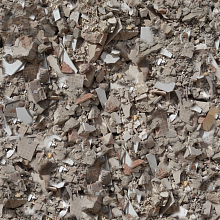 Seamless PBR Concrete Rubble Texture with Debris and Fragments
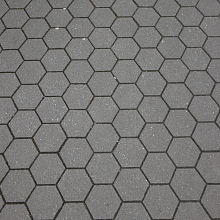 Seamless Hexagonal Concrete Tile PBR Texture 4K
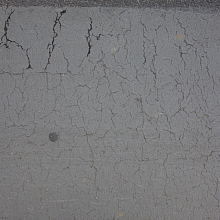 Cracked Asphalt Texture with Weathering