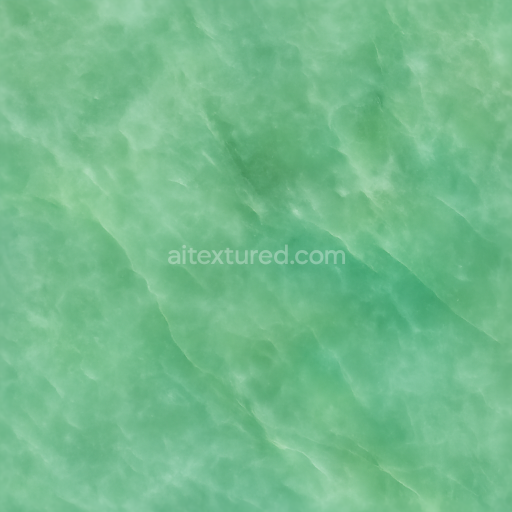
Jade Translucent Stone With Diffuse Translucency And Silky Luster Finish
Seamless texture (tileable) · PNG, WEBP, PBR ZIP.
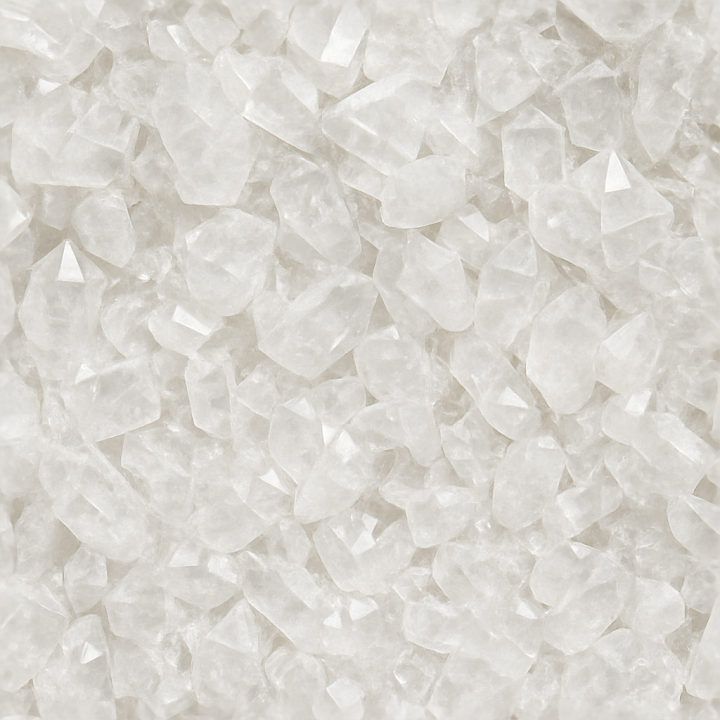
| ID | seamless-3d-texture-pbr-8k-quartz-crystal-lattice-natural-crystal-photorealistic |
|---|---|
| Category | Crystals |
| Formats | PNG, WEBP, PBR ZIP |
| Size | 1k (1024x1024px), 2k (2048x2048px), 4k (4096x4096px), 8k (8192x8192px) |
| Tileable | Yes |
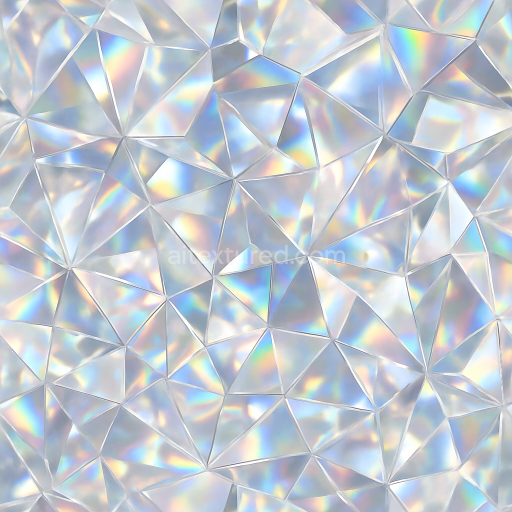
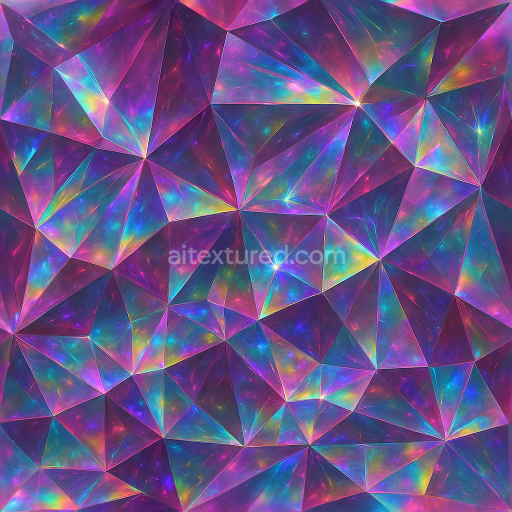
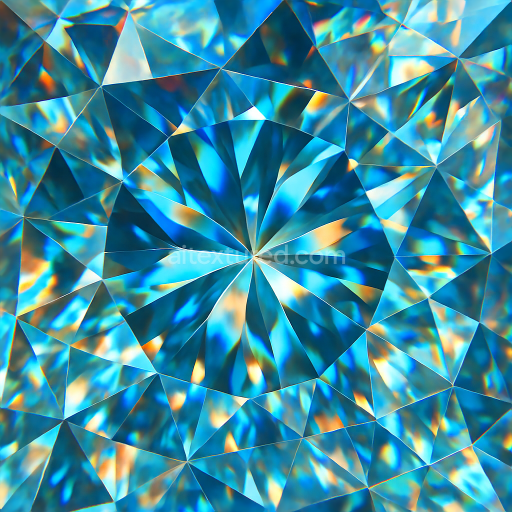
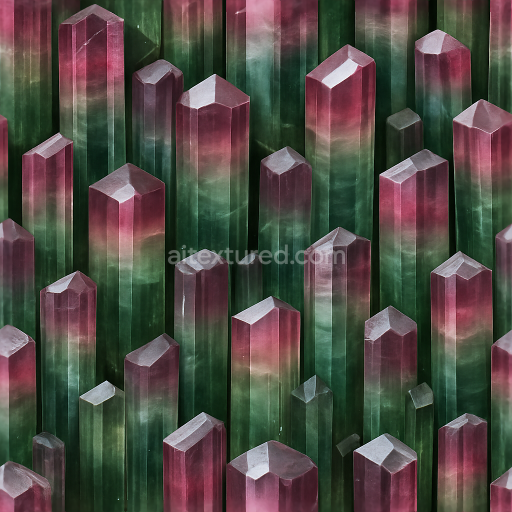
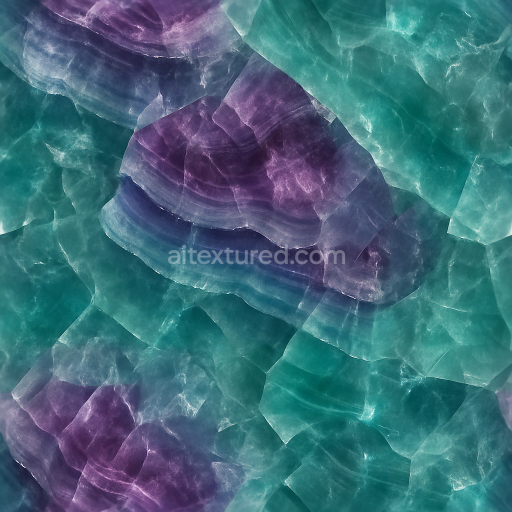
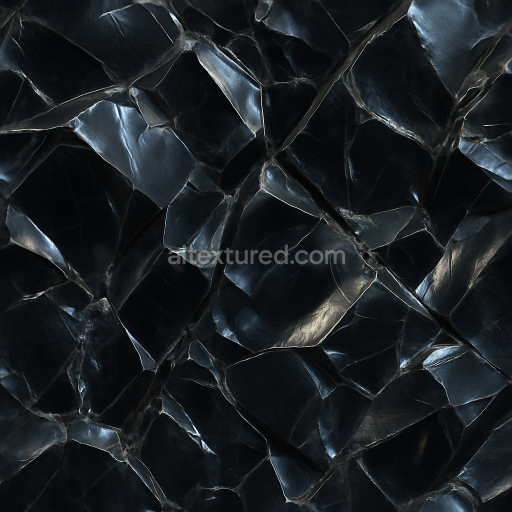
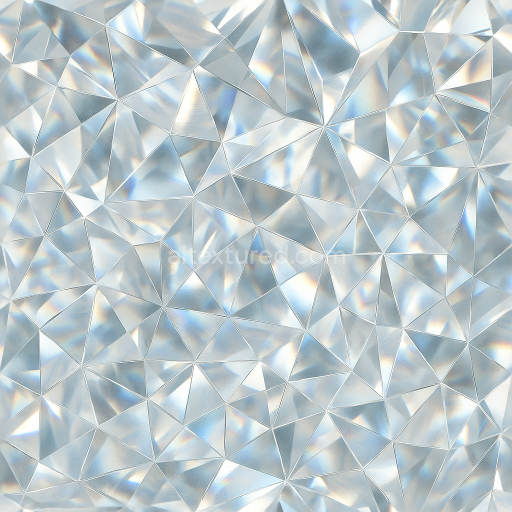
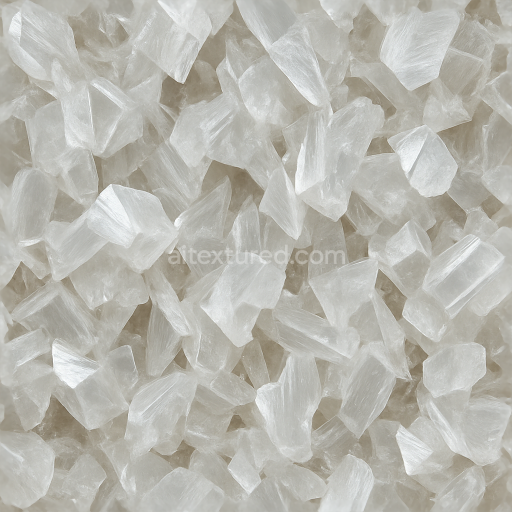
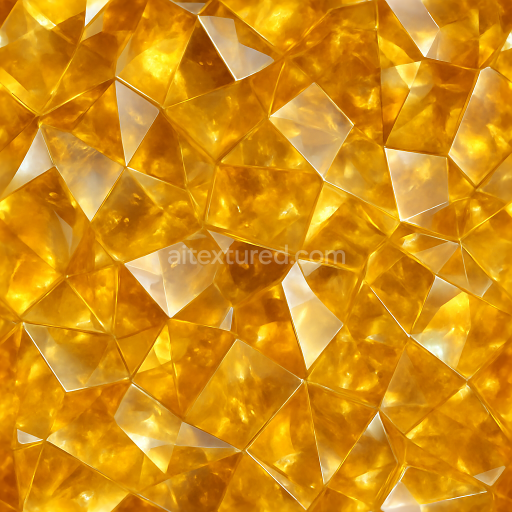
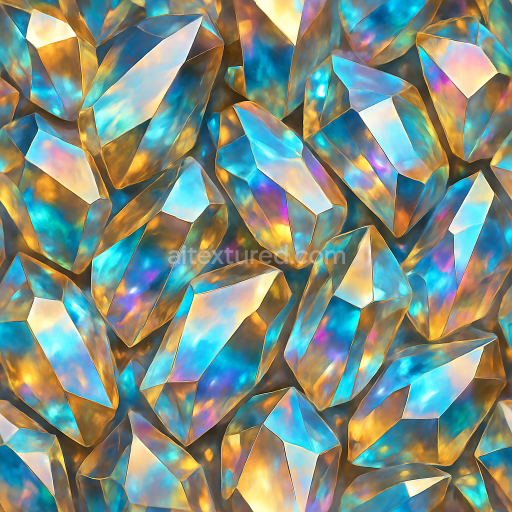
This seamless 3D texture presents a highly detailed photorealistic depiction of natural quartz crystals, emphasizing the characteristic crystal lattice structure that defines this mineral. The base material consists primarily of silicon dioxide, manifesting as an intricate network of translucent crystalline formations with subtle internal fractures and inclusions. These quartz crystals exhibit a hexagonal prismatic geometry with sharp edges and planar facets, arranged in a tightly interlocked pattern that repeats flawlessly across the texture. The surface finish is naturally glossy with areas of light diffusion, capturing the interplay between polished smooth planes and minute roughness caused by microfractures and weathering effects.
The composition highlights a clear, colorless substrate with occasional milky or smoky inclusions acting as natural colorants within the crystal matrix. There are no binders or adhesives, as the texture simulates the pure mineral aggregate itself. Porosity is minimal, reflecting quartz’s dense structure, but subtle surface irregularities and tiny fissures add realistic depth and complexity. The texture channels are meticulously mapped for Physically Based Rendering: the BaseColor (Albedo) captures the quartz’s translucent pale tones with slight variations, the Normal map conveys the fine relief of the crystal lattice and facet edges, while the Roughness map balances glossy highlights with matte imperfections. The Metallic channel is kept near zero, consistent with quartz’s non-metallic nature. Ambient Occlusion enhances shadowing around crevices, and the Height/Displacement map reinforces the three-dimensional depth of the lattice structure.
Rendered at an ultra-high 8K resolution, this texture ensures exceptional clarity and detail, suitable for close-up renders and high-fidelity visualizations. It is fully compatible with major rendering platforms such as Blender, Unreal Engine, and Unity, providing a versatile asset for gemstone simulations, mineralogical studies, architectural visualizations, and nature-inspired 3D environments. The seamless tiling capability allows for continuous coverage without visible edges, enabling realistic representation of large crystal surfaces or clusters.
For optimal results, it is recommended to adjust the UV scale to preserve the natural size of quartz crystals in your scene, preventing repetition artifacts. Additionally, fine-tuning the roughness values can enhance the balance between reflective sheen and diffuse scattering, mimicking the subtle variations found in real quartz surfaces. Combining the height map with normal maps through parallax occlusion techniques can further augment the perception of depth and complexity in the crystal lattice, adding convincing realism to your renders.
Import the texture maps into Blender with sRGB color space for albedo/base color and Non-Color for normal, roughness, metallic, AO, height, and ORM maps. Connect normal maps through a Normal Map node, then adjust UV scale with a Mapping node so the material repeats naturally on your model.
For the full step-by-step setup, see How to Use Seamless Textures in Blender. Browse related material examples in wood, concrete, and metal.
Yes. This texture is designed as a seamless tileable PBR material, so it can repeat across large surfaces without visible borders.
Use the download controls on this page: they expose the available PNG, WEBP or engine ZIP choices and supported resolutions for this asset.
Use the engine ZIP choices to package compatible source maps for Blender, Unreal Engine or Unity, then verify the imported material in the target application.
Commercial-use permission is not verified for this record. Confirm the original source and license before production use.
Generate maps from existing images, preview materials, convert channels, and package compatible inputs for Blender, Unity, and Unreal Engine.
Choose a verified workflow for generating maps, previewing tiling, converting channels, or starting from the texture catalog.
Derive Normal, Roughness, AO, Metallic, Height and optional ORM maps from one or more source images, then review the results.
Instant WebGL viewer: inspect materials on a sphere, plane, and cube. Check tiling and lighting in real time.
Re-packages maps per engine: Unreal (BaseColor + ORM), Unity (Mask/MetallicSmoothness), Blender (separate channels).
PNG ↔ JPG ↔ SVG: fast convert, SVG rasterize, embed/trace options, quality & background controls.