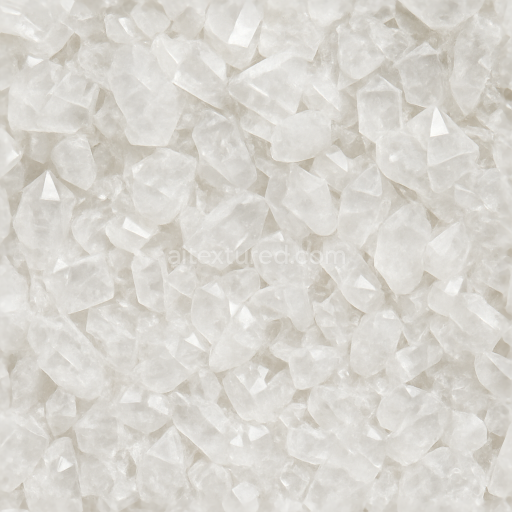
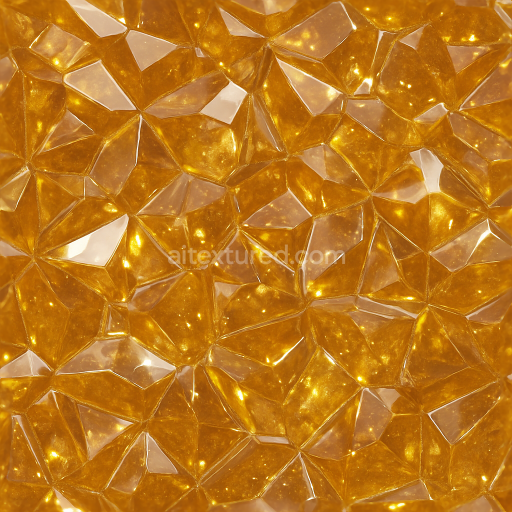
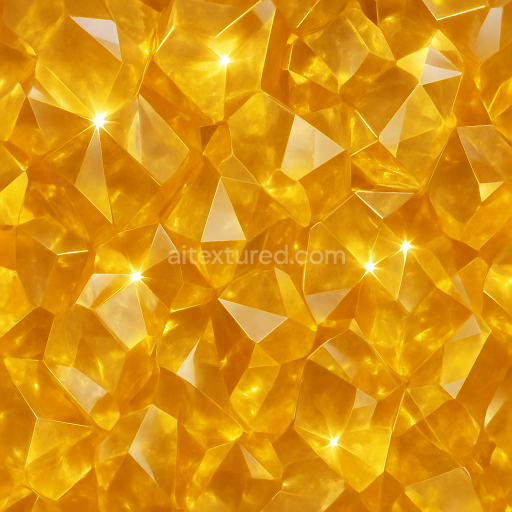
Quartz Crystal Lattice Natural Crystal Photorealistic
Seamless texture (tileable) · PNG, WEBP, PBR ZIP.
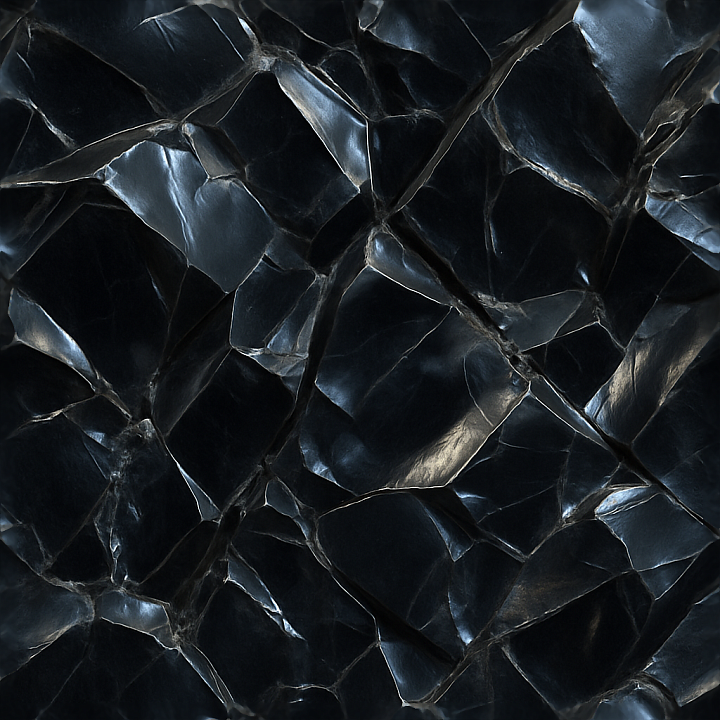
| ID | seamless-3d-texture-pbr-8k-obsidian-glassy-surface-with-fractures-and-metallic-sheen-highlights |
|---|---|
| Category | Crystals |
| Formats | PNG, WEBP, PBR ZIP |
| Size | 1k (1024x1024px), 2k (2048x2048px), 4k (4096x4096px), 8k (8192x8192px) |
| Tileable | Yes |
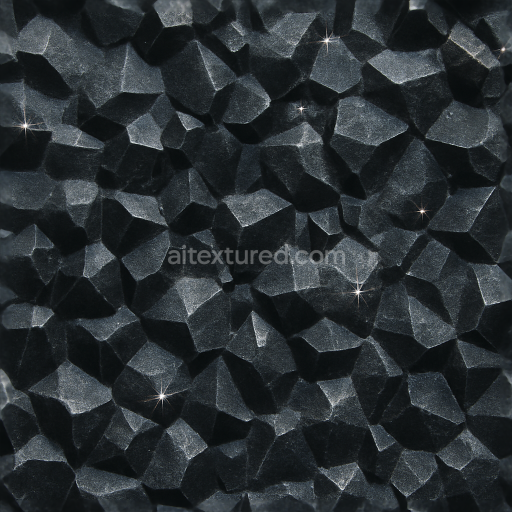
This seamless 3D PBR texture represents a high-fidelity obsidian surface characterized by its naturally glassy, smooth substrate interspersed with intricate fractures and fine crystal shards. The base material is volcanic glass—obsidian—known for its amorphous, non-crystalline structure that provides a predominantly smooth and reflective plane. These glassy surfaces are punctuated by subtle fissures and irregular fractures, which are rendered with precise height and normal mapping to convey depth and complexity. The texture’s low porosity and weathering resistance contribute to its polished appearance, while minor inclusions of crystalline aggregates create localized variations in reflectivity and translucency.
The material composition is reflected in the PBR channels with a rich BaseColor (Albedo) map capturing the deep black to charcoal hues of obsidian, enhanced by subtle variations where fractures and crystal shards scatter light differently. The Normal map accentuates the micro-geometry of the surface fractures and the subtle undulations of the glassy plane, adding realistic surface detail. Roughness is finely tuned to replicate the lustrous finish of obsidian—mostly smooth with areas of slightly increased roughness where fractures diffuse reflections. The Metallic channel is used sparingly to introduce a subtle metallic sheen highlight along fracture edges and crystal facets, simulating the reflective qualities of embedded mineral inclusions. Ambient Occlusion enhances the visual weight of crevices and micro-voids, while Height/Displacement maps provide the necessary relief for realistic parallax and depth effects in real-time engines.
This 8K resolution texture is optimized for seamless tiling, ensuring no visible repetition or seams when applied across large surfaces. Its high resolution preserves intricate detail, making it ideal for close-up renders in Blender as well as real-time applications in Unreal Engine and Unity. The combination of detailed normal and height maps with calibrated roughness and metallic values allows for flexible shading adjustments depending on lighting conditions and scene requirements.
For practical use, it is recommended to carefully adjust the UV scale to maintain the natural grain and fracture density of obsidian without overstretching, which could distort the crystalline details. Additionally, fine-tuning roughness values can help balance between a high-gloss glassy appearance and the subtle matte diffusion seen on fractured edges. Blending height and normal maps can also enhance the three-dimensional illusion of the fractures and crystal shards, especially when used with parallax occlusion mapping or tessellation features in modern rendering pipelines.
Import the texture maps into Blender with sRGB color space for albedo/base color and Non-Color for normal, roughness, metallic, AO, height, and ORM maps. Connect normal maps through a Normal Map node, then adjust UV scale with a Mapping node so the material repeats naturally on your model.
For the full step-by-step setup, see How to Use Seamless Textures in Blender. Browse related material examples in wood, concrete, and metal.
Yes. This texture is designed as a seamless tileable PBR material, so it can repeat across large surfaces without visible borders.
Use the download controls on this page: they expose the available PNG, WEBP or engine ZIP choices and supported resolutions for this asset.
Use the engine ZIP choices to package compatible source maps for Blender, Unreal Engine or Unity, then verify the imported material in the target application.
Commercial-use permission is not verified for this record. Confirm the original source and license before production use.
Generate maps from existing images, preview materials, convert channels, and package compatible inputs for Blender, Unity, and Unreal Engine.
Choose a verified workflow for generating maps, previewing tiling, converting channels, or starting from the texture catalog.
Derive Normal, Roughness, AO, Metallic, Height and optional ORM maps from one or more source images, then review the results.
Instant WebGL viewer: inspect materials on a sphere, plane, and cube. Check tiling and lighting in real time.
Re-packages maps per engine: Unreal (BaseColor + ORM), Unity (Mask/MetallicSmoothness), Blender (separate channels).
PNG ↔ JPG ↔ SVG: fast convert, SVG rasterize, embed/trace options, quality & background controls.