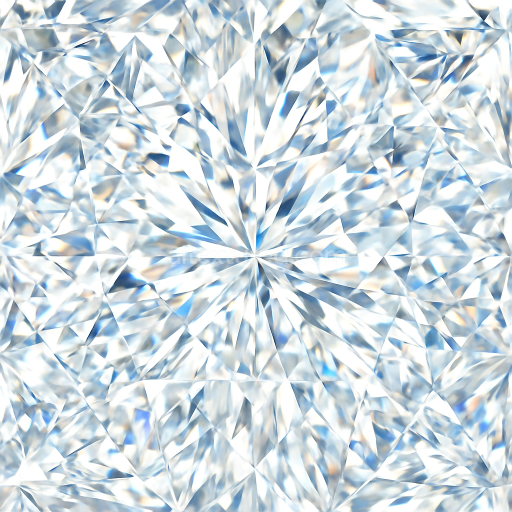
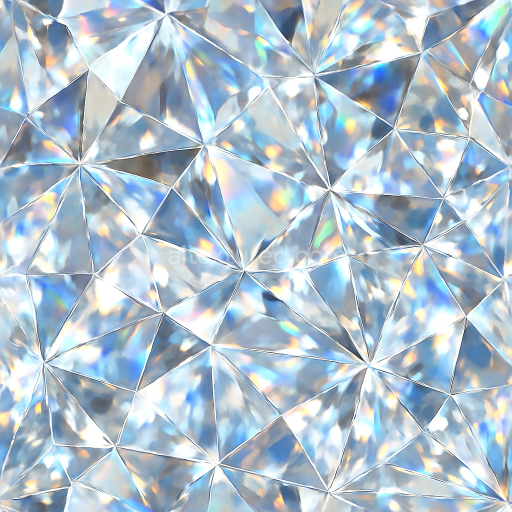
Diamond Faceted Gem With Gemstone Facets And Sparkle Highlights
Seamless texture (tileable) · PNG, WEBP, PBR ZIP.
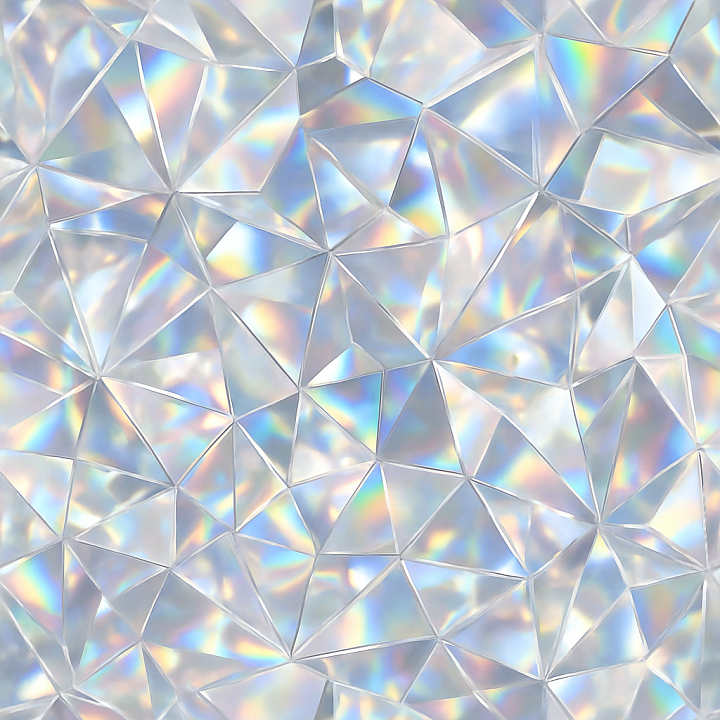
| ID | seamless-3d-texture-pbr-8k-kristall-prismatic-facets-with-crystal-shimmer-and-light-dispersion-sparkle-effect |
|---|---|
| Category | Crystals |
| Formats | PNG, WEBP, PBR ZIP |
| Size | 1k (1024x1024px), 2k (2048x2048px), 4k (4096x4096px), 8k (8192x8192px) |
| Tileable | Yes |
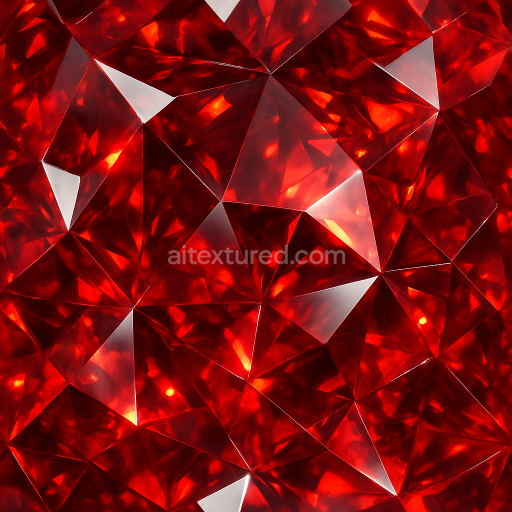
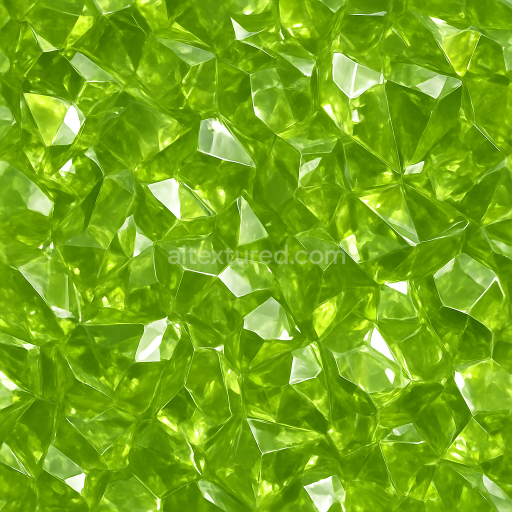
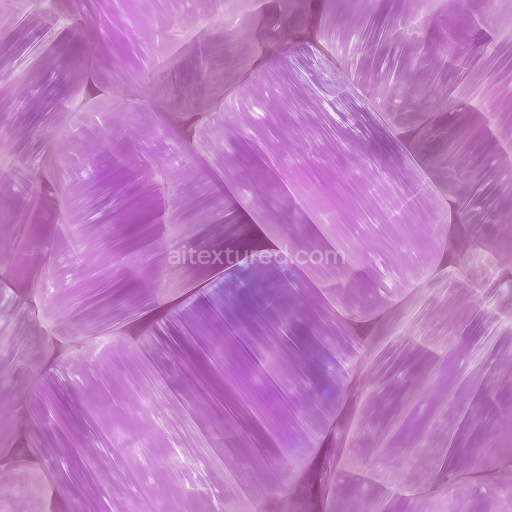
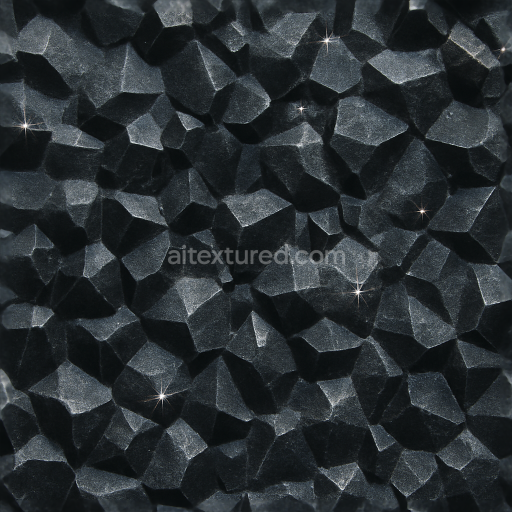
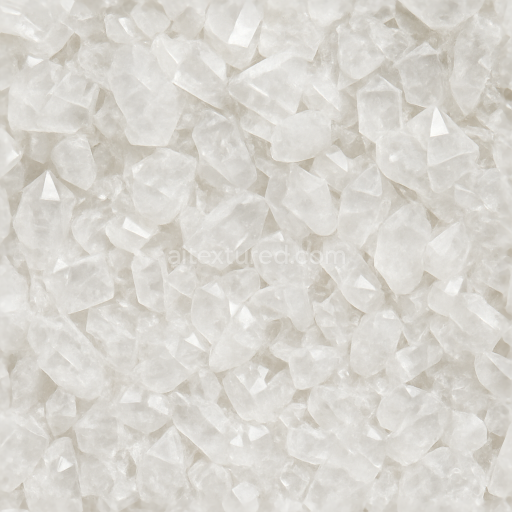
This seamless 3D texture showcases a high-fidelity kristall material characterized by intricate prismatic facets that form a complex geometric lattice reminiscent of natural crystal growth patterns. The base material simulates a transparent, highly polished quartz-like substrate, featuring sharp-edged facets that catch and refract light to create a convincing crystal shimmer effect. The geometry is composed of interlocking polygonal facets arranged in a tessellated pattern, ensuring smooth seamless tiling without visible repetition, ideal for covering extensive 3D surfaces with continuous crystal formations.
The PBR composition reflects a multi-layered crystal structure, where the substrate acts as a clear glassy matrix bound by molecular adhesion, with subtle internal grain and microfractures that enhance realism. The texture incorporates microscopic inclusions and light dispersion effects that simulate natural spectral scattering within the crystal lattice. Surface finishes are highly polished, producing low roughness values and high reflectivity, effectively represented in the Roughness and Metallic channels. The BaseColor channel remains nearly colorless with slight iridescent tints, while Normal and Height maps emphasize the prismatic facet edges and depth variations, contributing to a pronounced 3D relief and light interaction.
The Ambient Occlusion map subtly enhances shadowing within crevices between facets, adding depth without compromising the material’s transparency. Height and displacement maps are calibrated to mimic the subtle elevation differences between facets, enabling realistic parallax effects and tactile surface detail when implemented in engines. This texture’s 8K resolution ensures extreme detail preservation, making it suitable for close-up renders and high-end visualizations. It is fully compatible with Blender, Unreal Engine, and Unity, supporting advanced shader workflows that utilize all PBR channels for photorealistic rendering.
For optimal use, it is advisable to adjust the UV scale carefully to maintain facet proportions and avoid distortion, preserving the natural crystalline geometry. Additionally, fine-tuning the roughness parameter allows control over the intensity of the crystal shimmer and light dispersion effects, enabling subtle customization of glossiness to match different lighting conditions or artistic preferences. Combining this texture with normal map blending can enhance fine surface irregularities without losing the sharpness of the facet edges, providing a versatile solution for realistic crystal materials in diverse 3D projects.
Import the texture maps into Blender with sRGB color space for albedo/base color and Non-Color for normal, roughness, metallic, AO, height, and ORM maps. Connect normal maps through a Normal Map node, then adjust UV scale with a Mapping node so the material repeats naturally on your model.
For the full step-by-step setup, see How to Use Seamless Textures in Blender. Browse related material examples in wood, concrete, and metal.
Yes. This texture is designed as a seamless tileable PBR material, so it can repeat across large surfaces without visible borders.
Use the download controls on this page: they expose the available PNG, WEBP or engine ZIP choices and supported resolutions for this asset.
Use the engine ZIP choices to package compatible source maps for Blender, Unreal Engine or Unity, then verify the imported material in the target application.
Commercial-use permission is not verified for this record. Confirm the original source and license before production use.
Generate maps from existing images, preview materials, convert channels, and package compatible inputs for Blender, Unity, and Unreal Engine.
Choose a verified workflow for generating maps, previewing tiling, converting channels, or starting from the texture catalog.
Derive Normal, Roughness, AO, Metallic, Height and optional ORM maps from one or more source images, then review the results.
Instant WebGL viewer: inspect materials on a sphere, plane, and cube. Check tiling and lighting in real time.
Re-packages maps per engine: Unreal (BaseColor + ORM), Unity (Mask/MetallicSmoothness), Blender (separate channels).
PNG ↔ JPG ↔ SVG: fast convert, SVG rasterize, embed/trace options, quality & background controls.