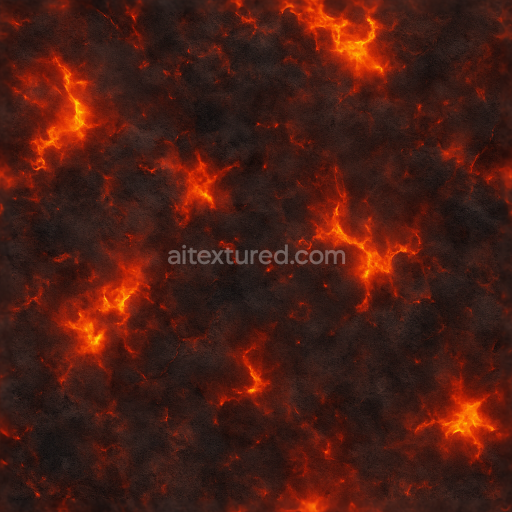
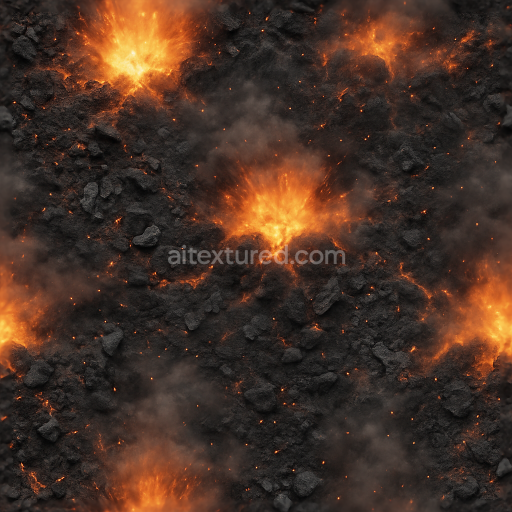
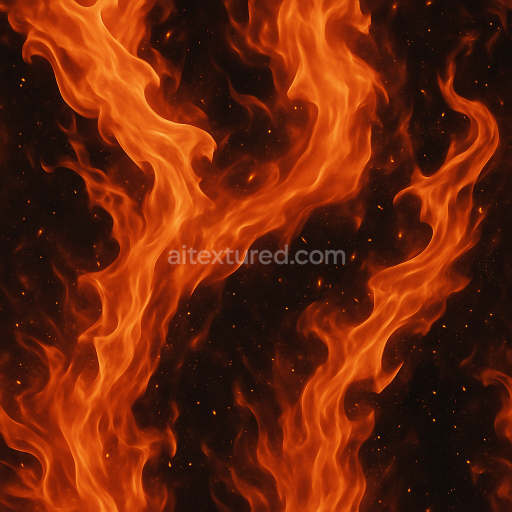
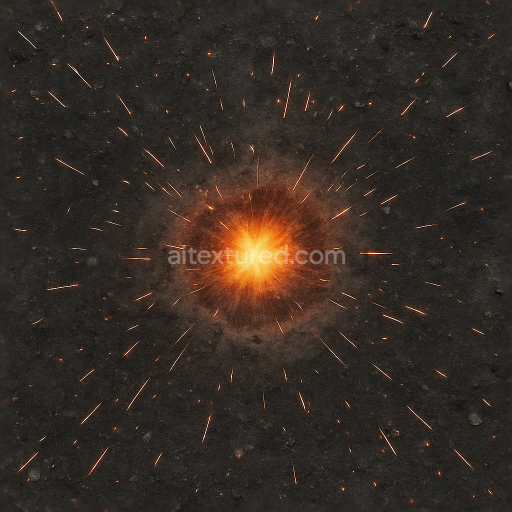
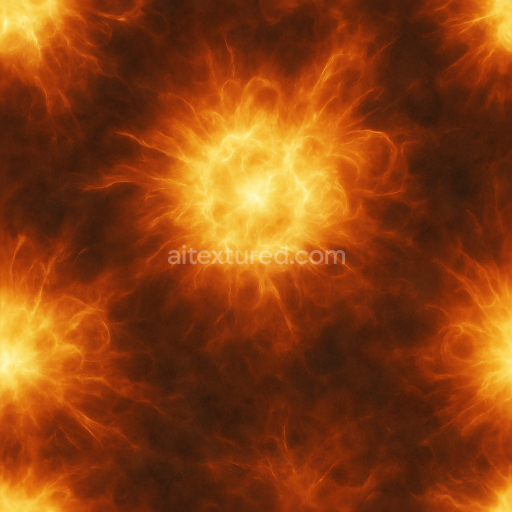
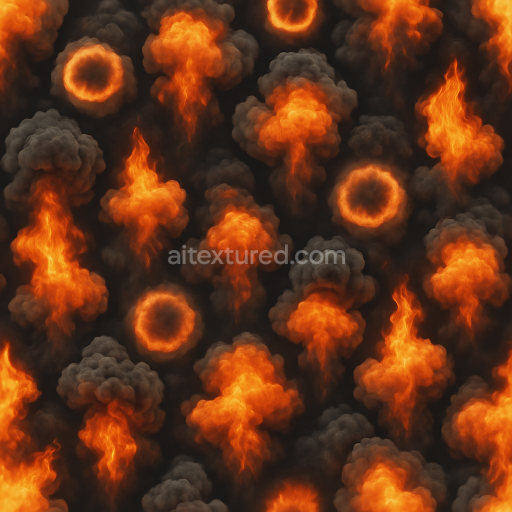
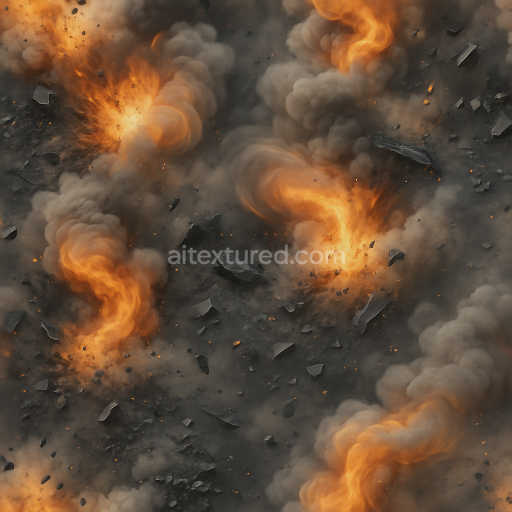
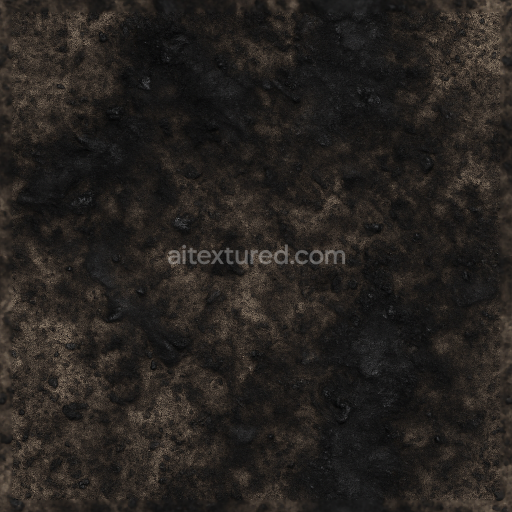
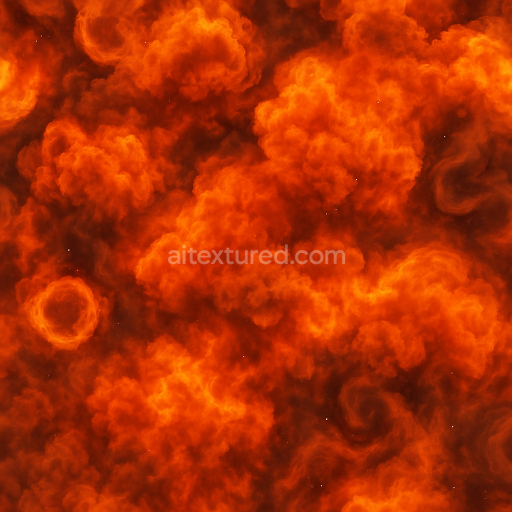
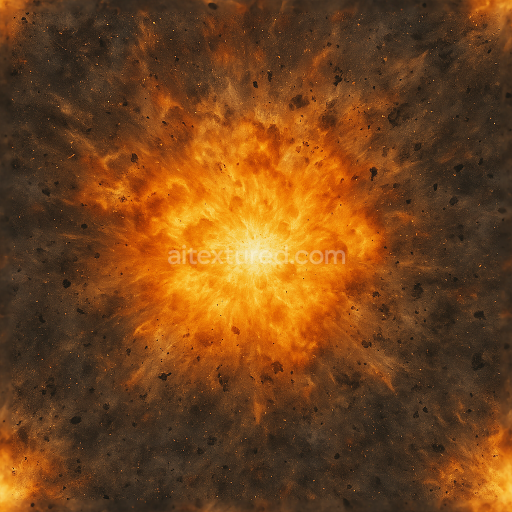
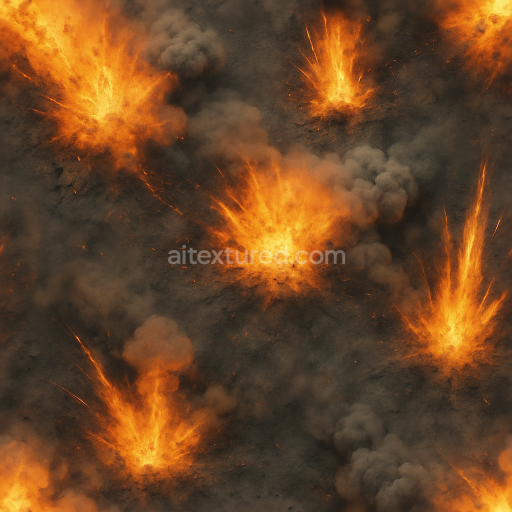
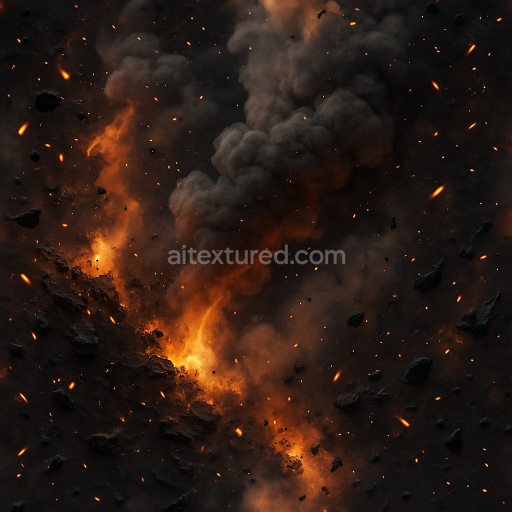
Seamless 8K PBR 3D texture displaying blazing inferno with burnt fabric and hot coals
Seamless texture (tileable) · PNG, WEBP, PBR ZIP.
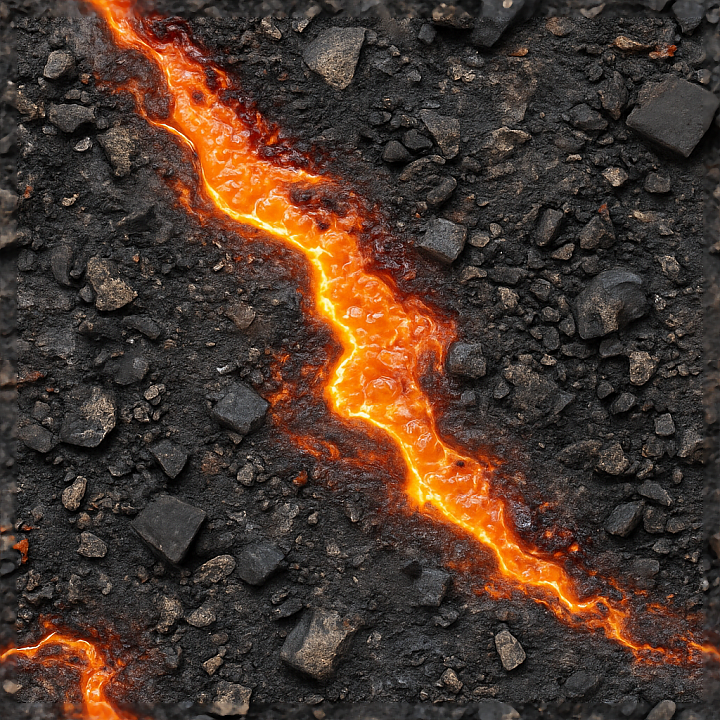
| ID | seamless-3d-texture-of-molten-metal-and-burnt-debris-from-intense-explosion-in-photorealistic-8k-pbr |
|---|---|
| Category | Explosion |
| Formats | PNG, WEBP, PBR ZIP |
| Size | 1k (1024x1024px), 2k (2048x2048px), 4k (4096x4096px), 8k (8192x8192px) |
| Tileable | Yes |
This seamless 3D texture portrays a complex surface formed by molten metal intermingled with burnt debris capturing the chaotic aftermath of an intense explosion. The primary material is a thick semi-solid substrate of cooled molten metal exhibiting a rugged uneven topology with flowing ridges and hardened drips that create a dynamic organic pattern. Interspersed with this metallic base are fragments of charred ground and incinerated rubble composed of brittle mineral aggregates and ash-like residues. These elements form a fractured irregular mosaic that contrasts with the smoother reflective molten metal surfaces. The overall geometric form is highly varied featuring cracked blistered layers and crater-like depressions that convey thermal shock and blast impact.
From a material composition standpoint the molten metal substrate simulates iron or steel that has been heated beyond its melting point and subsequently cooled resulting in an oxidized partially vitrified finish. The burnt debris consists of mineral-rich soil and concrete fragments altered by extreme heat with porosity ranging from compacted ash to fragile crumbly char. The texture’s surface finish is predominantly oxidized and scorched with patches of polished glassy metal where the molten material has solidified smoothly. Dark burnt pigments dominate the color palette ranging from deep charcoal and rusted reds to glowing embers of orange and yellow accurately mapped in the BaseColor channel. The Normal and Height maps emphasize the intricate relief of molten flows and fractured debris while the Roughness map varies from low values on polished metal to high roughness on matte burnt surfaces. The Metallic channel highlights the reflective quality of the cooled metal and Ambient Occlusion enhances the depth within cracks and crevices.
Rendered in photorealistic 8K resolution this texture is optimized for physically based rendering workflows in Blender Unreal Engine and Unity. Its seamless design ensures flawless tiling across large surfaces ideal for depicting post-explosion terrain or damaged industrial environments. The high-resolution detail preserves the intricate interplay of materials and forms allowing for close-up inspection without loss of fidelity. The texture is albedo-only under neutral lighting conditions providing flexibility for artists to apply custom lighting and shading setups while maintaining realistic material responses.
For practical integration it is recommended to carefully adjust the UV scale to balance the large-scale flow of molten metal with the finer-grained burnt debris details preserving both macro and micro texture features. Fine-tuning the roughness values can help distinguish between glossy metallic patches and dull charred ground enhancing material contrast. Additionally blending the Height and Normal maps subtly can create more pronounced depth perception improving realism in real-time engines or offline renders where parallax effects are supported. This approach maximizes the texture’s versatility in diverse post-detonation visualizations or simulation scenarios.
Import the texture maps into Blender with sRGB color space for albedo/base color and Non-Color for normal, roughness, metallic, AO, height, and ORM maps. Connect normal maps through a Normal Map node, then adjust UV scale with a Mapping node so the material repeats naturally on your model.
For the full step-by-step setup, see How to Use Seamless Textures in Blender. Browse related material examples in wood, concrete, and metal.
Yes. This texture is designed as a seamless tileable PBR material, so it can repeat across large surfaces without visible borders.
Use the download controls on this page: they expose the available PNG, WEBP or engine ZIP choices and supported resolutions for this asset.
Use the engine ZIP choices to package compatible source maps for Blender, Unreal Engine or Unity, then verify the imported material in the target application.
Commercial-use permission is not verified for this record. Confirm the original source and license before production use.
Generate maps from existing images, preview materials, convert channels, and package compatible inputs for Blender, Unity, and Unreal Engine.
Choose a verified workflow for generating maps, previewing tiling, converting channels, or starting from the texture catalog.
Derive Normal, Roughness, AO, Metallic, Height and optional ORM maps from one or more source images, then review the results.
Instant WebGL viewer: inspect materials on a sphere, plane, and cube. Check tiling and lighting in real time.
Re-packages maps per engine: Unreal (BaseColor + ORM), Unity (Mask/MetallicSmoothness), Blender (separate channels).
PNG ↔ JPG ↔ SVG: fast convert, SVG rasterize, embed/trace options, quality & background controls.