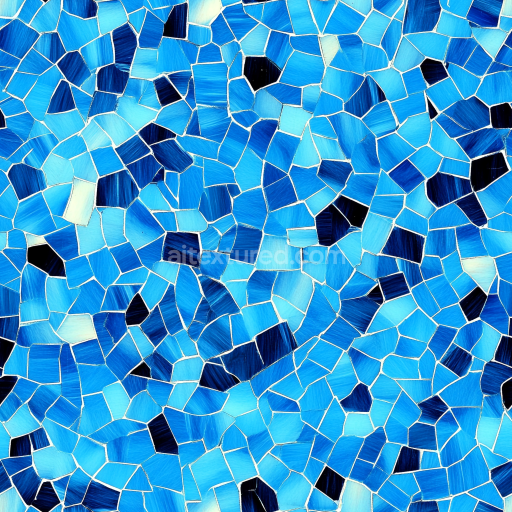
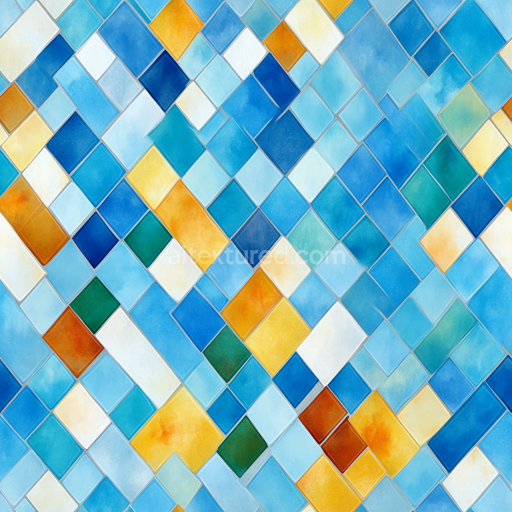
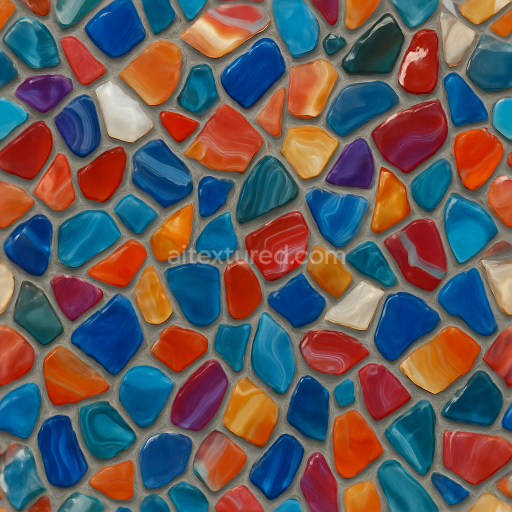
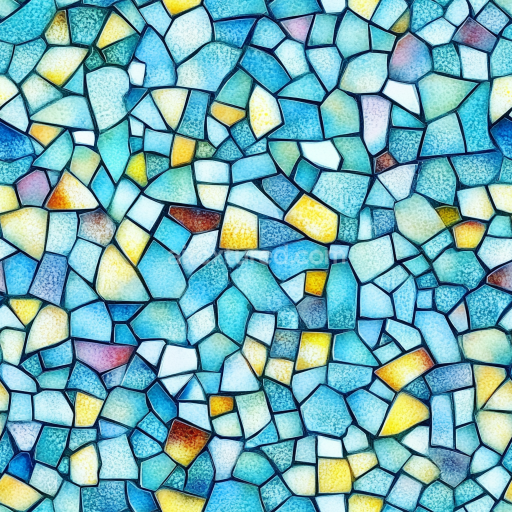
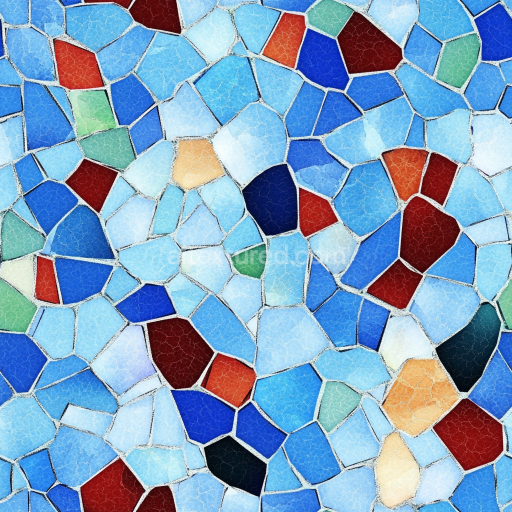
Mosaic PBR Texture Featuring Blue Ceramic Tiles with Varied Tones and White Grout
Seamless texture (tileable) · PNG, WEBP, PBR ZIP.
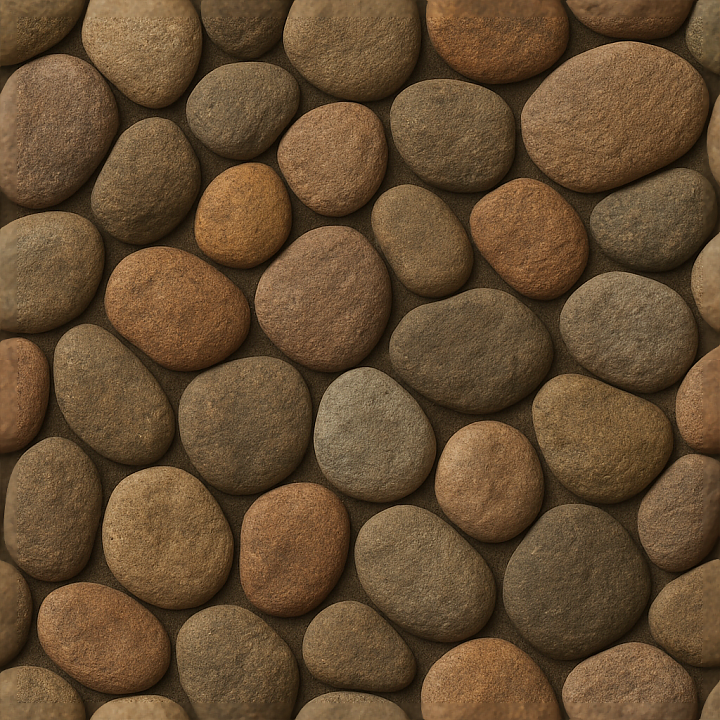
| ID | seamless-3d-texture-pbr-8k-mosaic-river-stones-with-rough-surface-and-earth-tones |
|---|---|
| Category | Mosaic |
| Formats | PNG, WEBP, PBR ZIP |
| Size | 1k (1024x1024px), 2k (2048x2048px), 4k (4096x4096px), 8k (8192x8192px) |
| Tileable | Yes |
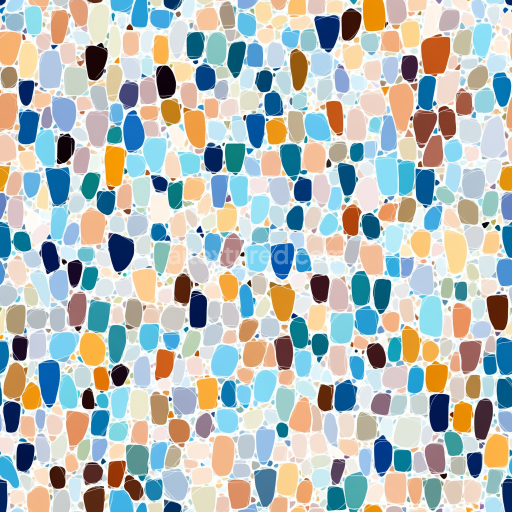
This seamless 8K PBR mosaic texture depicts a natural arrangement of river stones characterized by their rough, irregular surfaces and earthy color palette. The base material simulates smooth yet weathered river rocks embedded in a subtle mortar substrate, creating a realistic tessellated pattern. Each stone exhibits unique geometric forms—mostly oval and rounded shapes with slight angularity—arranged in a random, non-repetitive layout that mimics the organic distribution found in natural riverbeds. The rough surface detail results from fine grain and micro-porosity, reflecting the natural erosion and sediment deposits on the stones over time.
The composition suggests a typical stone mosaic structure where the aggregate consists of individual river stones bound together by a low-profile, matte mortar matrix that fills the gaps without overwhelming the natural contours. The binder mimics a cementitious material with subdued earth tone pigments, ranging from muted browns and grays to soft ochres and tans, providing subtle chromatic variation. The surface finish is matte to semi-rough, emphasizing tactile authenticity rather than glossiness, with no metallic elements present, ensuring the stones maintain their subdued, natural appearance.
In terms of PBR channels, the BaseColor (Albedo) map captures the nuanced natural hues and subtle color shifts of the stones and mortar. The Normal map enhances the perception of the rough stone surfaces and the uneven mortar joints, providing fine detail on micro-geometry such as small pits and ridges. The Roughness map is predominantly high to medium, reflecting the matte, non-reflective nature of river stones, with slight variation to simulate wet or weathered patches. The Metallic channel is uniformly black, as the texture contains no metallic materials. Ambient Occlusion accentuates crevices between stones to enhance depth perception, while the Height/Displacement map provides gentle elevation differences for realistic surface undulation when used with parallax or tessellation techniques.
This texture is optimized at 8K resolution, making it suitable for high-fidelity 3D applications in Blender, Unreal Engine, and Unity. Its seamless design allows for large-scale tiling without visible seams, ideal for expansive outdoor scenes or natural environment assets. For practical application, it is recommended to adjust the UV scale to maintain realistic stone sizing relative to the scene context, and to fine-tune the roughness channel to simulate varying wetness or weathering effects dynamically. Blending height and normal maps can further enhance depth perception and tactile realism when viewed up close.
Import the texture maps into Blender with sRGB color space for albedo/base color and Non-Color for normal, roughness, metallic, AO, height, and ORM maps. Connect normal maps through a Normal Map node, then adjust UV scale with a Mapping node so the material repeats naturally on your model.
For the full step-by-step setup, see How to Use Seamless Textures in Blender. Browse related material examples in wood, concrete, and metal.
Yes. This texture is designed as a seamless tileable PBR material, so it can repeat across large surfaces without visible borders.
Use the download controls on this page: they expose the available PNG, WEBP or engine ZIP choices and supported resolutions for this asset.
Use the engine ZIP choices to package compatible source maps for Blender, Unreal Engine or Unity, then verify the imported material in the target application.
Commercial-use permission is not verified for this record. Confirm the original source and license before production use.
Generate maps from existing images, preview materials, convert channels, and package compatible inputs for Blender, Unity, and Unreal Engine.
Choose a verified workflow for generating maps, previewing tiling, converting channels, or starting from the texture catalog.
Derive Normal, Roughness, AO, Metallic, Height and optional ORM maps from one or more source images, then review the results.
Instant WebGL viewer: inspect materials on a sphere, plane, and cube. Check tiling and lighting in real time.
Re-packages maps per engine: Unreal (BaseColor + ORM), Unity (Mask/MetallicSmoothness), Blender (separate channels).
PNG ↔ JPG ↔ SVG: fast convert, SVG rasterize, embed/trace options, quality & background controls.