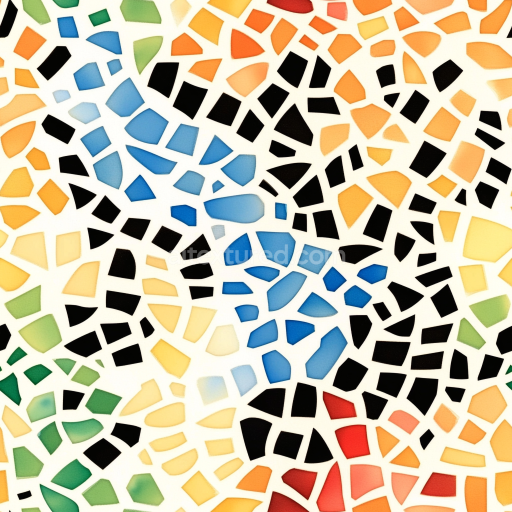
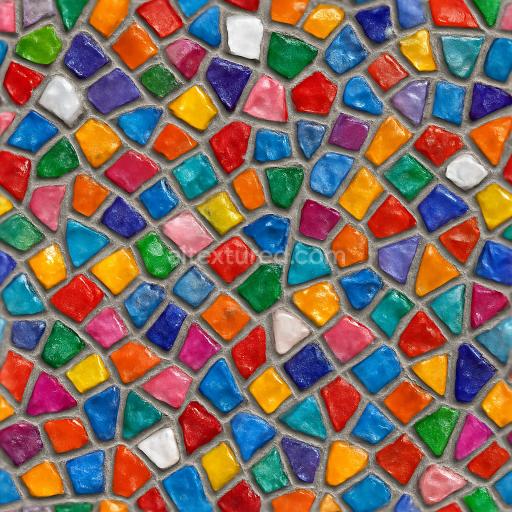
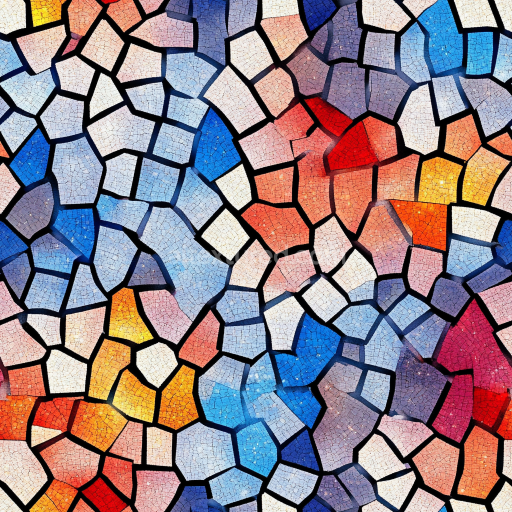
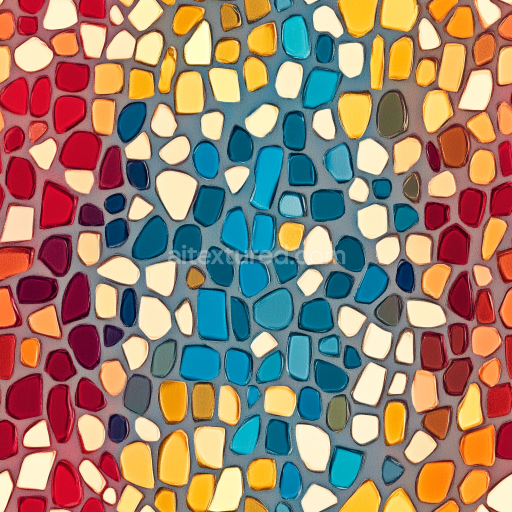
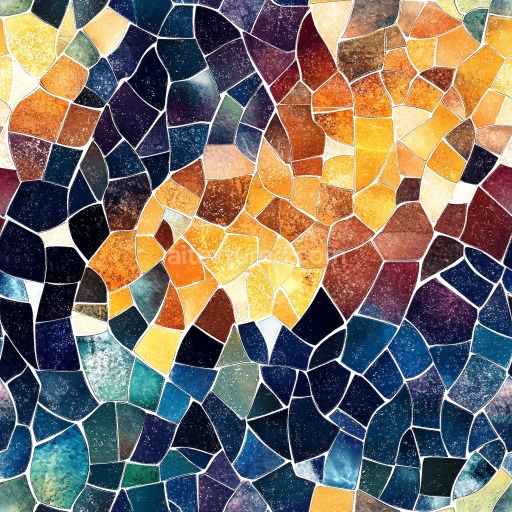
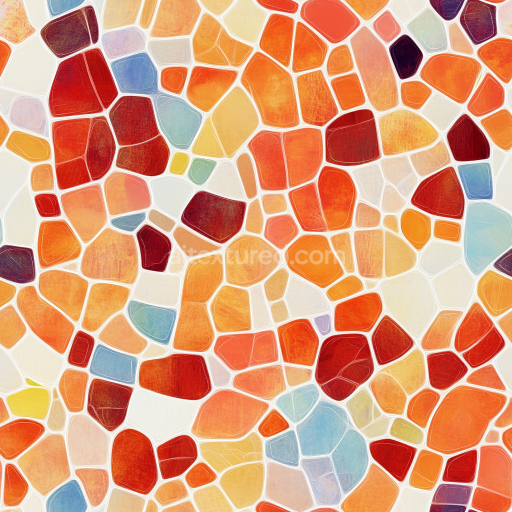
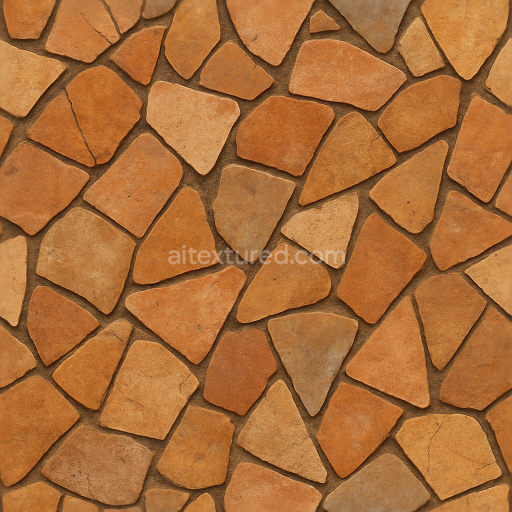
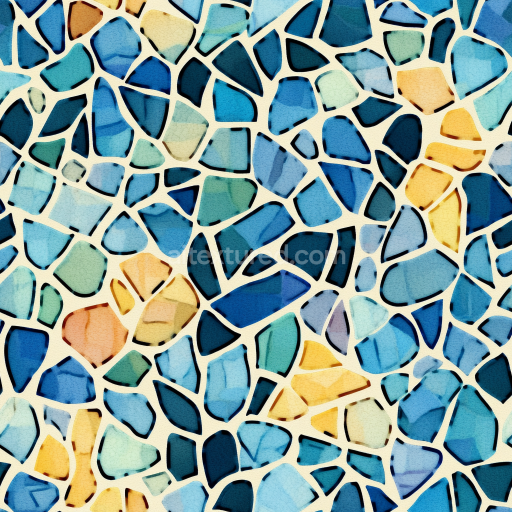
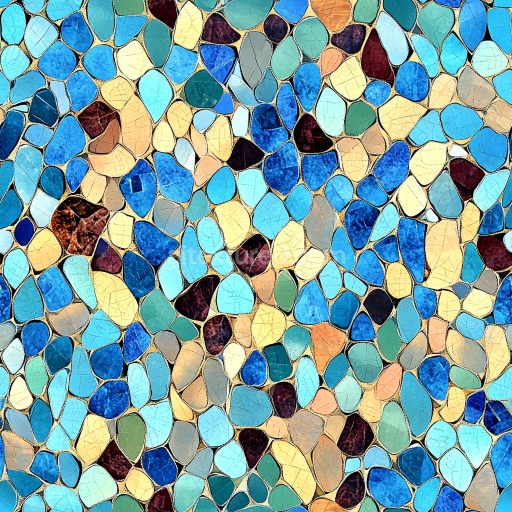
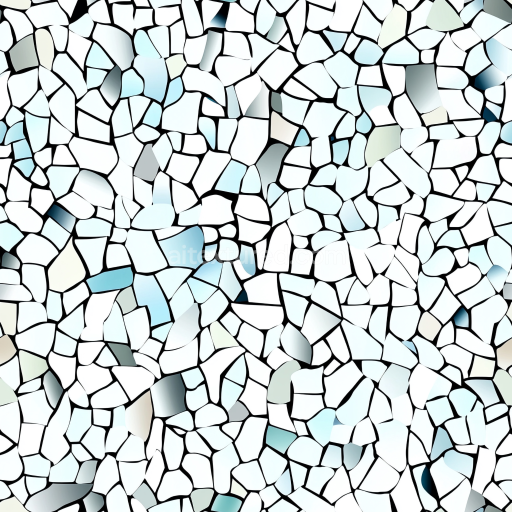
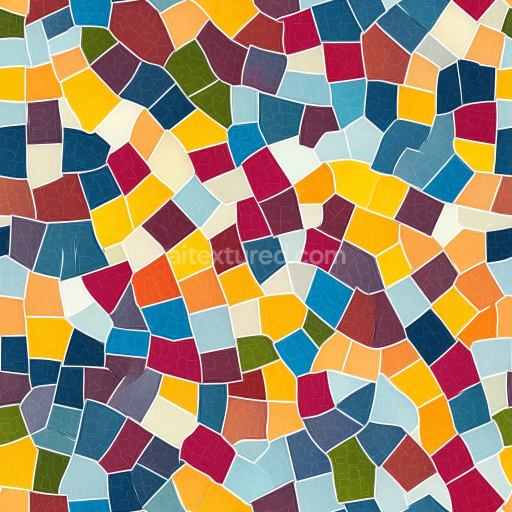
Mosaic PBR Texture of Colorful Ceramic Tiles with Irregular Geometric Chips
Seamless texture (tileable) · PNG, WEBP, PBR ZIP.
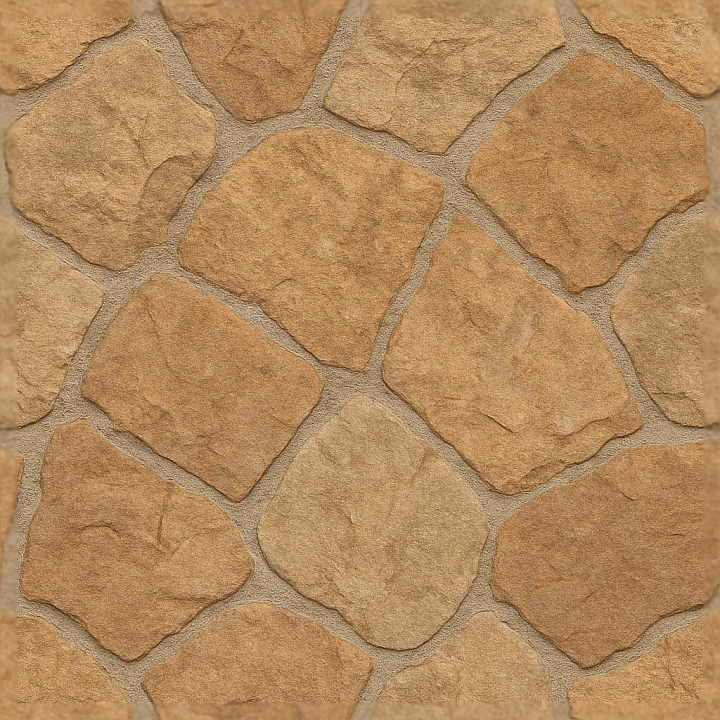
| ID | seamless-3d-texture-pbr-8k-rough-stone-mosaic-with-abstract-fragments-and-earth-tones |
|---|---|
| Category | Mosaic |
| Formats | PNG, WEBP, PBR ZIP |
| Size | 1k (1024x1024px), 2k (2048x2048px), 4k (4096x4096px), 8k (8192x8192px) |
| Tileable | Yes |
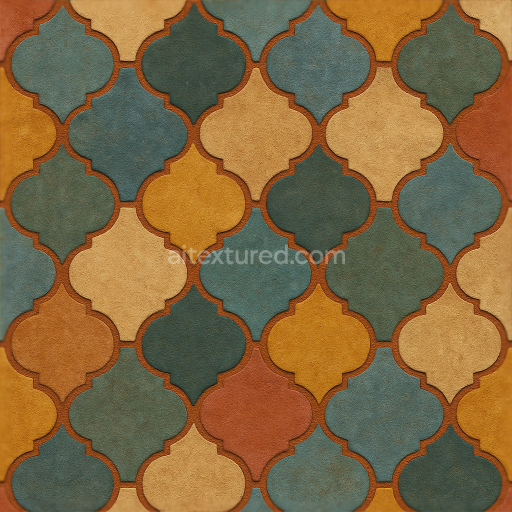
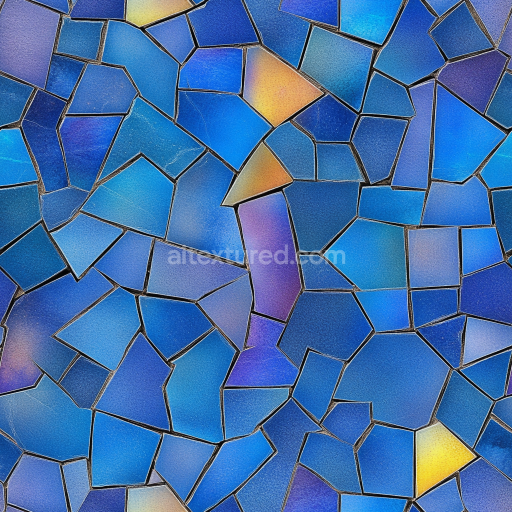
This seamless 3D PBR 8K texture depicts a mosaic surface composed of rough stone fragments arranged in an irregular, abstract pattern. The base material consists primarily of natural stone, characterized by coarse aggregate grains embedded within a cementitious substrate, simulating traditional mortar binders. The individual stone fragments exhibit various earth tones ranging from muted browns and ochres to soft grays and warm tans, reflecting mineral inclusions and subtle weathering effects. The mosaic pattern is formed by these unevenly shaped stone pieces, closely fitted but separated by fine tile grout lines that provide structural cohesion and visual separation. The surface relief captures the tactile ruggedness of the stone, with slight porosity and micro-cracks indicative of natural erosion and aging processes.
The texture’s physical properties are carefully translated into PBR channels to achieve photorealism and versatility across rendering engines. The Base Color (Albedo) map accurately preserves the complex coloration of the rough stone and grout, captured under neutral lighting to maintain natural hues without color bias. The Normal map encodes the uneven surface relief and subtle indentations between fragments, enhancing depth perception and light interaction. Roughness is set high overall to reflect the matte finish of weathered stone, with slight variations to differentiate between smoother grout and coarser stone surfaces. The Metallic channel remains near zero, consistent with non-metallic mineral composition. Ambient Occlusion highlights crevices and grout recesses, adding realistic shadowing. Height and Displacement maps define the three-dimensionality of the mosaic, enabling precise surface contouring and parallax effects.
Crafted at an 8K resolution, this texture ensures exceptional detail and sharpness even at close inspection, making it suitable for high-quality architectural visualizations, environmental modeling, gaming assets, and digital artwork. Its seamless design allows for flawless tiling across large surfaces without visible repetition or seams, facilitating efficient UV mapping workflows. Compatibility with Blender, Unreal Engine, and Unity is optimized, allowing straightforward integration and real-time rendering performance.
For practical application, adjusting the UV scale is recommended to match the desired mosaic fragment size relative to the scene context. Additionally, fine-tuning the roughness map in software can help simulate varying levels of surface wear or moisture on the stone. Blending height or parallax maps with normal maps can further enhance the perception of depth and irregularity, especially when viewed at grazing angles or under dynamic lighting conditions.
Import the texture maps into Blender with sRGB color space for albedo/base color and Non-Color for normal, roughness, metallic, AO, height, and ORM maps. Connect normal maps through a Normal Map node, then adjust UV scale with a Mapping node so the material repeats naturally on your model.
For the full step-by-step setup, see How to Use Seamless Textures in Blender. Browse related material examples in wood, concrete, and metal.
Yes. This texture is designed as a seamless tileable PBR material, so it can repeat across large surfaces without visible borders.
Use the download controls on this page: they expose the available PNG, WEBP or engine ZIP choices and supported resolutions for this asset.
Use the engine ZIP choices to package compatible source maps for Blender, Unreal Engine or Unity, then verify the imported material in the target application.
Commercial-use permission is not verified for this record. Confirm the original source and license before production use.
Generate maps from existing images, preview materials, convert channels, and package compatible inputs for Blender, Unity, and Unreal Engine.
Choose a verified workflow for generating maps, previewing tiling, converting channels, or starting from the texture catalog.
Derive Normal, Roughness, AO, Metallic, Height and optional ORM maps from one or more source images, then review the results.
Instant WebGL viewer: inspect materials on a sphere, plane, and cube. Check tiling and lighting in real time.
Re-packages maps per engine: Unreal (BaseColor + ORM), Unity (Mask/MetallicSmoothness), Blender (separate channels).
PNG ↔ JPG ↔ SVG: fast convert, SVG rasterize, embed/trace options, quality & background controls.