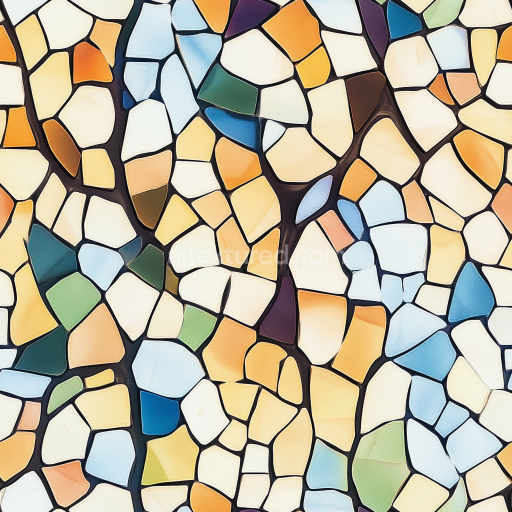
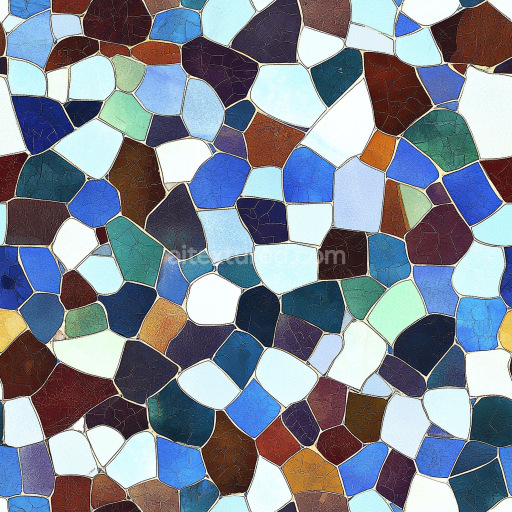
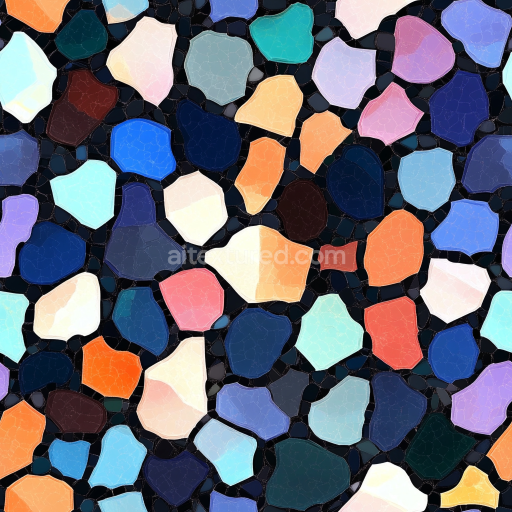
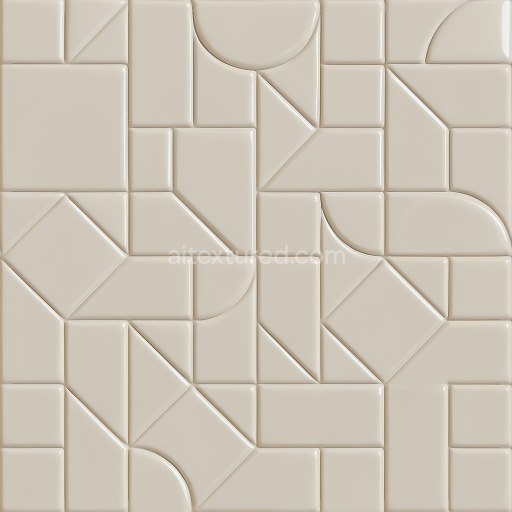
Mosaic PBR Texture of Colorful Broken Ceramic Tiles with Matte Finish
Seamless texture (tileable) · PNG, WEBP, PBR ZIP.
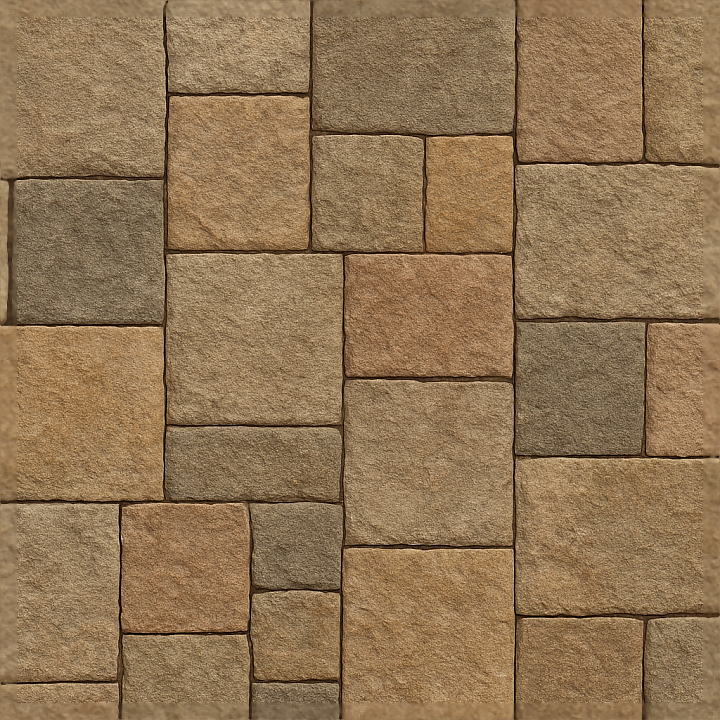
| ID | seamless-3d-texture-pbr-8k-mosaic-stone-tiles-with-rough-surface-and-natural-hues |
|---|---|
| Category | Mosaic |
| Formats | PNG, WEBP, PBR ZIP |
| Size | 1k (1024x1024px), 2k (2048x2048px), 4k (4096x4096px), 8k (8192x8192px) |
| Tileable | Yes |
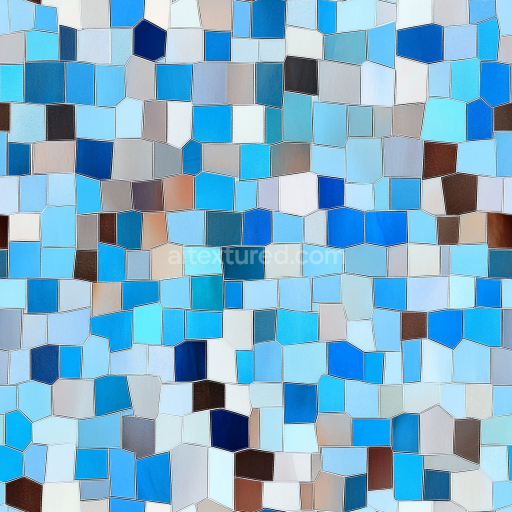
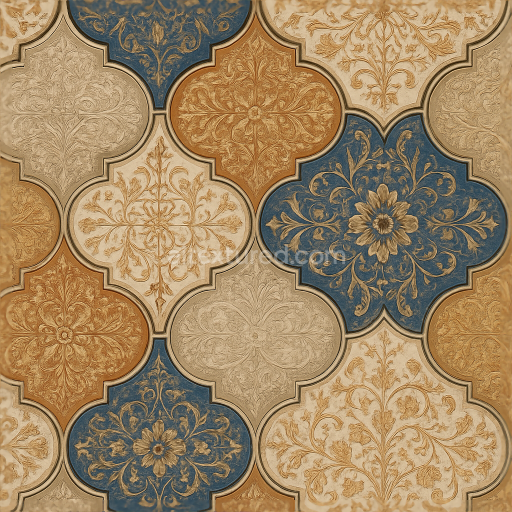
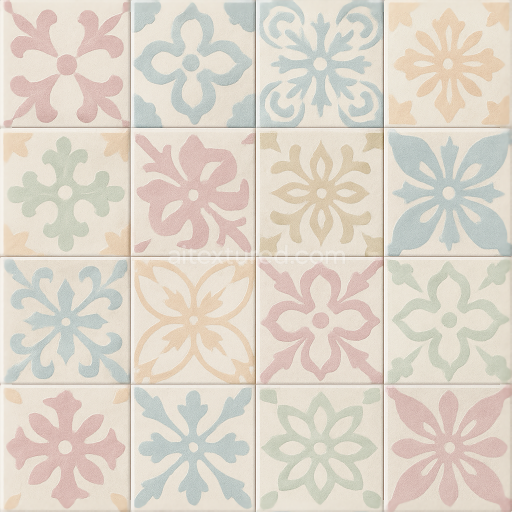
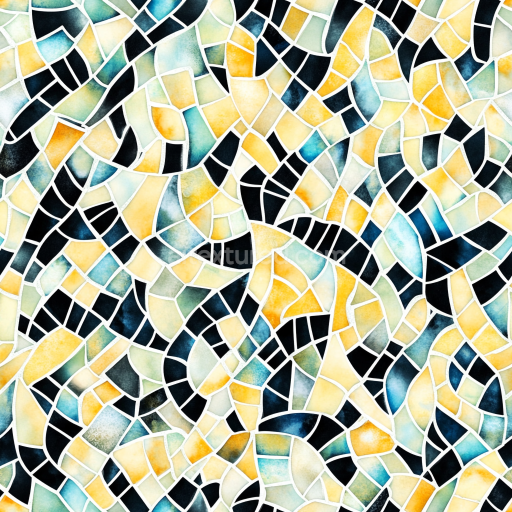
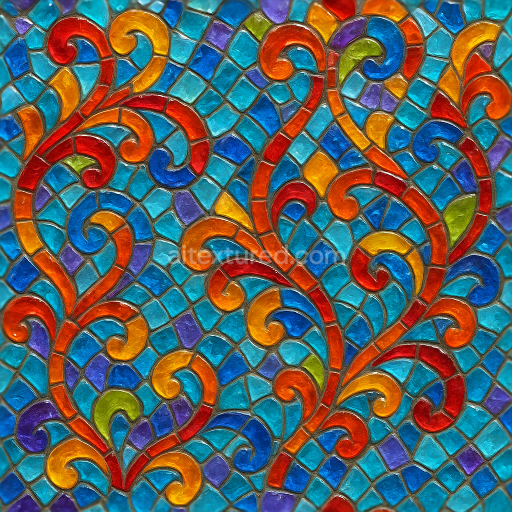
This seamless 3D texture depicts a mosaic composed of irregularly shaped stone tiles, arranged in a random layout that mimics traditional handcrafted tesserae. The base material is a natural sedimentary stone, characterized by a rough surface texture and subtle variations in porosity, reflecting weathered outdoor masonry. Each tile exhibits a matte finish, emphasizing the raw, unpolished quality of the stone. The substrate appears dense yet slightly porous, allowing for natural absorption of earth-toned pigments that range from warm beiges and soft grays to muted browns, enhancing the authentic rustic appeal. The binder between tiles simulates a coarse mortar, adding to the overall tactile complexity and reinforcing the mosaic’s structural integrity.
The texture’s PBR setup utilizes an 8K resolution to capture fine details such as micro-cracks, grain variations, and subtle surface imperfections. The BaseColor (Albedo) channel conveys the natural hues and subtle color gradations found in weathered stone and mortar, while the Normal map enhances the tactile roughness and depth of each tile’s irregular edges and surface undulations. The Roughness map is calibrated to emphasize the matte, non-reflective finish typical of aged stone, effectively reducing specular highlights and contributing to a natural, subdued appearance. Metallic values remain minimal to nonexistent, as the material is entirely non-metallic, while the Ambient Occlusion map adds depth by simulating the soft shadows cast within crevices and between tiles. The Height/Displacement map further defines the relief of the stone edges and mortar joints, improving realism in close-up renders and parallax effects.
Designed for seamless tiling without visible repetition, this texture is optimized for use across multiple platforms including Blender, Unreal Engine, and Unity. The high-resolution detail supports close camera work in architectural visualizations or game environments requiring authentic stone surfaces. Its rough, matte surface and natural color palette make it particularly suitable for outdoor scenes, historic reconstructions, or any project necessitating realistic aged masonry with subtle weathering and tactile depth.
For practical application, it is recommended to adjust the UV scale carefully to avoid overly large or small tile appearances relative to the scene context. Fine-tuning the roughness map can help balance between too dull or slightly reflective surfaces depending on lighting conditions. Additionally, blending the height map with normal maps can enhance the perception of depth without excessive geometry displacement, especially beneficial for real-time engines where performance is a consideration.
Import the texture maps into Blender with sRGB color space for albedo/base color and Non-Color for normal, roughness, metallic, AO, height, and ORM maps. Connect normal maps through a Normal Map node, then adjust UV scale with a Mapping node so the material repeats naturally on your model.
For the full step-by-step setup, see How to Use Seamless Textures in Blender. Browse related material examples in wood, concrete, and metal.
Yes. This texture is designed as a seamless tileable PBR material, so it can repeat across large surfaces without visible borders.
Use the download controls on this page: they expose the available PNG, WEBP or engine ZIP choices and supported resolutions for this asset.
Use the engine ZIP choices to package compatible source maps for Blender, Unreal Engine or Unity, then verify the imported material in the target application.
Commercial-use permission is not verified for this record. Confirm the original source and license before production use.
Generate maps from existing images, preview materials, convert channels, and package compatible inputs for Blender, Unity, and Unreal Engine.
Choose a verified workflow for generating maps, previewing tiling, converting channels, or starting from the texture catalog.
Derive Normal, Roughness, AO, Metallic, Height and optional ORM maps from one or more source images, then review the results.
Instant WebGL viewer: inspect materials on a sphere, plane, and cube. Check tiling and lighting in real time.
Re-packages maps per engine: Unreal (BaseColor + ORM), Unity (Mask/MetallicSmoothness), Blender (separate channels).
PNG ↔ JPG ↔ SVG: fast convert, SVG rasterize, embed/trace options, quality & background controls.