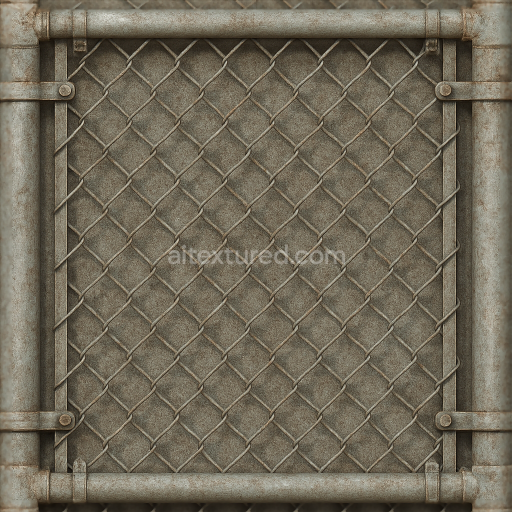
Seamless 8K 3D Texture PBR Chain Link Gate With Galvanized Metal And Wire Mesh Corroded M…
Seamless texture (tileable) · PNG, WEBP, PBR ZIP.
| ID | seamless-8k-3d-texture-pbr-chainlink-fence-with-metal-mesh-and-rust-stains-realistic-detail |
|---|---|
| Category | Fences |
| Formats | PNG, WEBP, PBR ZIP |
| Size | 1k (1024x1024px), 2k (2048x2048px), 4k (4096x4096px), 8k (8192x8192px) |
| Tileable | Yes |
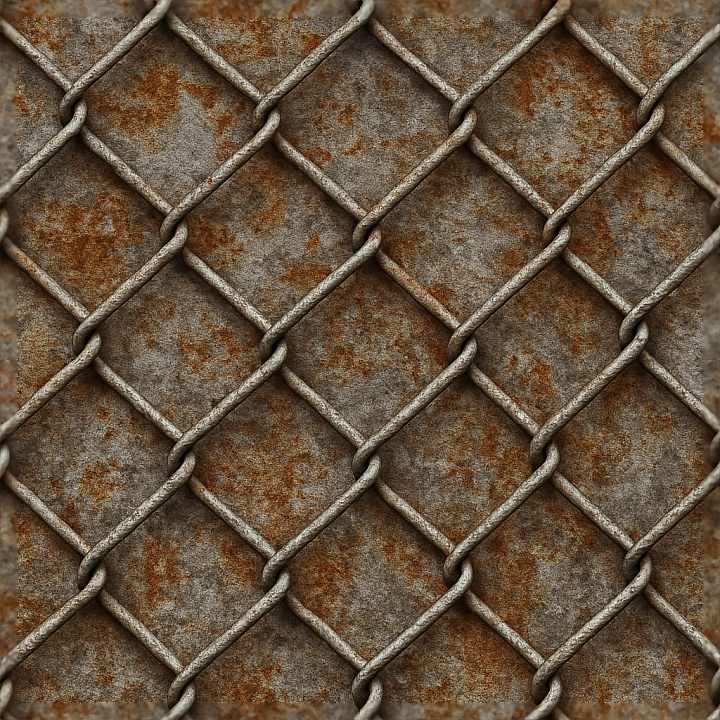
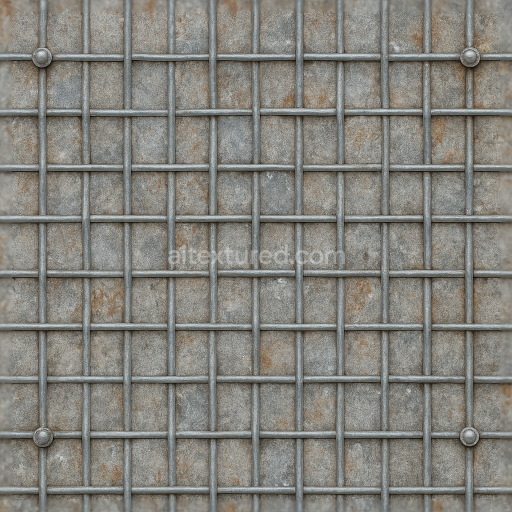
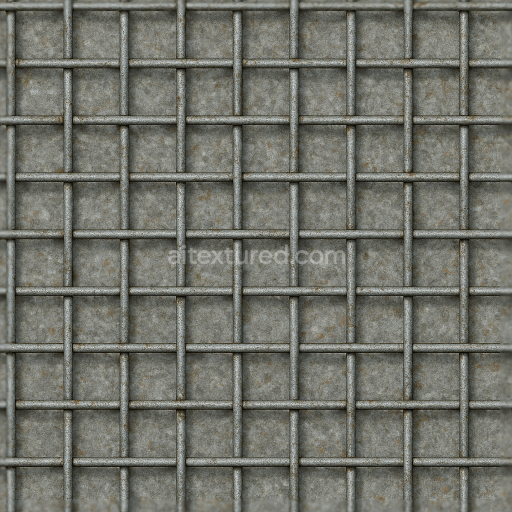
This seamless 8K PBR 3D texture represents a detailed chainlink fence constructed from interwoven steel rods forming a characteristic diamond-shaped metal mesh pattern. The primary material is galvanized steel, which has undergone oxidation and corrosion over time, resulting in a rough, weathered surface with prominent rust stains and patches of flaking metal. The metal rods, originally smooth and coated to resist environmental damage, now exhibit a complex interplay between the base galvanized substrate and the reddish-brown iron oxide that forms the corroded areas. This texture captures the natural progression of material degradation, including variations in porosity where rust has eaten into the metal, creating subtle depressions and raised flaky surfaces that contribute to the overall tactile realism.
The composition of the fence texture involves a metallic substrate bound by its inherent crystalline steel structure, with no additional binders or adhesives, as the mesh is formed by mechanically interlinking steel wires. The geometric form is a repetitive, woven mesh grid, creating a consistent yet intricate pattern of overlapping rods that cast delicate shadows and highlights. The surface finish is heavily oxidized and roughened, with a mix of matte and semi-gloss areas caused by uneven rust accumulation and exposure to the elements. Colorwise, the base metal displays a muted, bluish-gray tone from the galvanized coating, contrasted by the warm hues of orange and brown rust pigments. These color variations are accurately represented in the BaseColor (Albedo) channel, while fine metal grain and oxidation details are captured in the Normal and Height maps to enhance depth and tactile perception.
The texture’s PBR workflow is meticulously designed to include a Metallic map that emphasizes the steel’s inherent metallic properties while modulating intensity in rusted areas where metallic reflections diminish due to corrosion. The Roughness channel showcases a dynamic range—from smoother, less weathered metal patches to rough, oxidized segments where the surface irregularities scatter light diffusely. Ambient Occlusion enhances the subtle shadows within the mesh intersections and crevices, giving a realistic sense of volume and depth. The Height/Displacement map supports parallax and tessellation techniques in Blender, Unreal Engine, and Unity, enabling highly detailed surface relief that interacts convincingly with lighting and camera angles.
With a resolution of 8K, this texture is optimized for high-fidelity renders and real-time applications alike, ensuring crisp details even on large-scale fence objects in outdoor or industrial environments. It is fully seamless, allowing for uniform tiling without visible repetition or seams, essential for covering expansive fence sections. When applying this texture, it is recommended to adjust the UV scale carefully to maintain the natural size of the chainlink mesh pattern relative to the scene. Fine-tuning the roughness map can also help balance the reflectivity for different lighting conditions, while blending height and normal maps will enhance the perception of depth and material weathering without compromising performance.
Import the texture maps into Blender with sRGB color space for albedo/base color and Non-Color for normal, roughness, metallic, AO, height, and ORM maps. Connect normal maps through a Normal Map node, then adjust UV scale with a Mapping node so the material repeats naturally on your model.
For the full step-by-step setup, see How to Use Seamless Textures in Blender. Browse related material examples in wood, concrete, and metal.
Yes. This texture is designed as a seamless tileable PBR material, so it can repeat across large surfaces without visible borders.
Use the download controls on this page: they expose the available PNG, WEBP or engine ZIP choices and supported resolutions for this asset.
Use the engine ZIP choices to package compatible source maps for Blender, Unreal Engine or Unity, then verify the imported material in the target application.
Commercial-use permission is not verified for this record. Confirm the original source and license before production use.
Generate maps from existing images, preview materials, convert channels, and package compatible inputs for Blender, Unity, and Unreal Engine.
Choose a verified workflow for generating maps, previewing tiling, converting channels, or starting from the texture catalog.
Derive Normal, Roughness, AO, Metallic, Height and optional ORM maps from one or more source images, then review the results.
Instant WebGL viewer: inspect materials on a sphere, plane, and cube. Check tiling and lighting in real time.
Re-packages maps per engine: Unreal (BaseColor + ORM), Unity (Mask/MetallicSmoothness), Blender (separate channels).
PNG ↔ JPG ↔ SVG: fast convert, SVG rasterize, embed/trace options, quality & background controls.